Everyday Stories: A Walk Through East London’s History
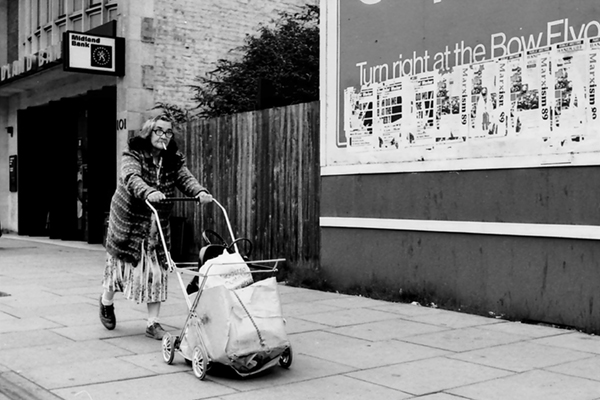
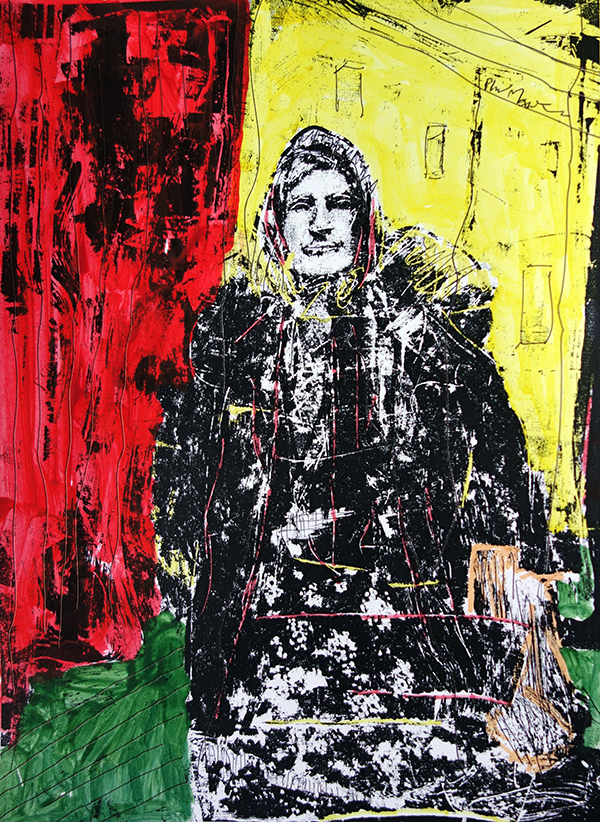
I think I photographed this woman a number of times during my wanderings around Whitechapel in the 1980s. On this occasion she stood out because of her determined walking style, the fag in her mouth and her customised push chair redesigned for shopping.
Next to her is a large billboard proclaiming, “Turn right at the Bow Flyover”, while a bank sign is visible in the background. These commercial signs speak of a changing city, yet they seem disconnected from the woman herself. The advertisements represent movement, development, and consumer culture, whereas she embodies continuity and everyday survival.
I think she humanises a generation of East End residents who had lived through war, post-war austerity, and the profound social changes that reshaped the area during the twentieth century. She’s actually walking past a former derelict bomb sight hidden by billboards. Although she occupies only a small part of the photograph, she’s undoubtedly its emotional centre.
The buildings, signs, and street furniture suggest the physical city, while the woman represents the lived experience of those who inhabit it. Her presence is fleeting as she is simply passing through the frame. Nevertheless she carries the history of the East End in a way that the architecture alone cannot.