Exploring Underground Culture: Berlin, New York, London
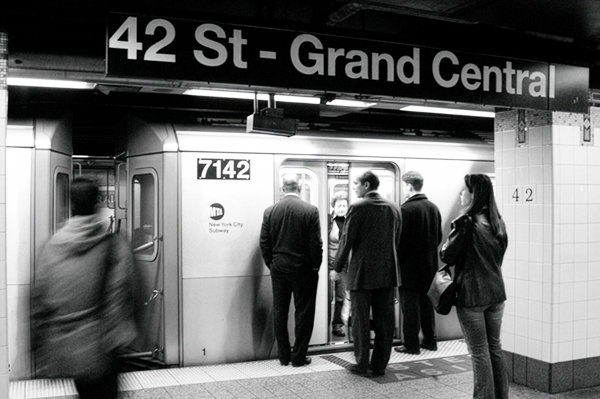
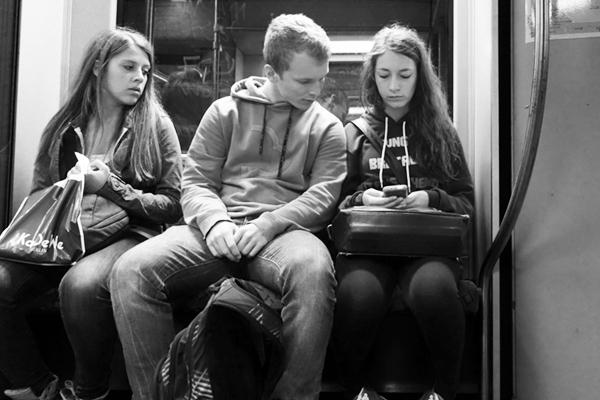
The first two photographs in this blog explore two complementary aspects of New York’s underground: the public choreography of movement and the private worlds that exist within it.
The first image is built around structure, rhythm and contrast. The bold station sign dominates the upper third of the frame, immediately anchoring the location, while the stationary train forms a strong horizontal band beneath it. The commuters waiting on the platform create a second layer of vertical forms, almost like punctuation marks against the station’s rigid geometry. I deliberately used a slow shutter speed, allowing the figure on the left to blur as they walked through the scene. This fleeting movement contrasts with the stillness of the other passengers, who appear almost statuesque. The woman stepping off the train looks down towards the platform, perhaps avoiding eye contact with those waiting to board. The image reflects a familiar urban paradox: hundreds of people sharing the same physical space while remaining socially isolated, each absorbed in their own thoughts and destination.
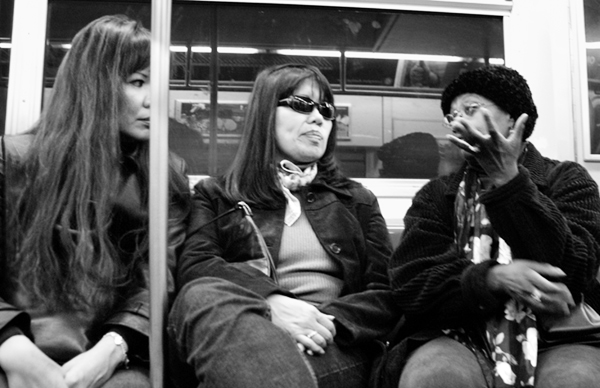
The photograph below tells a different story. It is quieter, more intimate and more personal. The three women appear to be friends, and judging by their expressions, the conversation was thoroughly engaging. From the opposite side of the carriage it was impossible to hear a single word over the relentless noise of the train, yet their body language says everything. In contrast to the anonymity of the platform scene, this image captures a fleeting moment of genuine human connection within the crowded environment of the subway.
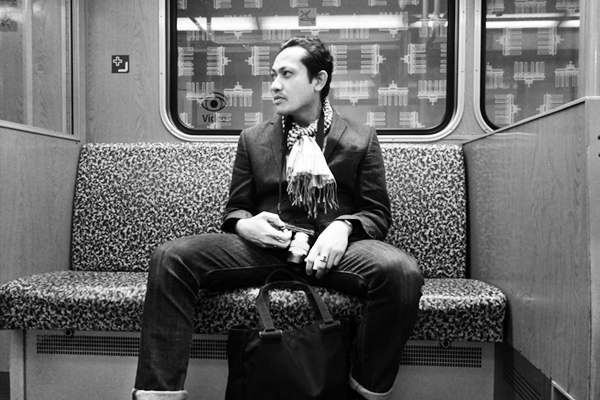
These photographs inevitably reminded me of the work of Walker Evans, whose remarkable series of candid photographs of New York subway passengers was made between 1938 and 1941. Evans concealed a 35mm camera beneath his coat, using a hidden cable release to photograph unsuspecting travellers as they sat opposite him. The resulting images are extraordinary for their honesty. Free from self-consciousness or performance, his subjects appear lost in thought, weary after work, curious, anxious or quietly reflective. The photographs reveal the emotional richness that can exist within ordinary, everyday moments and remain one of the most influential bodies of street photography ever produced. If you have never seen them, they are well worth searching for online—not only as a masterclass in candid photography but also as a profound study of humanity in a shared public space.