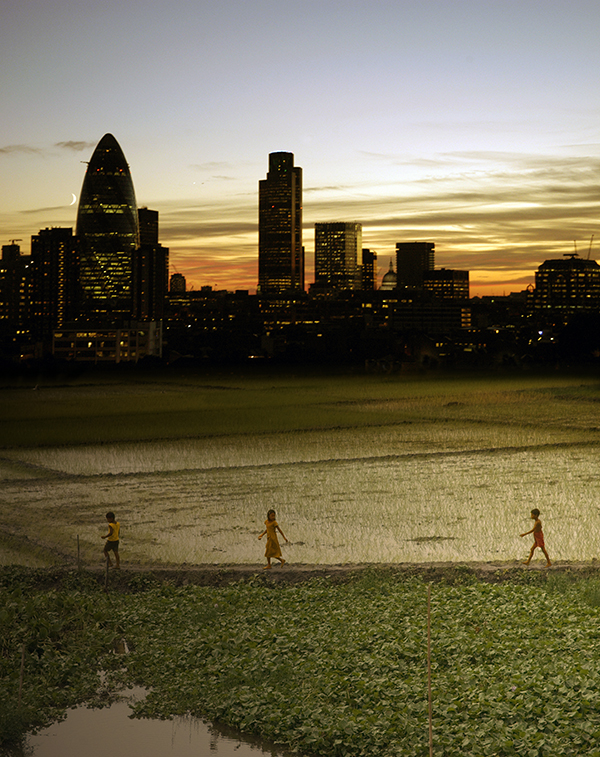
Exploring East London and Dhaka: A Comparitive Journey
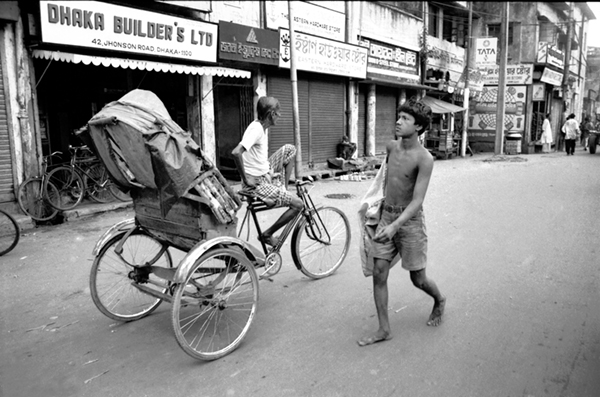
Dhaka is now one of the world’s largest megacities. In the early 1990s, many of its streets still retained a relatively low-rise commercial character, although the city was already expanding at an extraordinary pace. Today those same streets are denser, noisier, and far more heavily motorised. Through all that change, the cycle rickshaw has remained one of Dhaka’s enduring symbols.
I made this photograph shortly after the fall of General Hussain Muhammad Ershad’s military government in 1990. Bangladesh returned to parliamentary democracy after the 1991 elections, and there was a palpable sense of hope that political reform might bring wider change. Yet for many people, daily life continued to be shaped by poverty and the search for work.
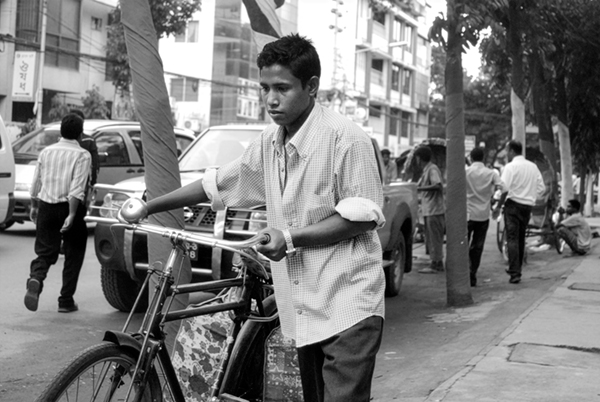
The barefoot, shirtless boy immediately speaks of economic hardship, but that is only part of the story. What first caught my attention was his self-assurance. His posture is upright, his stride purposeful, and he walks through the frame with a quiet confidence that seems to transcend his circumstances.
I was travelling on a cycle rickshaw when I made the photograph. Sitting slightly above the street gave me a unique perspective on the life unfolding around me. Rickshaws moved at a human pace, allowing moments to reveal themselves in a way that would have been impossible from a car. They became not just a means of transport, but a moving platform for observation.
More than thirty-five years later, I can still remember that journey through Dhaka. The city has changed beyond recognition in many ways, but this fleeting encounter has stayed with me. It reminds me that while cities evolve, the quiet dignity and resilience of the people who inhabit them are often what endure most vividly in memory.