Forty Years Apart: Two East End Streets

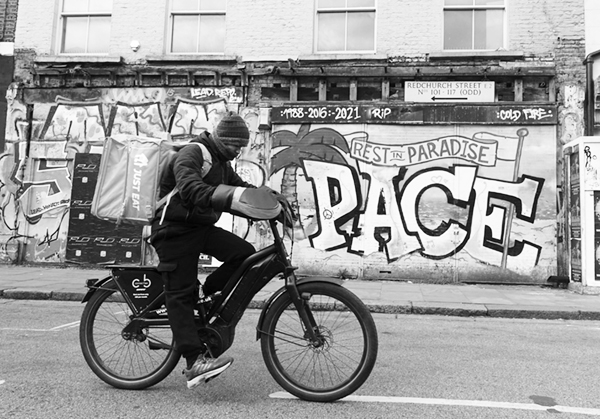
These two photographs, taken forty years apart, invite us to consider not only how the physical environment of the East End has changed, but also how much has remained constant.
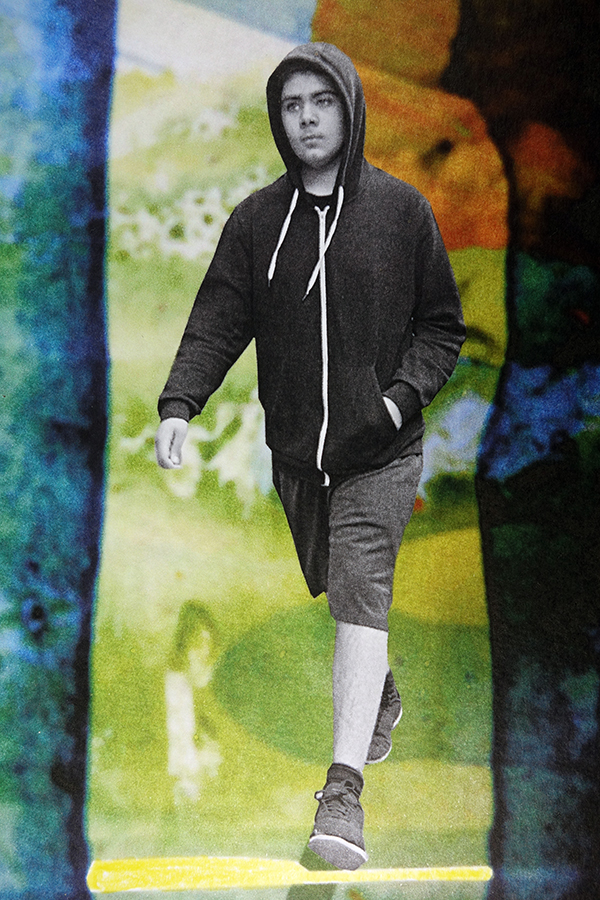
The 2024 cyclist is absorbed in his work, seemingly unaware of the camera. Wrapped up against the cold, he moves with a sense of urgency, his attention fixed on the journey ahead. There is something quite solitary about him, almost as if his clothing and the demands of his work have separated him from the street around him.
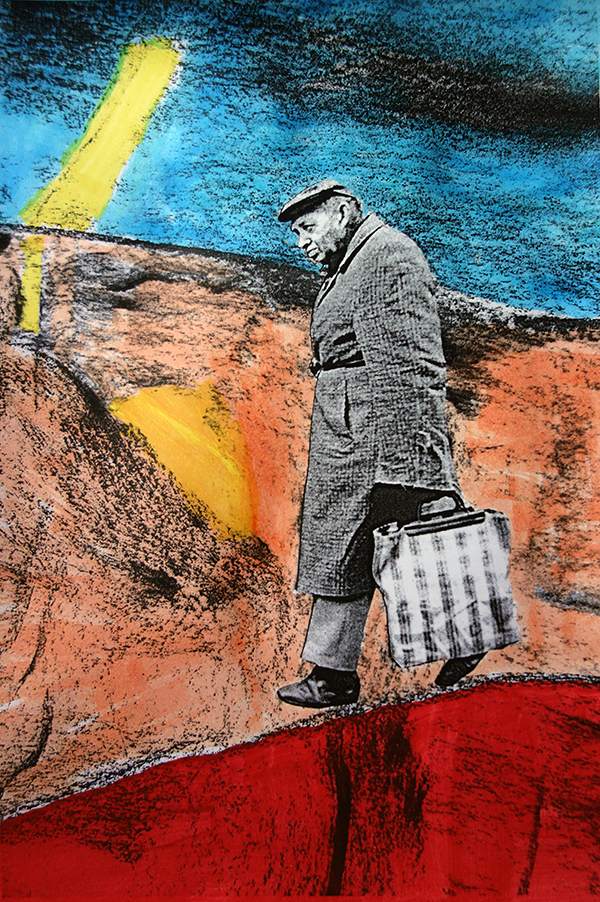
The man I photographed in Grimsby Street in 1984 was a very different character. He was used to seeing me wandering around Brick Lane with my camera, and we would acknowledge each other when I got a little closer. He was a man of few words, and I often found myself wondering about his past and the stories he might have told. I imagined him as a Second World War veteran who, having lived through such extraordinary times, had perhaps fallen on hard times later in life. I never knew whether that was true, but it was an impression that stayed with me.
He was a familiar figure around the Brick Lane area. In this photograph, he seems relaxed, almost lost in his own world as he walks alongside his bicycle. There is a quietness about him, a sense of someone who belongs to the street and is entirely at ease in his surroundings.
Both men, I think, convey a sense of individual dignity, although in very different ways. The man in 1984 seems to have time on his side, while the delivery cyclist is caught up in the relentless pace of contemporary life. One appears settled in his surroundings; the other is passing through, carrying out a job that demands speed and efficiency.
Looking at these photographs together, I am reminded that the history of the East End is not simply a story of buildings being demolished, industries disappearing or streets becoming fashionable. It is also a story of people adapting to changing circumstances, finding ways to make a living, and continuing to occupy the same urban spaces. The faces and the fashions change, but the street remains a place of work, movement and human encounter.
For me, the character of a street is never determined solely by its architecture or commercial identity. It is created by the people who use it, by the lives they lead and by the everyday experiences that take place within it.
These two photographs, taken forty years apart, are perhaps as much about the people of East London as they are about the streets themselves. They are personal memories, but they are also visual records of a social history that continues to unfold.