Exodus

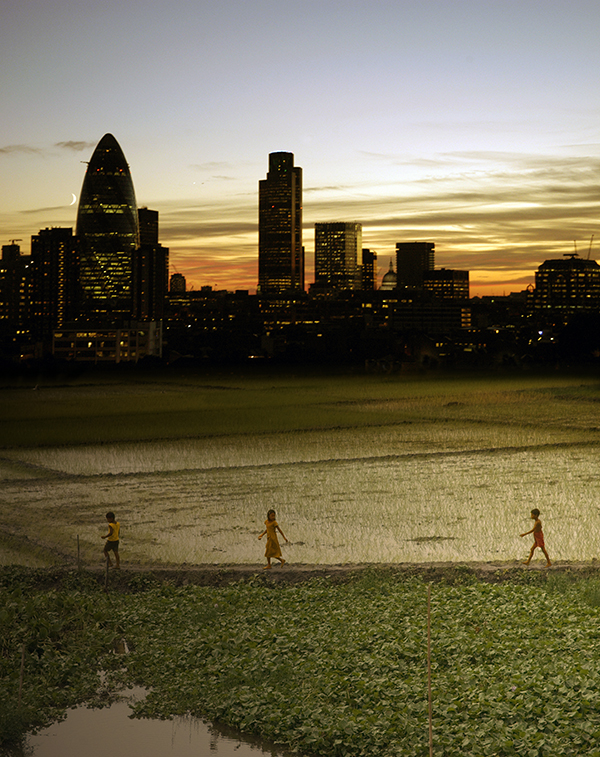
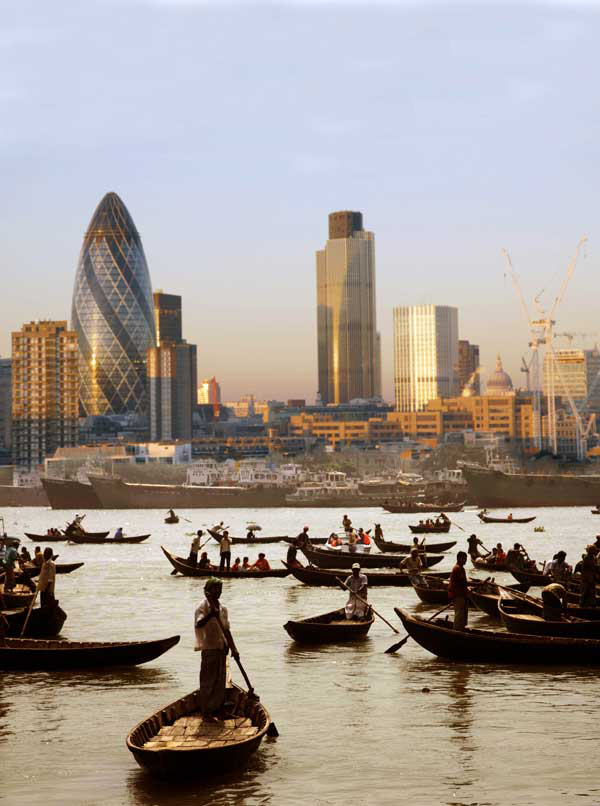
This photomontage combines an image of the skyline of the City of london and rickshaws on a road in Dhaka. It raises questions about the relationship between Bangladesh and the UK – a former colonial power that pillaged the resources of the country.
Today western capitalists profit from the exports the country produces. Tesco, H&M, Primark, Wal-Mart and other mega-corporations depend on the cheap clothing produced in the nation’s factories. Many garment industry workers subsist on poverty wages driven down by Western companies drive to maximise profits — and are forced to work in highly unsafe conditions.
The caretaker ‘Chief Adviser’ of Bangladesh Muhammad Yunus is currently in the UK for top level meetings with Kier Starmer and others. The recovery of laundered money and overseas assets is expected to be high on the agenda. Governor Ahsan H Mansur recently told reporters at the Foreign Service Academy that the chief adviser will raise the issue during the London visit, as part of ongoing efforts to recover stolen funds and assets. According to the government, an estimated $16 billion was “illicitly” transferred abroad annually under the previous administration.
Bangladesh is seeking cooperation from the British government through its high commissioner in Dhaka to trace and recover the exodus of funds allegedly laundered to the UK by individuals associated with the former Sheikh Hasina-led regime.
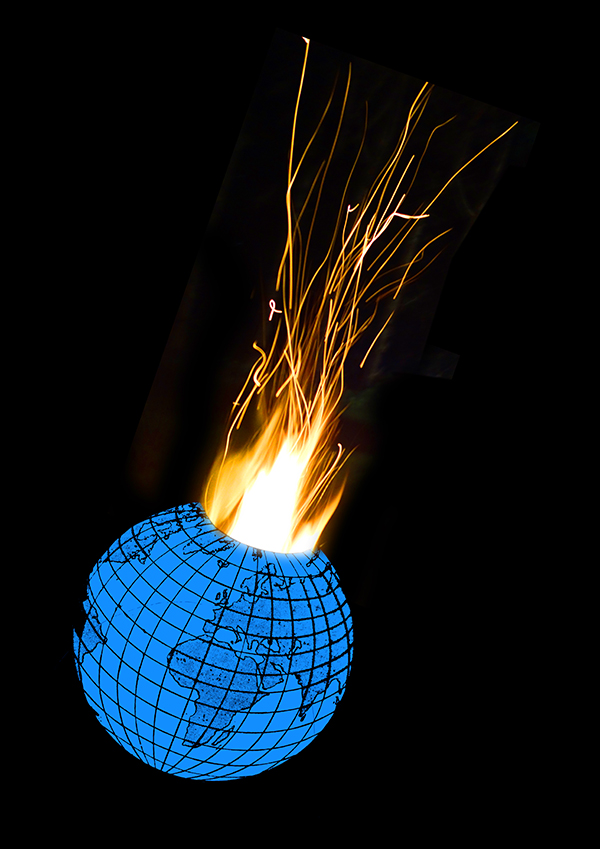
As well as the photomontage raising issues about economic inequality I can’t help thinking of the consequences of climate change – caused mainly by western industrialised nations – on Bangladesh. Climate change threatens the lives of over 19 million children in Bangladesh, according to the United Nations Children’s Fund (Unicef). Twenty of Bangladesh’s 64 districts are exposed to the most hazardous effects of climate change such as cyclones, flash floods and droughts. The report says “The effects of climate change are pushing families in many of the country’s poorest communities over the edge, leaving them unable to keep their children properly housed, fed, healthy and educated.”
Last year the Bangladesh Rehabilitation Assistance Committee (Brac), said in a statement that up to 3 million people remained stranded as fast-moving water inundated vast areas of farmland, destroying livelihoods, homes and crops. It said that many remained without electricity, food or water. Other media reported up to 4.5 million people have been affected in the delta nation of 170 million people.
If you are interested in supporting my latest photography book then click here. Many thanks!