Around Liverpool (113)
Get a free ticket to the launch of my latest photograph book ‘LIVERPOOL’
Around Liverpool (112)

If you are interested in supporting my latest photography book then click here. Many thanks!
Opposing Genocide Is Not Terrorism
If you demonstrate in London against the genocide in Gaza you’re likely to see a huge police sign that says “It is an offence to support a proscribed organisation”. This message is aimed at protesters who hold signs stating: “I oppose Genocide, I support Palestine Action”.
United Nations human rights experts and other human rights groups have strongly condemned the government’s Palestine Action terrorist ban and it’s attack on entirely peaceful protesters. The hundreds of people arrested so far will be denied a right to a trial by jury.
The United Nations Universal Declaration of Human Rights states: “Everyone has the right to freedom of opinion and expression; this right includes freedom to hold opinions without interference and to seek, receive and impart information and ideas through any media and regardless of frontiers.” Clearly this right no longer applies in the UK since the ‘Proscription’ of Palestine Action. This is blatant repression by the British state.

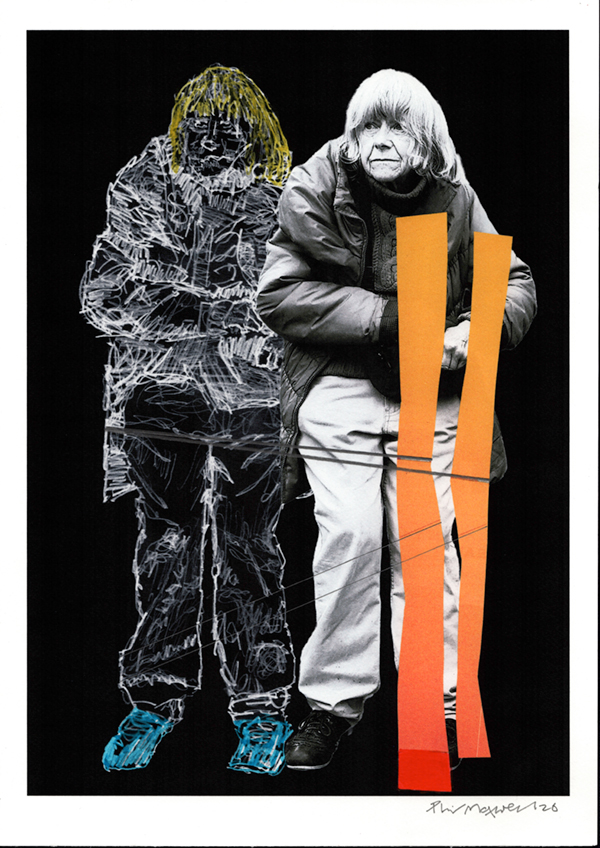
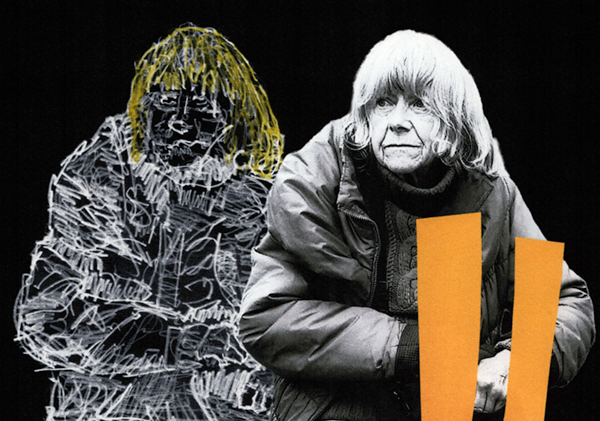
One pensioner, 76 year old Audrey White, was brutally arrested some time ago following a peaceful protest in Liverpool against the apartheid state of Israel. The UK government is on the wrong side of history.
In a letter to her MP Audrey has outlined the situation she now faces:
Dear Kim Johnson MP
Thank you for the support you have provided to date.
I need to advise you on recent developments. I along with 2 co-defendants are now due to appear at Westminster Magistrates Court on 11/11/25. The date and venue of the hearing raises serious concerns for all of us charged with these offences, as you are aware, many of them are pensioners.
A judicial review of the legality of extension of the Prevention of Terrorism Act to include Palestine Action does not take place until 26 November 2025 so a hearing on 11 November 2025 places defendants and their legal representatives at a disadvantage.
The venue is 200 miles from where the incident that led to our arrest took place. This severely curtails the practicalities of being able to bring defence witnesses to any trial. A potential witness for defence has restricted mobility and complex medical needs. They would find travel a difficulty. For them the alternative of a video link is not an option as they do not have access to the appropriate equipment and due to disability would struggle with the technology. This raises concerns regarding disability discrimination and digital exclusion.
A recent article by Craig Murray notes that defendants will not have the right to trial by jury and hearings will be limited to 36 minutes per defendant. This restriction has serious implications as it could set a dangerous precedent that could be applied to industrial action.
It would appear the Government is doing all it can to secure our convictions. The consequence could well be that prisons will acquire a duty of care for a large number of prisoners that have mobility problems and complex medical needs. The prison system is already overcrowded and is ill equipped to discharge such duties.
Our situation raises issues relating to human rights and disability discrimination. As my MP I would be grateful if you raise our situation in Parliament.
Yours sincerely,
Audrey White

I’ve been fortunate enough to know Audrey for a long time. She’s an inspirational campaigner for Socialism, Justice and Peace. When I asked her what she thought about the ‘ceasefire’ she said “Despite the so called ‘ceasefire’ there is a genocide happening in plain site in Gaza and Kier Starmer talks about the occupation of Gaza as being “wrong” and yet the government continues to supply arms and surveillance intelligence to Israel. For Israel a ‘ceasefire’ means ‘you cease, we fire’. The israelis continue to bomb & destroy family homes in Gaza. The truth is, there is no ceasefire; it’s all a big deception.
Action was needed 2 years ago and now the minimum Starmer can do to prevent the extermination of 2.1 million Palestinians in Gaza is to have a complete arms and military embargo on the apartheid state. All diplomatic ties shouls be ended and sanctions introduced immediately.”
The UK government is complicit in the genocide and the arrest of hundreds of people (mainly pensioners) for carrying signs supporting Palestine Action is a sign of desperate measures to suppress free speech. The use of non violent direct action to prevent the production of arms manufactured for use against Palestinians is not terrorism.” It was within this context that Hazuan Hashim and myself made our latest short film ‘Free Free Palestine’ (below). Please share the film to your contacts.
If you are interested in supporting my latest photography book then click here. Many thanks!
George Knibb 1949-2025
Many people in Liverpool will know the name George Knibb. He touched individual lives because he had a dogged determination to make a difference in a world that can be cruel and unforgiving for the working-class. I first met him ten years ago at a meeting of Wavertree Constituency Labour Party at a time when people had joined to support Jeremy Corbyn. I warmed to him immediately because of his precise, colourful and lurid descriptions of those who were trying to sabotage the left. As someone who’d left Liverpool in 1982 I was keen to hear his account of the City’s politics when the Council dared to oppose the vicious policies of Thatcherism. A history lesson from George was littered with sparkling anecdotes that brought everything to life. He was a repository of facts and wisdom unencumbered by personal ego.
George was a generous and thoughtful man. His committment to socialism was not just ideological but personal. During the pandemic he locked himself down to the task of helping others. He drove around the city delivering food parcels for the isolated and vulnerable giving no thought for his personal safety.
In 1987 George was elected to the Council and served for many years. Decades later he had another go as the successful Labour candidate in Norris Green. Unsurprisingly it wasn’t long before he resigned from the Labour group.
In this clip from the film ‘The Anatomy Of A Witch Hunt’ you can see George battling as an independent Councillor against the austerity policies of Liverpool City Council:
Felicity Dowling writes: “George Knibb had many talents and many chapters in his working-class political work. These are some of my memories of George. We all know people who do great work, but not all of them make you smile when you meet up or, as now, when we remember them. Paul Astbury, from the Liverpool 47 surcharged councillors, said, “George had character; he was somebody who could walk into a room and make a difference.”
George was part of the wonderful Croxteth Comprehensive School occupation in 1982. The Liberal council had been closing schools in the poorest areas of the city of Liverpool for some time, but the pupils, parents and community of Croxteth were having none of it! George and his brother Phil were important activists in this unique struggle. The council withdrew funding, so all the resources – from teachers to equipment – had to be fundraised, and, more importantly, solidarity had to be built across the city and the country.
I was teaching in Liverpool and involved in the National Union of Teachers. We were working on a plan to stop the random closures of schools, and to reorganise and improve the state secondary schools in the city. Croxteth was a beacon, not only in Liverpool but nationally.
During the occupation, the children in the school thrived. As a teacher, I admired the work that George did in maintaining the discipline of pupils. Most of the children at the school wanted to be there, and their parents wanted them to be there and to learn – but sometimes kids will be kids. Answering to George must have been far tougher than answering to an ordinary teacher, even when he had his broken leg and was working on crutches. Most of their dads would not have wanted to answer to George!
The school remained under occupation until Labour won control of the city in 1983, and that occupation was part of what explained that victory – very much against the national trend. The school could not be fully funded until it was legally recognised as a school, but the newly elected Labour council in 1983 was in full support of the demand to save Croxteth Comprehensive School.
In 1984, I was elected – on the “no cuts to jobs and services, no rate rises, create 1,000 jobs and build 1,000 houses” manifesto – to Liverpool City Council. I became Chair of Schools, tasked with implementing the plan for state secondary schools developed first by the NUT and then by the District Labour Party. It was a mountain of a task, and George and the Croxteth team were deeply involved.
We sent a team of specialist teachers into Croxteth Comprehensive to assess what help the children of the occupation required to catch up, but found they did not need any catching up. The children coming fresh into Year 7, however, needed a lot of help – showing the damage of years of cuts to education in the city. The newly re-opened school had a great staff and became an excellent school. The community support remained strong.
George came to work in the Central Strategy Unit of the city council. The housing and regeneration strategy work in the Croxteth area was exceptional, and the close community links mattered.
George was part of the crucial team during the intense day-to-day strategy of the fight against the Thatcher government. “Intense” hardly describes it. Day-by-day strategy in challenging both Thatcher and Kinnock mattered, but so did keeping the houses going up, creating jobs, improving the schools, and maintaining the conversation with the working class in Liverpool and beyond. It was always a two-way conversation. George could discuss policies and campaigns with working-class people, see through the bullshit, and bring important points to the discussions. He was part of the liaison with local authority manual workers, who were the bulwark of our support, and he became a respected and trusted intermediary.

When we, as councillors, were disbarred from office for fighting Thatcher, George was one of the “second eleven” councillors who were elected to keep up the struggle for jobs and services. He became involved in another monumental battle – the battle of the Poll Tax. Most of the councillors caved in and the Labour Party turned to the right. The struggle ebbed in Liverpool, but George remained an independent councillor for many years.
We had a long fight to raise the huge surcharge imposed on the Liverpool 47, and George was always with us in that time.
I was one of several councillors expelled from Labour, and had less contact with George after that. He was always a comrade – always ready with a laugh, a joke and a helping hand in any campaign. Thinking of George reminds me that we can fight, we can win, and we can always laugh.”
On 22 May 1986 Tony Benn made a diary entry that mentioned George in connection with the witch hunt against Liverpool Socialists: “At 4.30 in the afternoon, Councillor Harry Smith from Liverpool Council was brought in – a short, round-faced man with curly hair and twinkling eyes – and with him was a sallow-faced man with dark hair who kept whispering in his ear. Smith said, ‘I should introduce the man I have brought with me. His name is George Knibb – of course, that’s only his pen-name.’ Everybody burst out laughing, he was a very amusing man, though deadly earnest in what he said. He was only being charged with membership of the Militant Tendency, not with malpractice. They asked for a deferment and withdrew, and Kinnock moved that we did not let him consult with his solicitor. Blunkett said he thought we should wait. Hattersley moved that we proceed, and that was carried by 12 to 7. When they came back in, Harry Smith protested. ‘What would happen if I walked out? I am very nervous. Ian Lowes has been done in and I’m afraid you are going to do me in too. It’s like two murderers before a court. The judge says, “we’ve hanged one now, we’d better hang the other.” I’m going.’ So he left, but at 5.30 he returned …… At 6.42, by which time he had completely charmed the meeting, we had the final statement. He said, ‘I apologise for leaving when I did. It has been a comradely meeting. I hope you believe me. I hope I have satisfied you, and I would like to thank you for the comradely treatment I have received.’ It was quite clear that, with McCluskie, Kitson, Blunkett and Meacher voting in favour, Kinnock would lose. So Kinnock said, ‘We’ve heard the explanation, a very candid reply. Not being disingenuous, I think we should withdraw the charges to prove that we listened carefully.’ This was the point – he was anxious to let one person off so he could argue that he had been fair. He knew he would lose, and I think he was quite happy to let Smith off to ensure there was no vote. By 9.30 pm we had expelled two more members, and acquitted Harry Smith.”
Clearly George – “the man with dark hair who kept whispering” in the ear of Harry Smith was an effective advocate!
Tony Benn made another interesting diary observation on 8 May 1986: “Kinnock is openly arguing for capitalism, and the rest are accepting that Thatcher has won the argument but her Government might be replaced…. Looking back on it, I must recognise that the Labour Party has never been a socialist party, it has never wanted social transformation, it has always had a right-wing Leader, it has always wanted to pursue these policies, and it is only when circumstances require a change that the pressure comes from underneath for a transformation.”
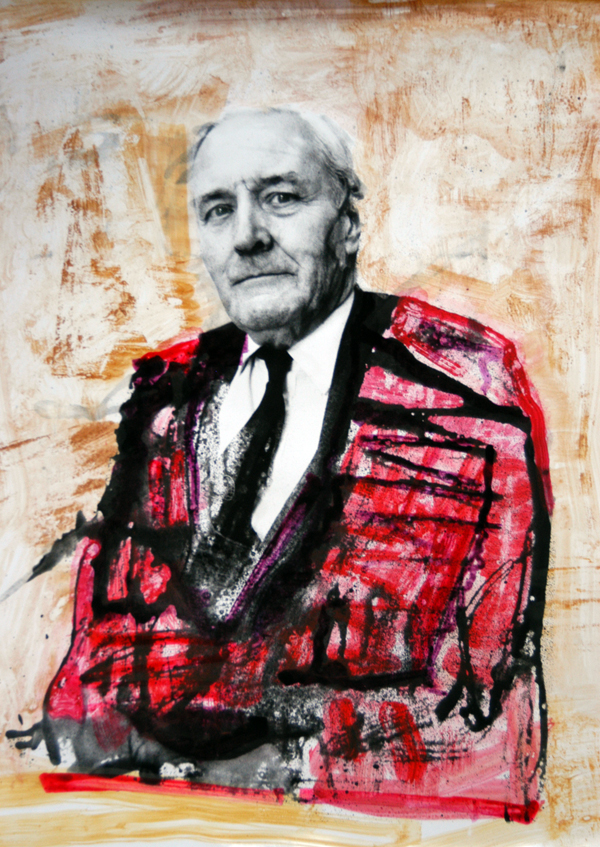
Tony Benn was on the right side of history – and so was George Knibb.
The Role Of British Companies In The Destruction Of West Papua
For nearly 60 years the West Papuan people have suffered under Indonesian settler colonialism. Their resources, freedom and dignity have all been stolen. Over 500,000 civilians have been killed as a direct result of the Indonesian occupation.
I was delighted to be commisioned to provide the photomontage (above) for the front cover of the booklet written by Samira Homerang Saunders and David Whyte, published by the Centre for Climate Crime and Climate Justice.
You can join the Free West Papua Campaign here.