Skip to content

60th Anniversary Of The First Aldermaston March

April 4, 2018

Today is the 60th anniversary of the first anti-nuclear Aldermaston March.

The first atomic bomb was dropped by the USA on the Japanese city of Hiroshima on 6 August 1945. Three days later a second atomic bomb was dropped on Nagasaki; the Second World War was over, but a new Atomic Age had begun.

The fear of nuclear warfare gripped Europe in the 1950s and The Campaign for Nuclear Disarmament (CND) was soon formed at a massive public meeting in London in February 1958. As well as campaigning against any military action that may lead to the use of atomic, chemical or biological weapons, CND favour nuclear disarmament of all countries.

The first Aldermaston March was held shortly after the formation of CND, on 4-7 April 1958. People marched for four days from Trafalgar Square, London to the Atomic Weapons Research Establishment in Berkshire to demonstrate their opposition to nuclear weapons. This march attracted a good deal of attention, and the CND symbol was seen everywhere. From the outset people from all sections of society got involved. After 1958 the marches were held annually from 1959 to 1963 when the International Test Ban Treaty was signed, which partially banned nuclear tests. There were revivals of the march in later years including 1972 and 2004. The Aldermaston Marches, the CND symbol and their slogan ‘Ban the Bomb’ became icons and part of the youth culture of the 1960s.

Recently Theresa May announced an extra £600 million for the Dreadnought submarine programme, part of the government scheme to replace the Trident nuclear weapons system. She announced it as if it were positive news, but it represents more millions that could have been spent on schools, hospitals and building new homes.

Kate Hudson, CND general secretary, said:

“It’s a further example of the lack of transparency on Trident spending, the full costs of which the government never admits to. Our calculations, using government figures in the public domain, show that Trident replacement will cost more than £205 billion over the lifetime of the scheme, yet you will never hear the government admit to these full costs.”

CND meeting at Labour Party Conference. Brighton 1990's

CND meeting at Labour Party Conference. Brighton 1990s.

NHS Not Trident. Publicity shot for the film. Manchester 2017.

NHS Not Trident. Publicity shot for the film Austerity Fight. Manchester 2017.

Liverpool protest (CND). Early 1980's.

Liverpool protest (CND). Early 1980s.

Cut Trident

‘Cut Trident’, TUC March London 2011.

Cruise convoys convey death

Cruise missile convoys convey death. Protesters block Whitechapel Road in East London. Early 1980s.

No to war. Manchester, October 2017.

No to war. Manchester, October 2017.

Anti-nuclear protest, Brighton c.1984

Anti-nuclear protest, Brighton 1984.

Brighton c. 1986

Anti-nuclear protest, Brighton 1984.

Jobs not Trident. NHS London demonstration 2017.

Jobs not Trident. NHS London demonstration 2017.

Anti Nuclear Demonstration,Brighton c.1987

Anti-Nuclear Demonstration, Brighton 1984.

Parents of deceased British Soldiers. London2003

Parents of deceased British Soldiers. anti war protest in Trafalgar Square. London 2003.

'Jobs not bombs', Liverpool 1980s

‘Jobs not bombs’, Liverpool 1980s.

Anti-war badges. St Georges Hall Liverpool 2018.

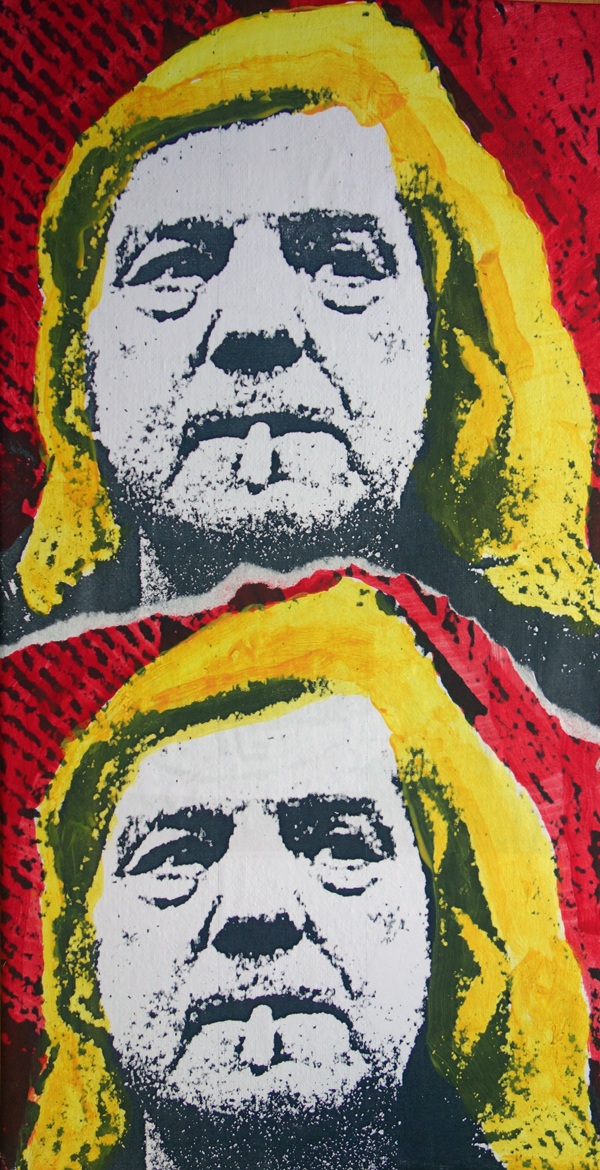
British army veteran Dave Gannon with a defused Donald Trump on the Stop The War & CND stall at Georges Hall Liverpool, March 2018.

You may also be interested in:

The Spirit Of Protest

NHS Protest ‘In The Spirit Of The Suffragettes’

You can support a feature length film I am helping to make about pensioners and their campaigns here: Pensioners United.


Around London In 2008

April 3, 2018
Landlady Sandra Esqulant outside the Golden Heart pub in Spitalfields. London August 2008.

Landlady Sandra Esqulant outside the Golden Heart pub in Spitalfields. London August 2008.

tree

Commercial Road in Stepney. London, August 2008.

mirror

Bank underground station. London, August 2008.

youth glasses

Watney market in Stepney. London, August 2008.

taxi

Crossing the road in Stepney. London, August 2008.

tunnel

Bank underground station. London, August 2008.

clouds

Battersea power station viewed from a train.

chimney

Battersea power station viewed from a train. Bank underground station. London, August 2008.

phone headphones

Commercial Road in Stepney. London, August 2008.

Crossing the road in Stepney. London, August 2008.

Crossing the road in Stepney. London, August 2008.

You may also be interested in:

Around East London In 2008 (6)

Watney Market East London (4)

Art Of The Street

Commercial Street East London – Old & New

Looking Back On Brick Lane (5)

You can support a feature length film I am helping to make about pensioners and their campaigns here: Pensioners United.

St Paul’s Church In Melaka

April 2, 2018

On a recent visit to Malaysia I explored St. Paul’s Church at dawn before the tropical heat kicked in. St. Paul’s Church is a historic church building in Melaka, Malaysia that was originally built in 1521, making it the oldest church building in Malaysia and Southeast Asia. It is located at the summit of St. Paul’s Hill and is today part of the Melaka Museum Complex comprising the A Famosa ruins, the Stadthuys and other historical buildings.

sky

Circular window, St Paul’s Church. Melaka February 2018.

windows

View from where the altar used to be to the entrance of St Paul’s Church. Melaka February 2018.

The original structure was a simple chapel built in 1521 dedicated to the Virgin Mary and known as the Nossa Senhora da Annunciada (Our Lady of the Annunciation). The chapel was built by a Portuguese fidalgo or nobleman, Duarte Coelho, as an act of gratitude following his escape from a storm in the South China Sea.

The chapel was deeded to the Society of Jesus in 1548 by the Bishop of Goa, João Afonso de Albuquerque, with the title deeds received by St. Francis Xavier. The chapel was then further enlarged in 1556 with the addition of a second floor, and a belfry tower was added in 1590. The chapel was then renamed the Igreja de Madre de Deus (Church of the Mother of God).

A burial vault was opened in 1592 and many people were buried there, including Pedro Martins, the second Bishop of Funay, Japan.

tower block

St Paul’s Church. Melaka February 2018.

Tower

St Paul’s Church. Melaka February 2018.

St Paul’s Church. Melaka February 2018.

St Paul’s Church. Melaka February 2018.

Exercise

View of Melaka from St Paul’s Church. Melaka February 2018.

Blue sky

Looking up from the nave of St Paul’s Church. Melaka February 2018.

St Paul’s Church. Melaka February 2018.

n 1548, St. Francis Xavier with the help of fellow Jesuits, Fr. Francisco Peres and Brother Roque de Oliveira, established a school in the premises of the chapel known as St. Paul’s College. This was perhaps the first school in the modern sense to be established on the Malay peninsula.

Xavier used the church as his base for his missionary journeys to China and Japan. In one of those journeys, Xavier fell sick and in 1552 in Shangchuan Island, China he would die.

In 1553, the body of Xavier was disinterred from Shangchuan Island and temporarily buried at the church before it was finally shipped to Goa. An open grave in the church still exists today marking the place of Xavier’s burial.

door

Looking out from the back of St Paul’s Church. Melaka February 2018.

window

Looking out from the back of St Paul’s Church. Melaka February 2018.

floor bricks

Looking out from the back of St Paul’s Church. Melaka February 2018.

coat of arms

Tombstone in St Paul’s Church. Melaka February 2018.

With the conquest of Melaka by the Dutch in 1641, the church was reconsecrated for Dutch Reformed use as St. Paul’s Church also known as the Bovernkerk or High Church. The church remained in use as the main church of the Dutch community until the new Bovenkerk (better known today as Christ Church Melaka) was completed in 1753.

The old church was then subsequently deconsecrated and the structure modified and strengthened as part of the fortifications of Melaka. The nave of the church was then used as a churchyard.

When the British occupied Melaka in 1824, the church was used as a powder magazine and was allowed to deteriorate further.

Skull & cross bones

Tombstones in St Paul’s Church. Melaka February 2018.

1695

Tombstone (detail) in St Paul’s Church. Melaka February 2018.

skull

Skull & crossbones on a tombstone in St Paul’s Church. Melaka February 2018.

carving

Tombstone (detail) in St Paul’s Church. Melaka February 2018.

Tombstone (detail) in St Paul’s Church. Melaka February 2018.

Tombstone (detail) in St Paul’s Church. Melaka February 2018.

Efforts to preserve records of monuments from the past such as the tombstones found in St. Paul’s Church were photographed by the Resident Councillor of Malacca, Robert Norman Bland and published in his 1905 work, Historical Tombstones of Malacca.

In 1924, the old Portuguese burial vault in the chancel of the church was partially uncovered. Further excavation was done in 1930 by the president of the newly formed Malacca Historical Society, Major C. E. Bone. It was in this period that the tombstones that were scattered around in the vicinity of the church were affixed to the walls.

In 1952, a statue of St. Francis Xavier was erected in front of the ruins of the church in commemoration of the 400th anniversary of his sojourn in Melaka. A day after the statue was consecrated, a large casuarina tree fell on it, breaking off its right arm. Incidentally, the right forearm of Xavier was detached in 1614 as a relic.

Tombstone (detail) in St Paul’s Church. Melaka February 2018.

Tombstone (detail) in St Paul’s Church. Melaka February 2018.

Tombstones in St Paul’s Church. Melaka February 2018.

1660

Tombstone (detail) in St Paul’s Church. Melaka February 2018.

sails

Sailing ship carved on a tombstone in St Paul’s Church. Melaka February 2018.

Phil & Haz

Shadows in St Paul’s Church. Melaka February 2018.

trees

St Paul’s Church. Melaka February 2018.

You may also be interested in:

Faces at the Melaka Night Market

Liverpool Anglican Cathedral

Chester Cathedral

Liverpool Metropolitan Cathedral

Nantes Cathedral Of St Peter & St Paul

Cathedral & Capitalism In Crisis

Christchurch Spitalfields From A Rooftop In Hanbury Street

You can support a feature length film I am helping to make about pensioners and their campaigns here: Pensioners United.

On The Bus In Liverpool (11)

April 1, 2018
Bus stop on Picton Road. Liverpool March 2018.

Bus stop on Picton Road. Liverpool March 2018.

bus

Leaving Queen Square. Liverpool March 2018.

sitting

Bus stop on Wavertree Road. Liverpool March 2018.

hood

On the bus in Picton Road. Liverpool March 2018.

On the bus in Picton Road. Liverpool March 2018.

On the bus in Picton Road. Liverpool March 2018.

hood

Bus stop on Picton Road. Liverpool March 2018.Bus stop on Picton Road. Liverpool March 2018.

Bus stop on Picton Road. Liverpool March 2018.

glasses

Bus stop on Picton Road. Liverpool March 2018.

pub

View from the top of the bus on Picton Road. Liverpool March 2018.

You may also be interested in:

On The Bus In Liverpool (6)

On Top Of The Bus In East London

Yesterday In Liverpool (6)

You can support a feature length film I am helping to make about pensioners and their campaigns here: Pensioners United.

Around Liverpool 2017 (3)

March 31, 2018
conversation

Pub on Wavertree High Street. Liverpool, December 2017.

tree

Twilight in Wavertree Park. Liverpool, December 2017.

Wavertree High Street. Liverpool, December 2017.

georgian

Night on Sandown Lane. Liverpool, December 2017.

shopping

Supermarket. Liverpool, December 2017.

winter

Naked tree in Wavertree Park. Liverpool, December 2017.

Waiting to cross the road on Wavertree High Street. Liverpool, December 2017.

trees

Fading light in Wavertree Park. Liverpool, December 2017.

Turning the corner on Wavertree High Street. Liverpool, December 2017.

Trees and a pond in Wavertree Park. Liverpool, December 2017.

You may also be interested in:

Around Liverpool In 2017 (2)

Liverpool March 2017 (2)

Mystery Frost

You can support a feature length film I am helping to make about pensioners and their campaigns here: Pensioners United.