Skip to content

Streets Of Spitalfields 2010

September 7, 2017
Fashion Street. Spitalfields East London 2010.

Fashion Street. Spitalfields East London 2010.

Bus Stop. Commercial Street. Spitalfields East London 2010.

Bus Stop. Commercial Street. Spitalfields East London 2010.

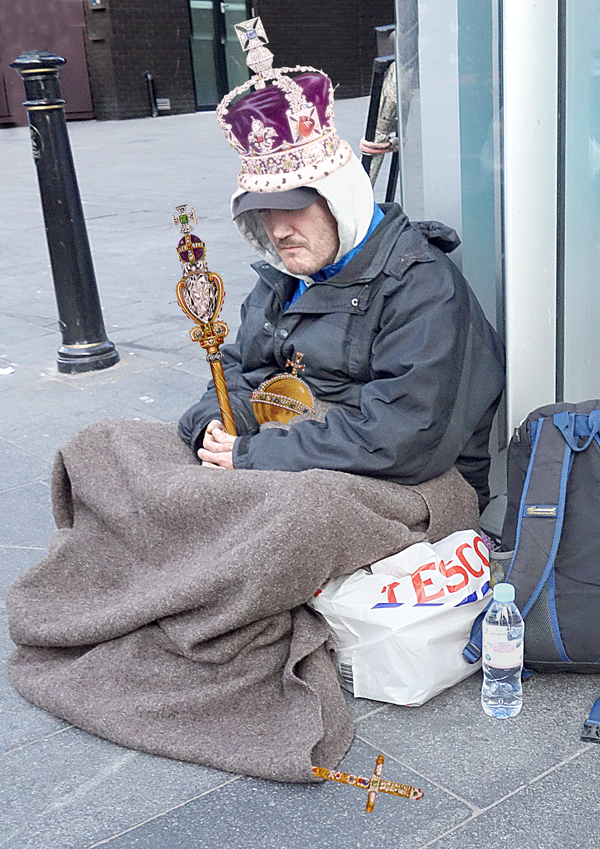
Homeless. Commercial Street. Spitalfields East London 2010.

Homeless. Commercial Street. Spitalfields East London 2010.

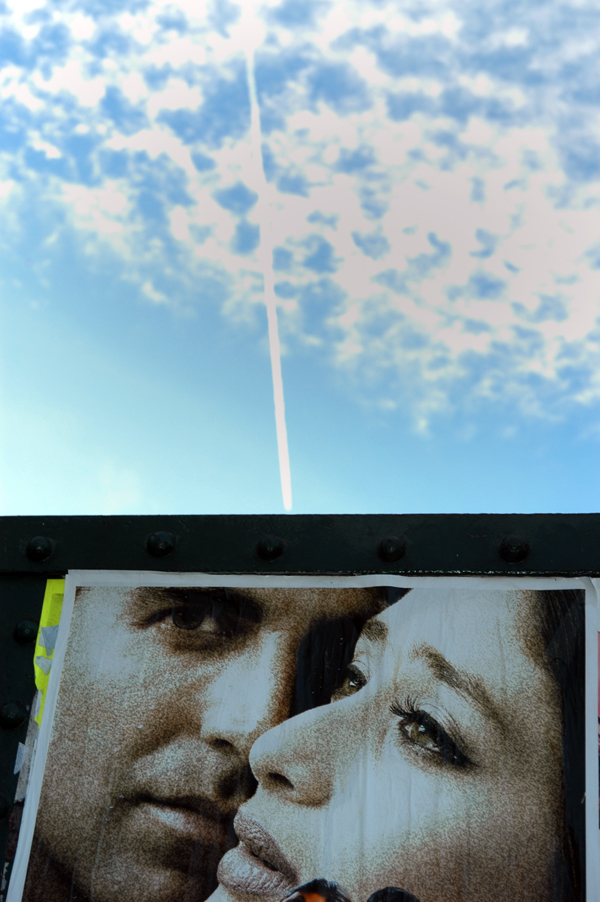
Poster. Commercial Street. Spitalfields East London 2010.

Poster. Commercial Street. Spitalfields East London 2010.

Listening with headphones. Commercial Street. Spitalfields East London 2010.

Listening with headphones. Commercial Street. Spitalfields East London 2010.

Buxton Street. Spitalfields East London 2010.

Buxton Street. Spitalfields East London 2010.

Quaker Street. Spitalfields East London 2010.

Quaker Street. Spitalfields East London 2010.

Smudge gallery. Commercial Street. Spitalfields East London 2010.

Smudge gallery. Commercial Street. Spitalfields East London 2010.

Fournier Street. Spitalfields East London 2010.

Fournier Street. Spitalfields East London 2010.

Tourists at the junction of Fournier Street & Brick Lane. Spitalfields East London 2010.

Tourists at the junction of Fournier Street & Brick Lane. Spitalfields East London 2010.

Get your FREE ticket for the Liverpool premiere of a feature length film I helped to make here: Austerity Fight


Albert Dock Liverpool

September 6, 2017

The Albert Dock is a complex of dock buildings and warehouses in Liverpool. Designed by Jesse Hartley and Philip Hardwick, it was opened in 1846, and was the first structure in Britain to be built from cast iron, brick and stone, with no structural wood. As a result, it was the first non-combustible warehouse system in the world.

At the time of its construction the Albert Dock was considered a revolutionary docking system because ships were loaded and unloaded directly from/to the warehouses. Two years after it opened it was modified to feature the world’s first hydraulic cranes. Due to its open yet secure design, the Albert Dock became a popular store for valuable cargoes such as brandy, cotton, tea, silk, tobacco, ivory and sugar. However, despite the Albert Dock’s advanced design, the rapid development of shipping technology meant that within 50 years, larger, more open docks were required, although it remained a valuable store for cargo.

During the Second World War, the Albert Dock was requisitioned by the Admiralty serving as a base for boats of the British Atlantic Fleet. The complex was damaged during air raids on Liverpool, notably during the May Blitz of 1941. In the aftermath of the war, the financial problems of the owners and the general decline of docking in the city meant that the future of the Albert Dock was uncertain. Numerous plans were developed for the re-use of the buildings but none came to fruition and in 1972 the dock was finally closed. Having lain derelict for nearly ten years, the redevelopment of the dock began in 1981, when the Merseyside Development Corporation was set up, with the Albert Dock being officially re-opened in 1984.

Today the Albert Dock is a major tourist attraction in the city and the most visited multi-use attraction in the United Kingdom, outside London. It is a vital component of Liverpool’s UNESCO designated World Heritage Maritime Mercantile City and the docking complex and warehouses also comprise the largest single collection of Grade I listed buildings anywhere in the UK.

Albert Dock. Liverpool 2005.

Albert Dock. Liverpool 2005.

Reflections. Albert Dock. Liverpool 2005.

Reflections. Albert Dock. Liverpool 2005.

Chains. Albert Dock. Liverpool 2005.

Chains. Albert Dock. Liverpool 2005.

Column & arch. Albert Dock. Liverpool 2005.

Column & arch. Albert Dock. Liverpool 2005.

Albert Dock. Liverpool 2005.

Albert Dock. Liverpool 2005.

Mast. Albert Dock. Liverpool 2005.

Mast. Albert Dock. Liverpool 2005.

Bottle. Albert Dock. Liverpool 2005.

Bottle. Albert Dock. Liverpool 2005.

Albert Dock. Liverpool 2005.

Albert Dock. Liverpool 2005.

Chain & mast. Albert Dock. Liverpool 2005.

Chain & mast. Albert Dock. Liverpool 2005.

Metal wall. Albert Dock. Liverpool 2005.

Metal wall. Albert Dock. Liverpool 2005.

Albert Dock. Liverpool 2005.

Albert Dock. Liverpool 2005.

Get your FREE ticket for the Liverpool premiere of a feature length film I helped to make here: Austerity Fight

Historic McDonald’s Strike

September 5, 2017

Yesterday McDonald’s UK workers went on strike for the first time in UK history, over the company’s failure to offer them acceptable working conditions, job security or even an affordable living wage.  In July, the Bakers’, Food and Allied Workers Union (BFAWU) notified McDonald’s that workers at 2 stores were to be balloted, with a view to authorise a strike later this year.

Results  showed that 95.7 percent of McDonald’s workers that have been balloted voted in favour of the strike at the ballot, paving way for them to voice their concerns about McDonald’s not dealing with their grievances, and failing to end the use of zero-hour contracts – something that was promised to workers earlier this year.
Workers have found themselves living on low wages – with no guarantee of hours. This has been viewed by some as punishment for joining a union, and has seen employees struggle to meet their rent payments – whilst some have even lost their homes. Now, workers feel as if they have no alternative but to take action – all in line with their basic workplace rights and company procedures.

Despite McDonald’s being one of the UK’s largest, most profitable, and globally recognised employers, its employees are subjected to difficult, yet avoidable working conditions – working on insecure zero-hour contracts for low-wages.
This historic strike forms part of a growing global workers movement for fairness. In the USA, McDonald’s have come under significant pressure as part of the “Fight for $15” campaign – supported by the Service Employee’s International Union (SEIU). As a result of this campaign, more than 10 million workers in the U.S. are on a path to $15 an hour, and 20 million workers total have won wage increases since 2012.

These photographs were taken at a protest outside McDonald’s in Lord Street Liverpool.

Labour Party banner outside McDonald's. Liverpool 2017.

Labour Party banner outside McDonald’s. Liverpool 2017.

outside McDonald's. Liverpool 2017.

Marie Harrison, Secretary of the Merseyside Pensioners Association, outside McDonald’s. Liverpool 2017.

Unite members outside McDonald's. Liverpool 2017.

Unite members outside McDonald’s. Liverpool 2017.

Writer Alan Gibbons outside McDonald's. Liverpool 2017.

Writer Alan Gibbons outside McDonald’s. Liverpool 2017.

Members of the Merseyside Pensioners Association, outside McDonald's. Liverpool 2017.

Members of the Merseyside Pensioners Association, outside McDonald’s. Liverpool 2017.

Protesters outside McDonald's. Liverpool 2017.

Protesters outside McDonald’s. Liverpool 2017.

Members of the Merseyside Pensioners Association, outside McDonald's. Liverpool 2017.

Members of the Merseyside Pensioners Association, outside McDonald’s. Liverpool 2017.

Tony Mulhearn of the Merseyside Pensioners Association, outside McDonald's. Liverpool 2017.

Tony Mulhearn of the Merseyside Pensioners Association, outside McDonald’s. Liverpool 2017.

Terry Harrison of the Merseyside Pensioners Association, outside McDonald's. Liverpool 2017.

Terry Harrison of the Merseyside Pensioners Association, outside McDonald’s. Liverpool 2017.

Get your FREE ticket for the Liverpool premiere of a feature length film I helped to make here: Austerity Fight


The Vines Pub Liverpool

September 4, 2017

Albert B. Vines opened the Vines pub on Lime Street in 1867. In 1907, Walkers took over and rebuilt it in an exuberant baroque style. The architect was a very interesting character; Walter Thomas. He also designed the Philharmonic pub in Hope Street. He also designed the Coffee House in Wavertree. Alderman Berkley Walker took this place over in 1907. Walker was the man who gave Liverpool the famous art gallery in 1877. The Vines itself is one of the only pubs in the British Isles that can boast its own art collection. I noticed recently that one of the beautiful windows of the Vines was cracked. These photographs were taken in 2005 before the damage.

The Vines pub. Lime street Liverpool 2005.

The Vines pub. Lime street Liverpool 2005.

The Vines pub sign. Lime street Liverpool 2005.

The Vines pub sign. Lime street Liverpool 2005.

The Vines pub. Lime street Liverpool 2005.

The Vines pub. Lime street Liverpool 2005.

Decorated glass window. The Vines pub. Lime street Liverpool 2005.

Decorated glass window. The Vines pub. Lime street Liverpool 2005.

Decorated glass window. The Vines pub. Lime street Liverpool 2005.

Decorated glass window. The Vines pub. Lime street Liverpool 2005.

Decorated glass window. The Vines pub. Lime street Liverpool 2005.

Decorated glass window. The Vines pub. Lime street Liverpool 2005.

Decorated glass window. The Vines pub. Lime street Liverpool 2005.

Decorated glass window. The Vines pub. Lime street Liverpool 2005.

Decorated glass window. The Vines pub. Lime street Liverpool 2005.

Decorated glass window. The Vines pub. Lime street Liverpool 2005.

Decorated glass window. The Vines pub. Lime street Liverpool 2005.

Decorated glass window. The Vines pub. Lime street Liverpool 2005.

Get your FREE ticket for the Liverpool premiere of a feature length film I helped to make here: Austerity Fight


Roman Road East London

September 3, 2017
On the phone. Roman Road. East London 2010.

On the phone. Roman Road. East London 2010.

Woman wearing sun glasses. Roman Road. East London 2010.

Woman wearing sun glasses. Roman Road. East London 2010.

Woman crossing the road. Roman Road. East London 2010.

Woman crossing the road. Roman Road. East London 2010.

The market. Roman Road. East London 2010.

The market. Roman Road. East London 2010.

Woman with a shopping trolley. Roman Road. East London 2010.

Woman with a shopping trolley. Roman Road. East London 2010.

Passing the shoe shop. Roman Road. East London 2010.

Passing the shoe shop. Roman Road. East London 2010.

Woman with a shopping trolley. Roman Road. East

Woman with a shopping trolley. Roman Road. East

Shops and market. Roman Road. East London 2010.

Shops and market. Roman Road. East London 2010.

Looking in a shop window. Roman Road. East London 2010.

Looking in a shop window. Roman Road. East London 2010.

Woman with a shopping trolley. Roman Road. East London 2010.

Woman with a shopping trolley. Roman Road. East London 2010.

Get your FREE ticket for the Liverpool premiere of a feature length film I helped to make here: Austerity Fight