Sclater Street: Film & Digital
I stopped using film and went ‘digital’ in 2002. I was a late convert to the new format but I have no regrets about using the new technology. I still love exploring my film archive and discovering photographs I haven’t seen in years. Most of my negatives are now housed at the Bishopsgate Institute in London in the safe hands of archivist Stefan Dickers. There are many images that are still waiting to be digitised and I keep ‘discovering’ new images. Here are a few of Sclater Street (just off Brick Lane) in East London; I’ve mixed them with some more recent digital images.

Sclater Street c.1986

Sclater Street 2012

Sclater Street c.1985

Sclater Street 2002

Sclater Street c.1985

Sclater Street 2015

Sclater Street c.1990

Sclater Street Market 2012

Sclater Street c.1990

Sclater Street 2014
East London & Liverpool
Picton Road in Liverpool is the main Road in Wavertree, a few yards from where I now live. In some ways it reminds me of Bethnal Green Road in East London. So here are some photographs from both places.

Picton Road 2016

Bethnal Green Road 2004

Picton Road 2016

Bethnal Green Road 2002

Picton Road 2016

Bethnal Green Road 2015

Picton Road 2016

Bethnal Green Road 2013

Picton Road 2016

Bethnal Green Road 2002
A Compact Camera in 1980
In 1980 I bought my first compact camera. It was an Olympus XA2. I bought it because I thought it would be a useful tool for street photography. Small, discreet and with an excellent lens it was ideal for unobtrusive photography. Before then I used a SLR (single lens reflex camera) which was much larger. Today I fluctuate between using a Digital SLR and a compact camera depending on what I am shooting. Mostly for street photography I use a high end digital compact. This gives incredible results, is flexible and can be set manually. In 1980 the Olympus compact produced excellent results. Below are some of the photographs taken with the first roll of HP5 film I wound into the camera.

Bootle, Liverpool 1980

Bootle, Liverpool 1980

Bootle, Liverpool 1980

Bootle, Liverpool 1980

Bootle, Liverpool 1980
The following Photographs were taken using HP5 film and a SLR camera.

Liverpool Cathedral c.1978

Distant view of the Anglican Cathedral. Liverpool late 1970’s

Distant view of the Anglican Cathedral. Liverpool late 1970’s

Boy riding his bicycle off Princess Avenue. Liverpool 1980
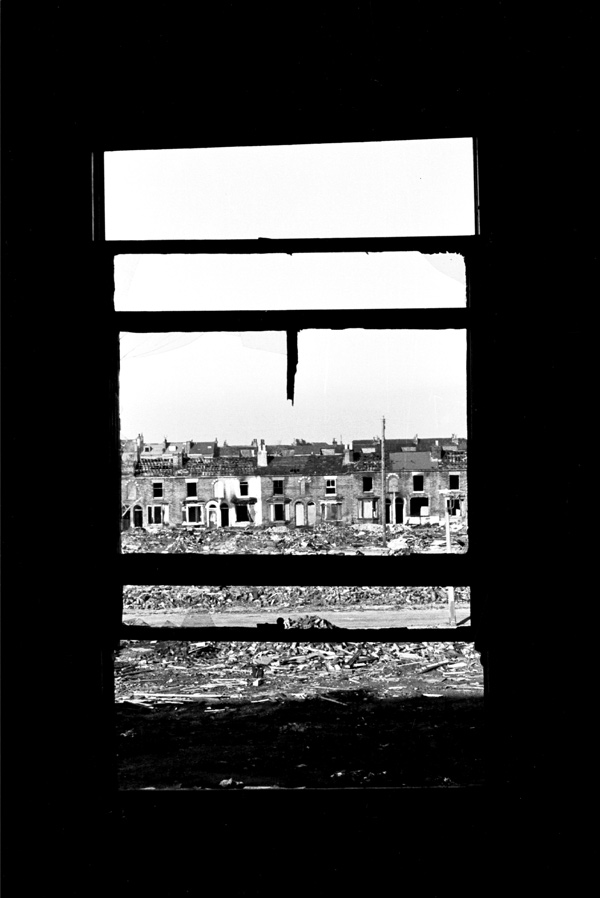
An empty Toxteth street, Liverpool 1981
Climate Change & Bangladesh
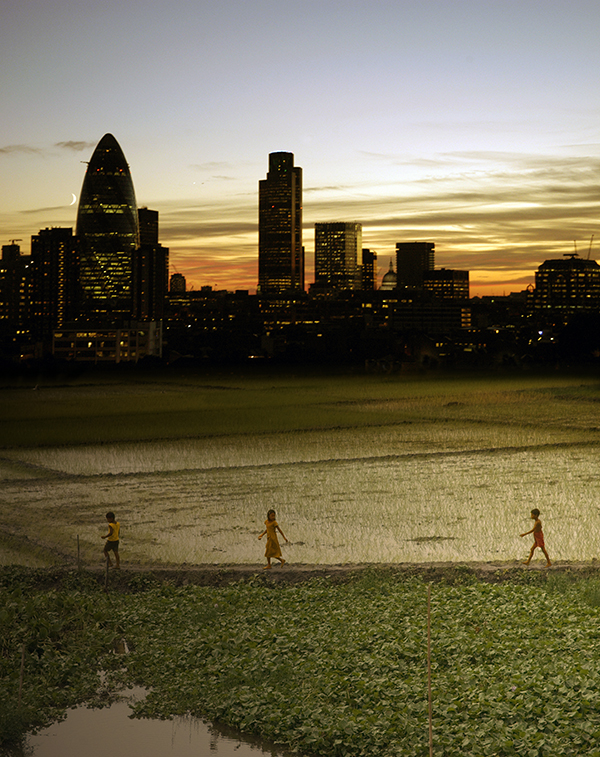
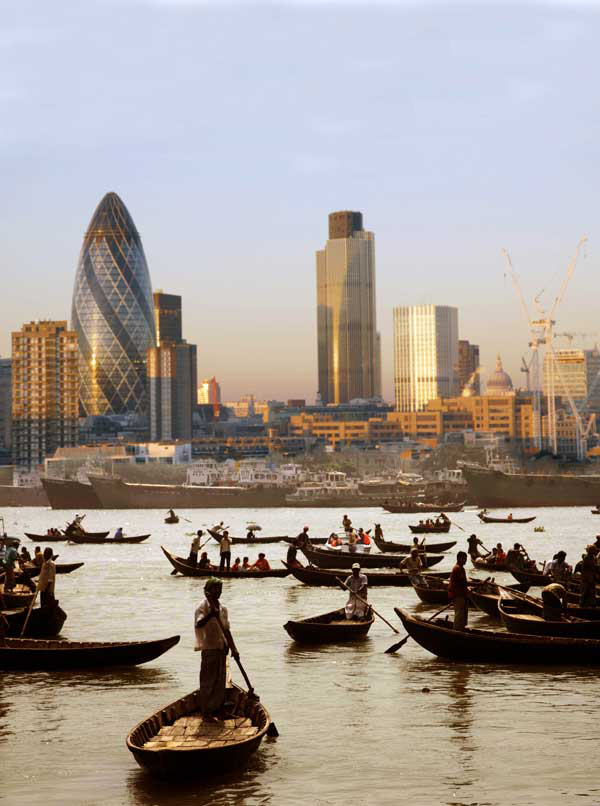
Bangladesh, with its low elevation and severe tropical storms, is among the countries most vulnerable to the effects of climate change, though it has contributed little to the emissions that are driving it.
Global sea levels could rise more than three feet by 2100. Higher seas and warmer weather will cause profound change. Climate scientists have concluded that widespread burning of fossil fuels is releasing heat-trapping gases that are warming the planet. While this will produce a host of effects, the most worrisome may be the melting of much of the earth’s ice, which is likely to raise sea levels and flood coastal regions. Island nations like the Maldives, Kiribati and Fiji may lose much of their land area, and millions of Bangladeshis will be displaced.
Bangladesh produces only 0.3 percent of the emissions driving climate change. Some developing countries have demanded that rich countries compensate poor countries for polluting the atmosphere. A few have even said that developed countries should open their borders to climate migrants. “It’s a matter of global justice,” said Atiq Rahman, executive director of the Bangladesh Center for Advanced Studies and the nation’s leading climate scientist. “These migrants should have the right to move to the countries from which all these greenhouse gases are coming. Millions should be able to go to the United States.”Bangladesh has done much to protect its population by creating an early-warning system and building at least 2,500 concrete storm shelters. The result has been a vast reduction in storm-related deaths. While Cyclone Bhola in 1970 killed as many as 550,000 people, Cyclone Aila in 2009 killed 300. The deadliest part of the storm was the nearly 10-foot wall of water that roared through villages in the middle of the afternoon.

Dhaka, Bangladesh 1995

Dhaka Bangladesh 1994

Bangladesh 1994

Rickshaw,Bangladesh 1994

Bangladesh 1994

Rural Bangladesh 1994

Bangladesh 2008

Rural Bangladesh 1992

Bangladesh 1994
Dhaka Bangladesh 1994

Dhaka Bangladesh c.1992

Dhaka Bangladesh c.1994

Bangladesh 2008

Rural Bangladesh 1994
Bangladesh 2008

Sylhet Bangladesh c.1992

Bangladesh 2008

Dhaka Bangladesh c.1992

Bangladesh 2008

Bangladesh c.1992

Bangladesh c.1992

Dhaka, Bangladesh 1996

Dhaka Bangladesh 2009
Images Of Bangladesh
My interest in Bangladesh began because a lot of my friends in East London were born there. I first visited in 1991 with my friend Alla Uddin. My archive of photographs of Bangladesh cover a number of visits over two decades.

Dhaka, Bangladesh 2008

Transporting food on the river in Bangladesh, 1991

Dhaka, Bangladesh c.1996

Boy on a train, 1992

Children on a landfill site in Dhaka, Bangladesh 2008

Boat on a river it twilight. Bangladesh 1996

Taking a nap, Sylhet Bangladesh 1992

Two bikes in Dhaka, Bangladesh 1991

Man on bicycle, Dhaka Bangladesh 2010

Sylhet Bangladesh c.1992

Pupils in a boat taking them from School back to their village. Sylhet, Bangladesh 1991

Tree on a flood plain outside Dhaka. Bangladesh 1996

Boy steering a boat. Bangladesh 1996