Market Trader
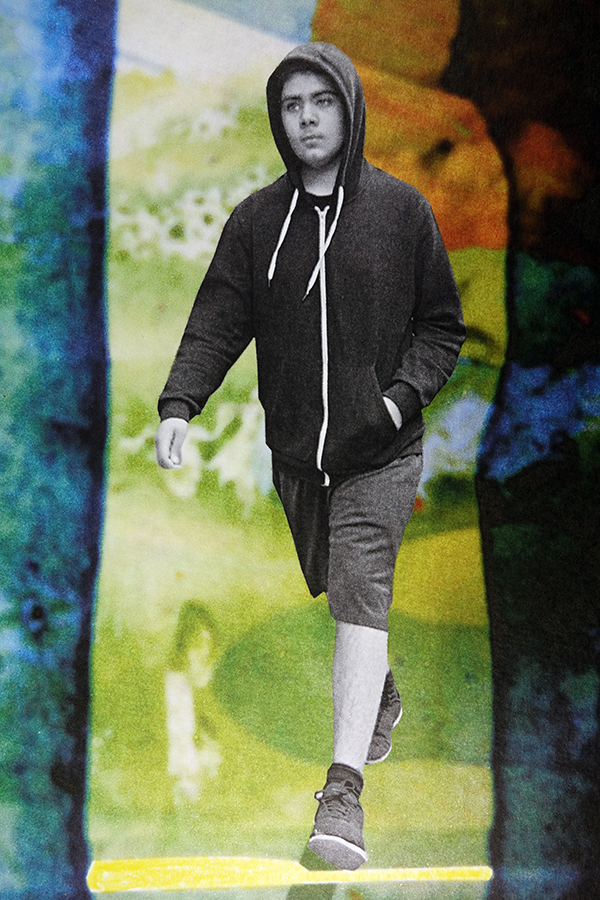
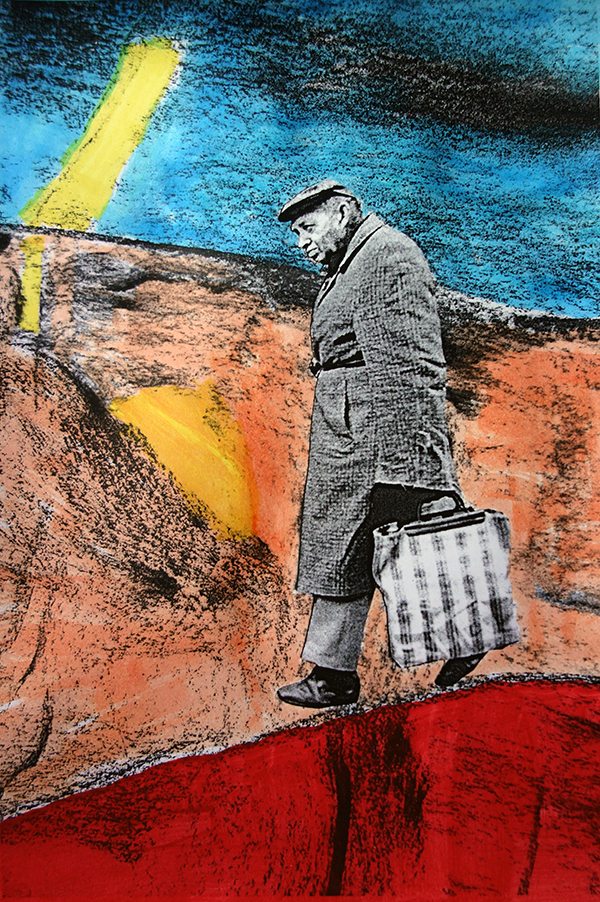
The subject of this piece is a market trader I photographed early in the morning on Vallance Road in East London around 12 years ago. The collage beneath his feet represents the urban environment in Whitechapel with a solitary tree as the sole representative of the natural world as he heads towards whitechapel market with his heavy load to extract a living during a long day.

To book a free studio and gallery visit to see Phil Maxwell’s work leave your contact details on the comment section below and we will be in touch.
Around East London (21)


On Picton Road
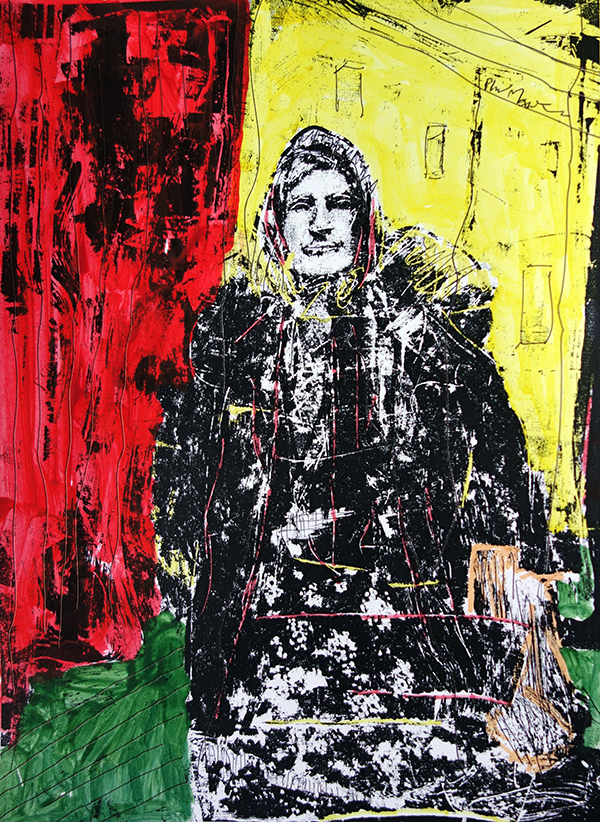
This piece ‘Woman with a trolley bag on Picton Road’ – is derived from two photographs. One taken at night on Picton Road and the other during the day on London road (both in Liverpool).

To book a free studio and gallery visit to see Phil Maxwell’s work leave your contact details on the comment section below and we will be in touch.
World Streets (29)




On The Move In Barcelona
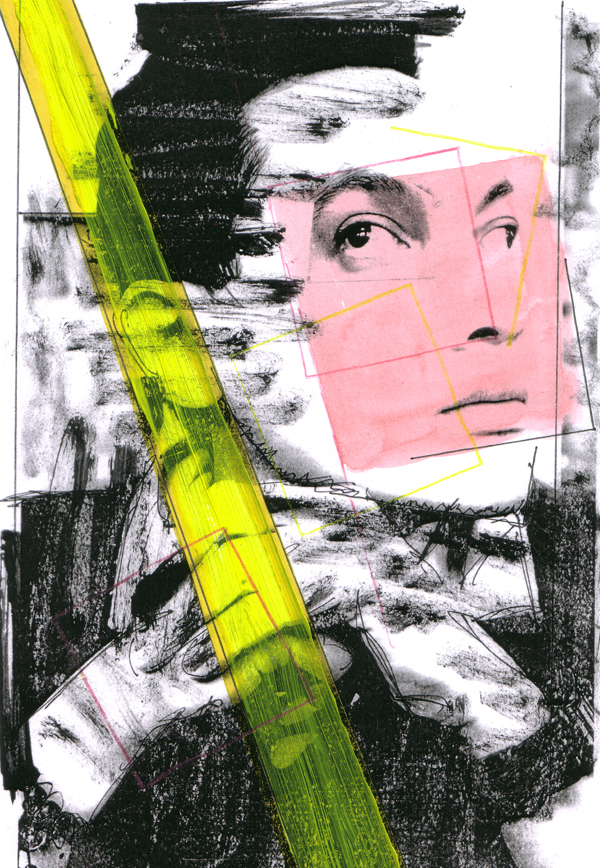
‘On the move in Barcelona’ combines three images of a woman pushing a trolley outside a building in Barcelona. She’s could be a hotel worker who’s using her brief journey to catch up with family or friends. I was impressed with her ability to have a conversation that probably took her miles away from the her hard regular duties in the work place.
Having worked in the past as a labourer, gardener and super market worker I remember the times when my mind would just drift off – particularly when I was doing boring and repetitive work on my own. This is why I’ve created a dreamscape for the woman to walk through with her double – signifying that she’d most likely made the same journey many times before but each time with a different perception.