Images of Poverty
We are so used to images of poverty from developing countries that their impact is diminished. We are told there is an inevitability about poverty. This is not to say that the mainstream media is overflowing with poor people, on the contrary it is overflowing with celebrity. Nevertheless the physical conditions of the majority of humanity is not addressed by the media enough, creating a kind of consumerist media bubble for the richer nations with millions of consumers. The images of poverty that we do see are devalued because they come with an editorial baggage suggesting hopelessness because of state corruption, environmental disasters or other misfortunes; everyone is a helpless victim. There is little analysis of the foreign policy of richer nations and the role of multinationals and their impact on the majority world. Niether is their consideration for movements based on solidarity and a fight for justice.
The photograph below illustrates life for some young children in Bangladesh. They survive with a small income by selling on recyclable objects.

Children on a landfill sight where they search for recyclable materials. Dhaka, Bangladesh 2008
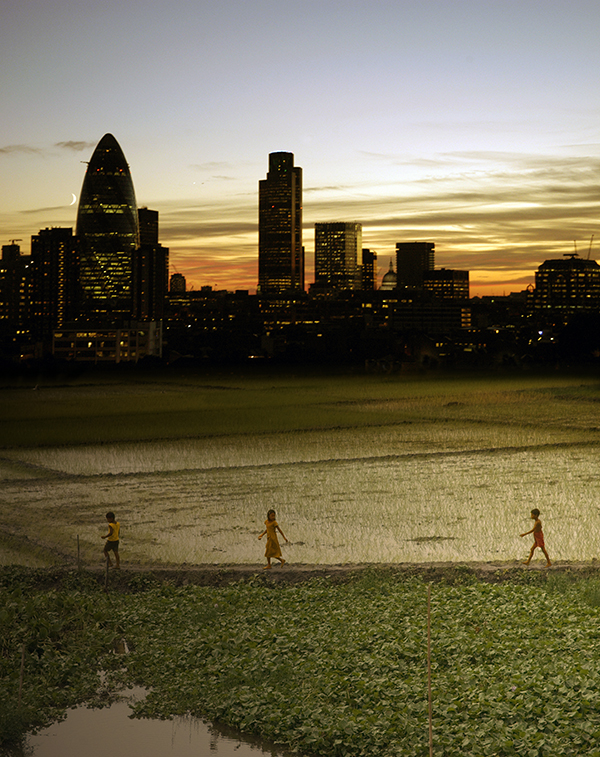
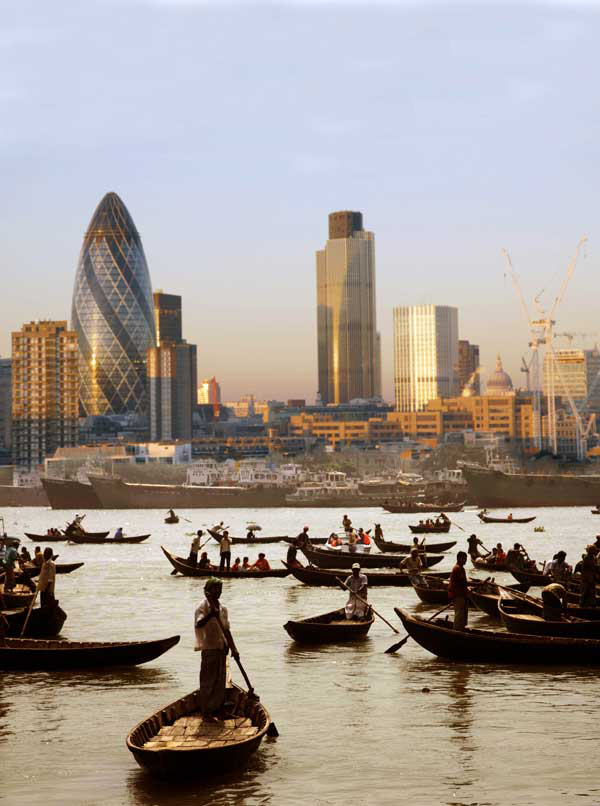
How do you connect a photograph like the one above with the lives of people in the richer world? The photomontage below attempts to close the circle by placing the child’s environment in the city of London thus raising a host of issues relating to the cause of poverty in countries like Bangladesh.

A child on a landfill site. Photomontage 2008
At its simplest the photomontage above attempts to explode the myths that poverty (such as that seen above) is inevitable and unconnected with policies in richer countries. It is designed to get people talking and challenging stereotypes about the causes of poverty.
We Are Leaving London
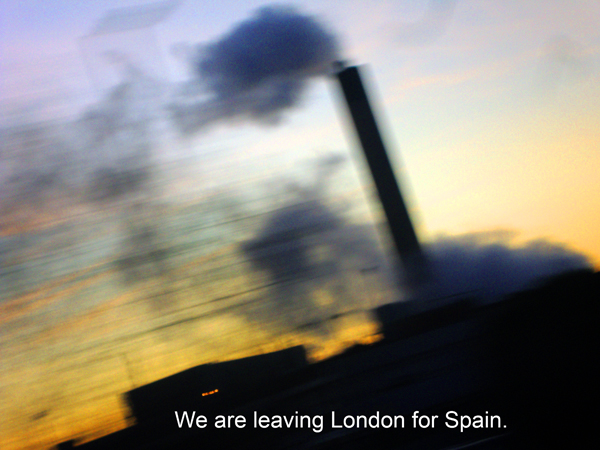
Stanstead Express from Liverpool Street, London January 6 2012
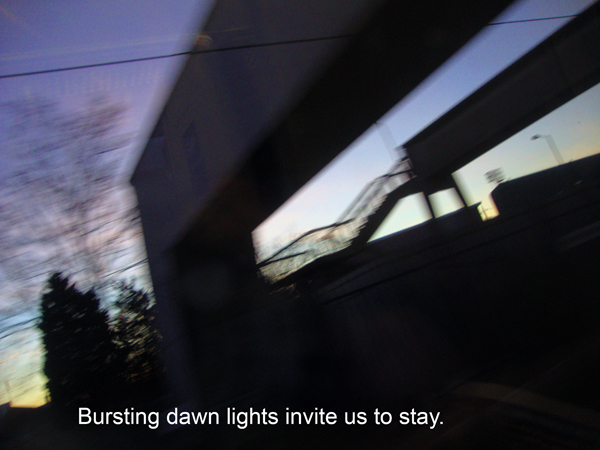
Stanstead Express from Liverpool Street, London January 6 2012

Stanstead Express from Liverpool Street, London January 6 2012

Stanstead Express from Liverpool Street, London January 6 2012

Stanstead Express from Liverpool Street, London January 6 2012

Stanstead Express from Liverpool Street, London January 6 2012

Hazuan in Palma de Mallorca, January 7 2012
Ladies of Character and Fortitude

Woman in Cheshire Street. Spitalfields, London 1987
All of these photographs were taken close to where I live. Today it seems that ladies like these are a rarity. A great shame.

Two ladies outside Davenant House, Old Montague Street, London 1984
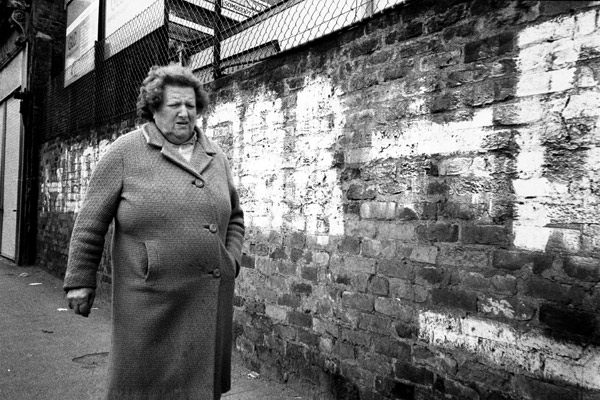
Vallance Road. London 1987
Housing Crisis

Stepney Housing with a message. Stepney, London 1981
According to official figures the number of households in Tower Hamlets is projected to increase from 78,700 in 2001 by 70 per cent to 133,600 in 2021. There is a severe housing crisis in East London. For decades house prices have increased whilst the availability of social housing has diminished. This situation has been exacerbated by the pressure of growth from the city of London in the West and Canary Wharf in the East.

Looking towards the City from Spitalfields market. London 1983

View from Whitechapel to the City. London 1989
The skyline has changed rapidly over recent decades illustrating graphically the pressure of developments which in turn have increased both land and property prices.

The City seen from Whitechapel. London 2007

Canary Wharf viewed from Poplar. London 1989

Canary Wharf viewed from Whitechapel. London 2007
Much of the social housing which had fallen into disrepair was never replaced and whole swathes of Council housing were sold off during the last 30 years to boost poor Council finances.

Derelict and empty Council Housing in Poplar. London 1983
Despite numerous campaigns over the years there is still a severe shortage of housing for people on low and middle incomes.

Demonstration against housing privatisation. Bethnal Green, London 1988
This phenomenan has been a characteristic of housing since expensive Docklands developments appeared in the 1980’s which were out of the financial reach of the majority of residents many of whom lived, as today, in overcrowded conditions.

New expensive homes built on former Council land 1985
Food for Thought
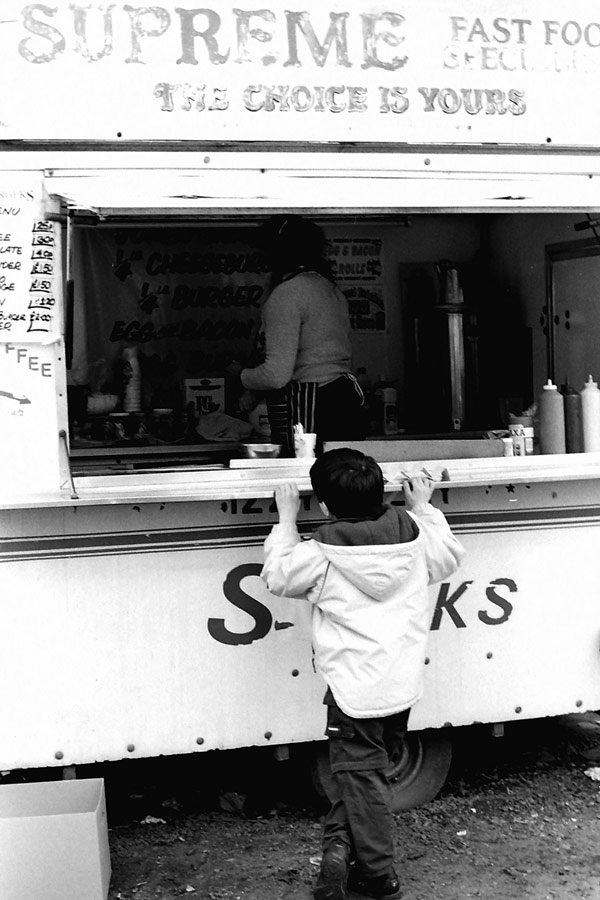
Snack bar. Sunday market off Brick Lane. London 1986

Cafe 2010. Paris, France
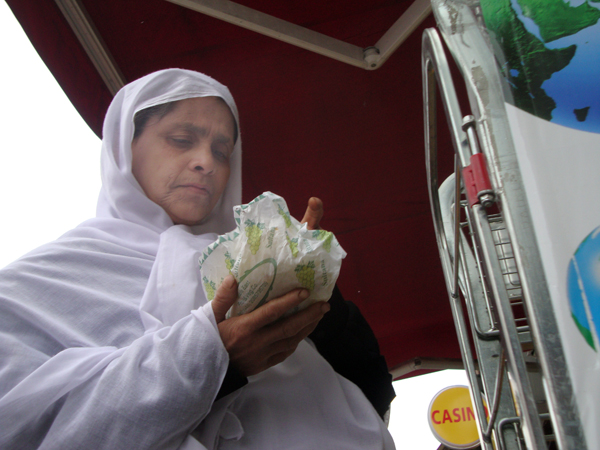
Whitechapel Road. Woman with food in her hand. London 2010
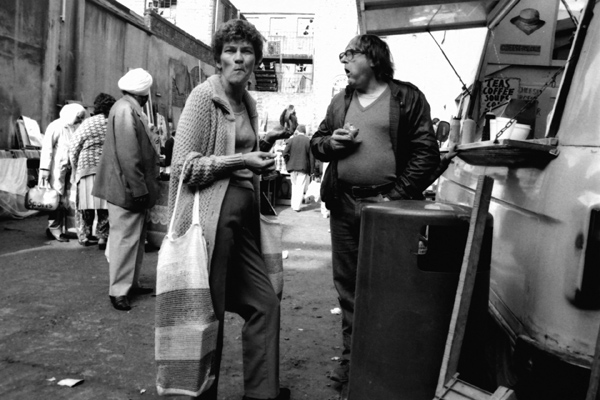
Sunday market, Cheshire Street. Spitalfields 1988

Cafe. Paris, France 2010

Snack bar. Sunday market off Brick Lane. London 1986