Exchange Square
Built in the early 1990’s as part of the redevelopment of Liverpool Street Station Exchange Square has always felt to me like a space designed to pay homage to Capitalism. The tablet of stone (below) once touched by bankers, gives them unrivalled powers to rob money from the rest of us. The curvaceous sculptural steel architecture hints at a menacing alien spaceship which has brought privileged knowledge about quantitative easing and Armageddon Hedge Funds. Possibly I was left with these feelings after a security guard told me I needed ‘written permission’ to take photographs on the square as it was private property.

Exchange Square. City of London, 1993

Exchange Square. City of London, 1993

View from Exchange Square. City of London, 1993
Michael Nyman Says It With His Hands
In 2008 Michael Nyman, composer & filmmaker, took part in a Q&A chaired by the East End Film Festival Director Alison Poltock. I was struck by his animated hands; surely the hands of a conductor?

Michael Nyman engaging with an audience at the 2008 East End Film Festival

Michael Nyman engaging with an audience at the 2008 East End Film Festival

Michael Nyman engaging with an audience at the 2008 East End Film Festival

Michael Nyman engaging with an audience at the 2008 East End Film Festival

Michael Nyman engaging with an audience at the 2008 East End Film Festival

Michael Nyman engaging with an audience at the 2008 East End Film Festival
Kerbside
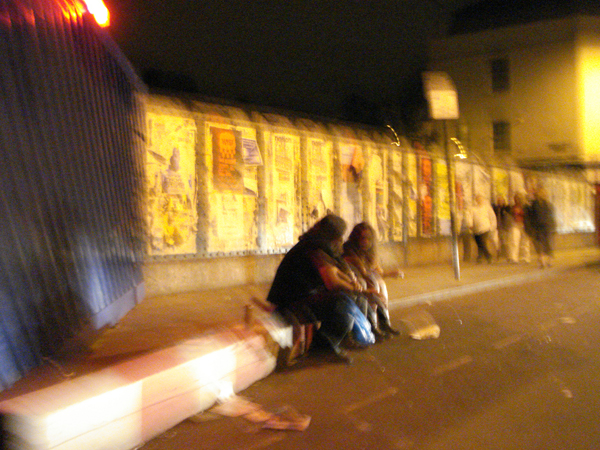
Kerbside, Brick Lane bridge. London 2007
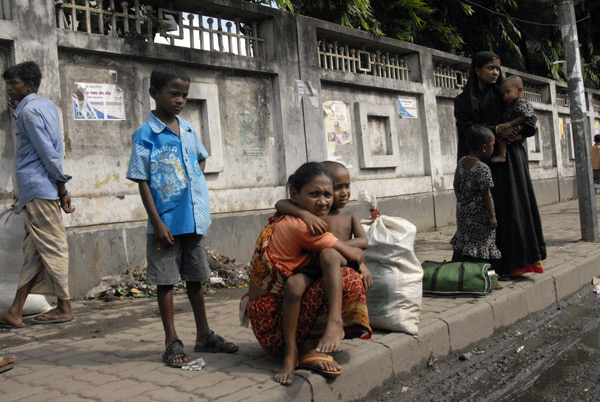
Kerbside, Dhaka. Bangladesh 2009
Rapid Succession
Many of you by now will have noted my tendency of taking photographs in rapid succession. Cynics might say it increases the possibility of getting a decent image! The actual reason for my ‘trigger happiness’ is that I am fascinated by the relationship between people and the built environment and the movement dynamic that occurs within a few seconds. Successive shots also facilitate a number of opportunities for the use of images in film. My early collaborations with Hazuan Hashim illustrate the filmic qualities of sequences taken in the 1980’s.
Many of the sequences in the ‘East End Series’ were taken on an SLR camera which required each frame of film to be wound on by hand. The digital revolution has enabled me to push my sequences technique much further. Nevertheless the business of my winding hands on the camera for over 20 years produced the results I wanted; because of time and financial constraints it was impossible to utilise all the material produced. I still continued to process rolls & rolls of film hoping that they might see the light of day some time in the future. This is now happening and my archive is at last beginning to come alive! The support of the Bishopsgate Institute (who are digitising the archive) has given me the time to make creative use of my ’emerging archive’.
Brick Lane night & day
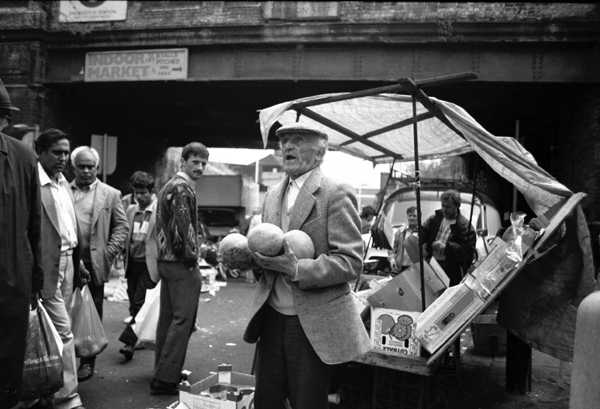
Market stall holder, Brick Lane. London 1985
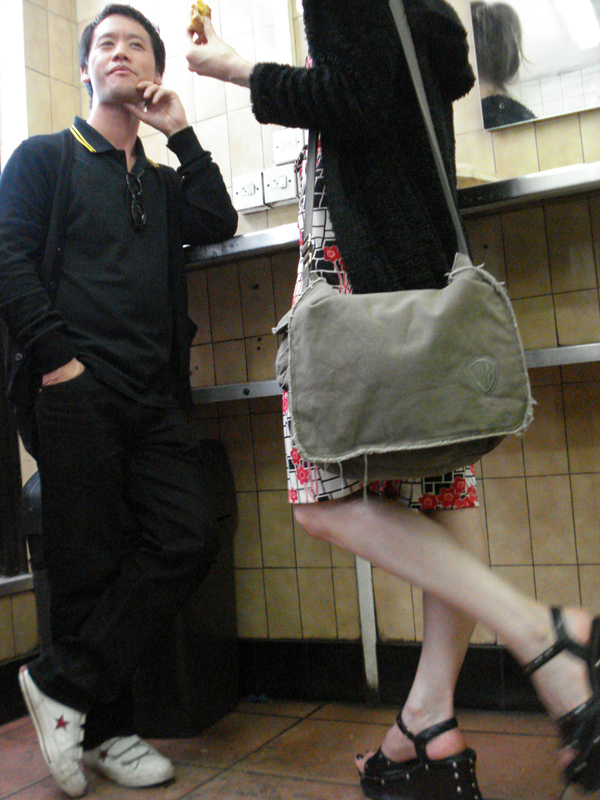
Begal shop at 1am. Brick Lane 2007
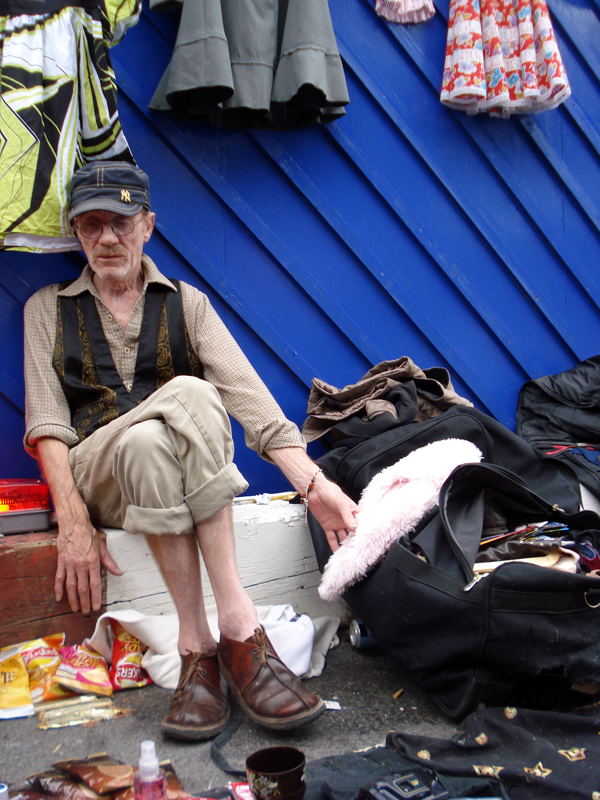
Sunday market. Brick Lane 2007