Room With A View
The window (below) has seen many changes over the past 30 years. What was once a wasteland is now full of housing and clean streets. The wasteland drew car boot sales to it at the weekend; though lots of the ‘car boots’ were without cars.

Window view onto Whitechapel 1998
The most recent view (below) hints at the changes from the ‘wasteland’ in the following photographs.

View from a window through an empty glass vase. Whitechapel 2011.

View from a window. Whitechapel 1984

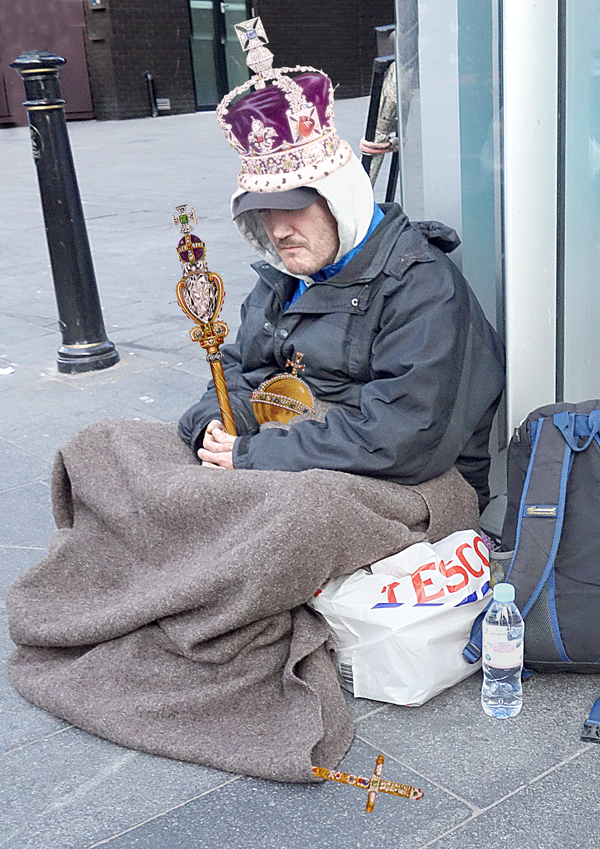
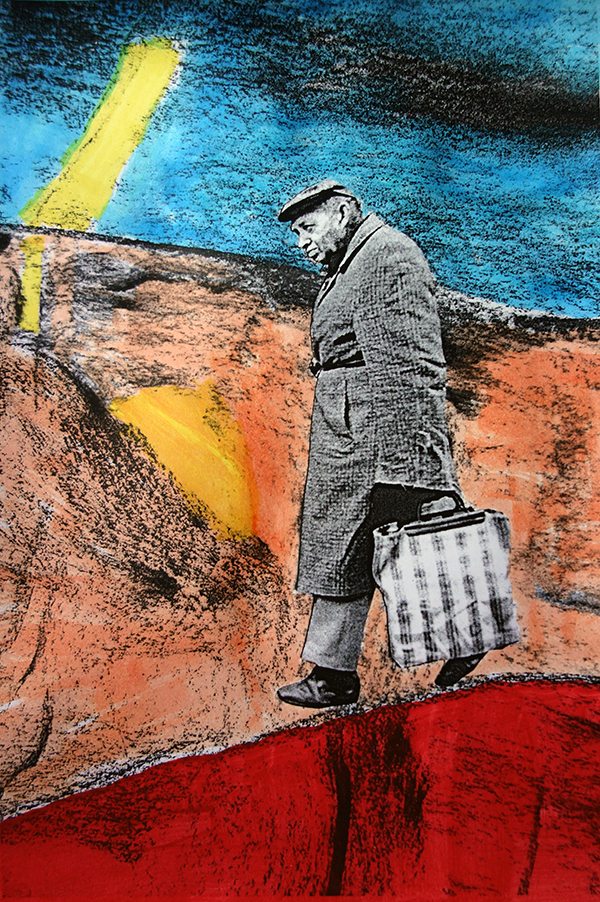
Man with a cap on Whitechapel waste land, 1985
Q & A after the film
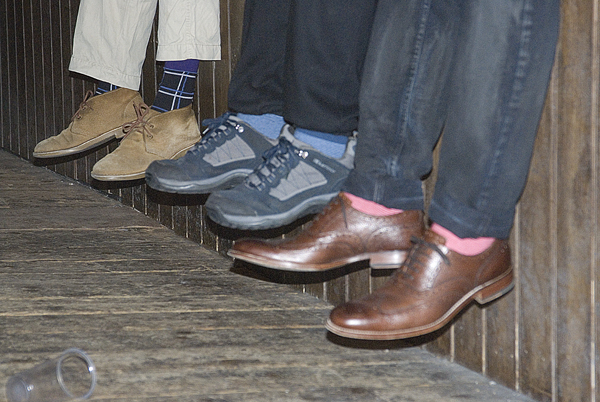
Feet of the questioner and questioned. Wilton's Music Hall, October 4, 2011

Feet of the questioner and questioned. Wilton's Music Hall, October 4, 2011
Photographs by Amiri Shongeeth
Fundamental for Life and Health
Water is fundamental for life and health. The human right to water is indispensable for leading a healthy life in human dignity. It is a pre-requisite to the realization of all other human rights. This observation of the United Nations Committee on Economic, Cultural and Social Rights is borne out by much of what we see around us. Unfortunately water resources in some parts of the world are so depleted that a barrel of water can be worth as much as a barrel of oil.

A man walks by a lake in the opposite direction to the train. Bangladesh 2008

Rain near St Pauls. London 2006
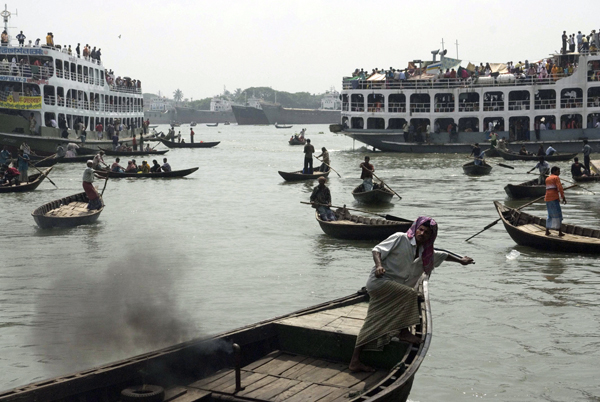
The Buriganga river. Dhaka, Bangladesh 2008

Students seated underneath abandoned cranes in the port of London, 1990
Wilton’s Music Hall Packed for From Cable Street to Brick Lane!
As artists in residence at Wilton’s Music Hall we were delighted to see the ‘house’ was full last night for the preview of ‘From Cable Street to Brick Lane’! 75 years to the day the slogan ‘They Shall Not Pass’ became a reality.
Thanks to everyone that came along and shared views about the film. We are now well placed to finish From Cable Street to Brick Lane in time for the East End Film Festival in 2012. Thanks to Amiri Shongeeth for the photographs of the after party and Q&A …..

Family of one of the actors from Swanlea school. Wilton's October 4, 2011

Yoav Segal and Phil Maxwell shake hands with Ubby Cowan seated. Wilton's 2011

Yoav Segal, Ubby Cowan, Phil Maxwell and Hazuan Hashim. Wilton's 2011

Amanda Richardson and Phil Maxwell. Wilton's 2011

Roger Mills, Phil Maxwell and Hazuan Hashim. Wilton's London 2011

Derek Gadd & Phil Maxwell. Wilton's London 2011

Phil Maxwell, Hasina Zaman and Derek Gadd. Wilton's London 2011
There will be more of this tomorrow together with some photographs of ‘the making of…..’
Riveting Bridge
Liberty Bridge (below) was built for the Millenium World Exhibition in 1896. Damaged during the second world war it has since been repaired to its former glory. Construction was started in June 1894. It was inaugurated by Francis Joseph I, who hammered in the last silver rivet on the Pest side on 4 October 1896, at the festivities held for the thousand-year jubilee of Hungary.

Rivets on Liberty Bridge. Budapest 2005
I was unable to find the silver rivet (perhaps it was painted over during communist times). The mass of rivets holding the bridge together was a visual display of the strength of the structure. Rivets are everywhere on this bridge and thankfully there has been no attempt to disguise them.

Rivets on Liberty Bridge. Budapest 2005
I found it impossible not to touch and swirl my hands around the rivets. They are all the same size but each has its own identity owing to its proximity to other rivets and the coating of paint which has been spread lavishly over the years.
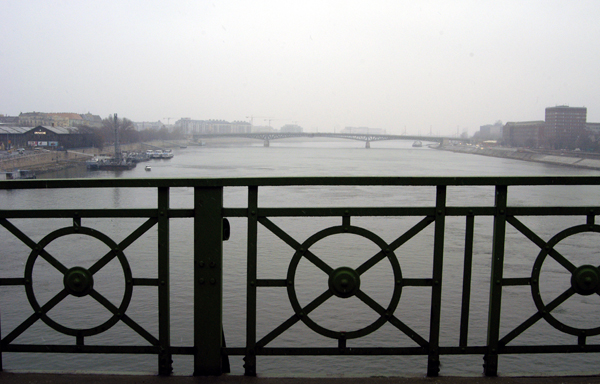
Liberty Bridge. Budapest 2005
The side of the bridge acts as a graceful Art Nouveau window to the river Danube.
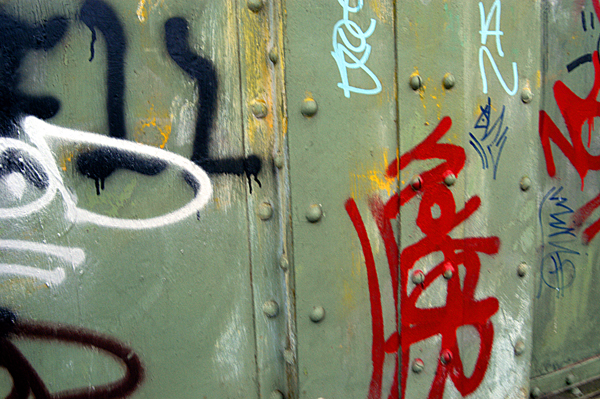
Rivets & graffiti on Liberty Bridge. Budapest 2005
There are plenty of tags and graffiti but they will fade and disappear leaving the rivets amused but unmoved.

Liberty Bridge looking towards the Gelert Hotel in Buda. Budapest 2005

Two girls crossing a bridge in Bangladesh, 1991
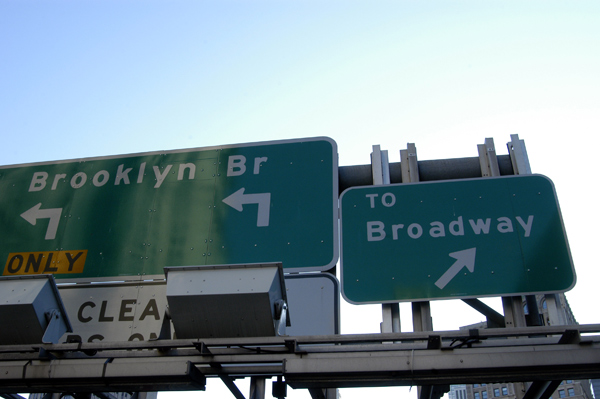
Signs on a bridge. New York 2005

Foot & bicycle prints near Liberty Bridge. Budapest 2005

Rivets turned into igloos. Liberty Bridge. Budapest 2005