Invasion of the Estate Snatchers
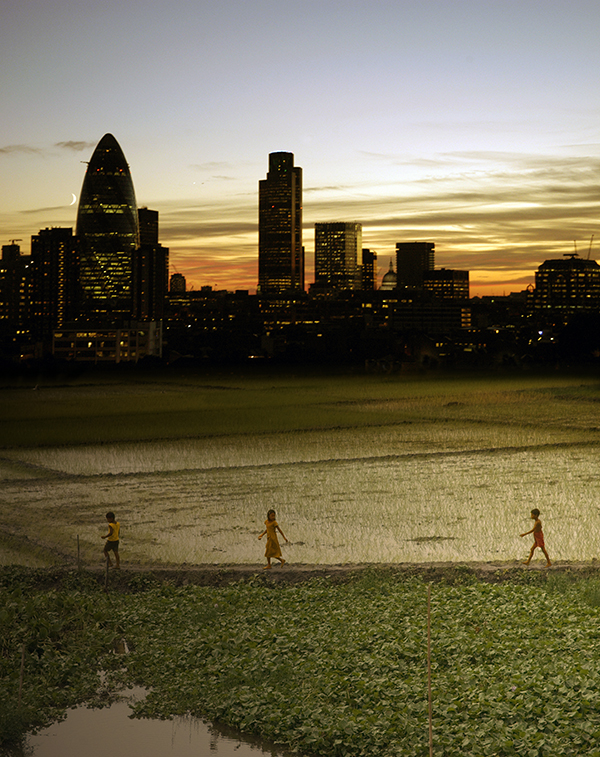
For most of my life I have lived in the Tower Block which you can see in the third photograph below. From the balcony of our flat you could get an immediate sense of belonging to the East End of London. Looking West 30 years ago (below) you could see only a small suggestion of the City. Looking East there was no Canary Wharf.
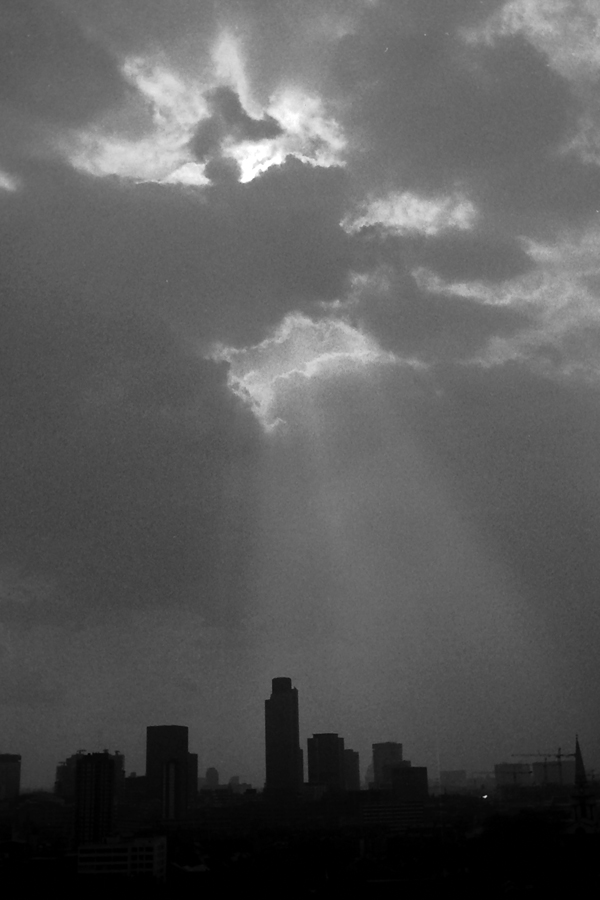
View of the City from the Chicksand Estate. Spitalfields, 1982
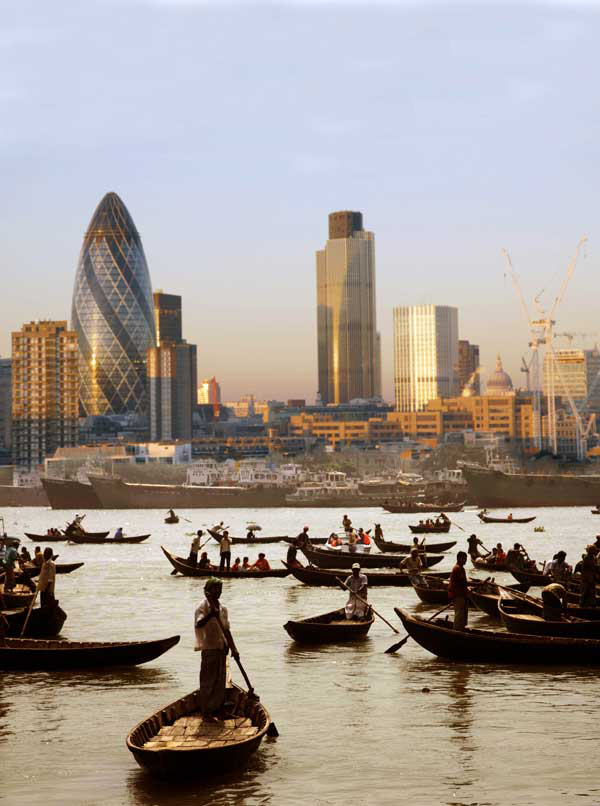
As time progressed the view to the West rapidly changed until the walls of my peace loving Tower Block felt they were about to be boarded by enemy siege towers carrying estate agents. In recent years a propaganda war has involved a number of tricks including at least one letter a week from an estate agent claiming they have bankers who want to live in our block. We’ve never wanted to surrender to these City marauders. Where would we go? Who wants to live next to a banker?

A siege tower under construction for the invasion of the Chicksand Estate, London 2002
The 1980’s was a relatively peaceful time. There was still a lot of open spaces. The photographs below were taken looking west from the waste land behind Whitechapel station reaching up to Vallance Rd.

Boys from the Chicksand Estate, 1980's

Boys from the Chicksand Estate, 1980's
The Rich Estate Snatchers have demolished much of the area surrounding my estate.

A view of the demolition that has occured to make way for Estate Snatchers. Bethnal Green London 2002.
Rossi’s Cafe – Gone But Not Forgotten
Until its closure earlier this year Saturday mornings was usually marked out for Hazuan and myself by a Rossi’s breakfast of bacon, fried egg, beans and toast. It was a bit of a ritual for us because it was usually a lot quieter on Saturdays so we could take up to two hours to eat, drink loads of tea and stare out of the window as the trendy world of the new Spitalfields passed us by. It was if we were in a time capsule that protected us from the change we could see through the window. Alas it is now the worlds most expensive fish & chip shop. As a boy a big treat would be for me to buy a bag of chips for 4d which would be wrapped in grease proof paper and old newspapers. I was stunned the other day to see the newspaper had made a return (previously banned for health and safety reasons): two trendy young things strolled out of the shop with their newsprint chips. Of course it wasn’t the real thing but an art directors timid imitation.
Anyway enough of my nostalgia rant. Below are some pics of Rossi’s taken on a Saturday morning a long time ago …..
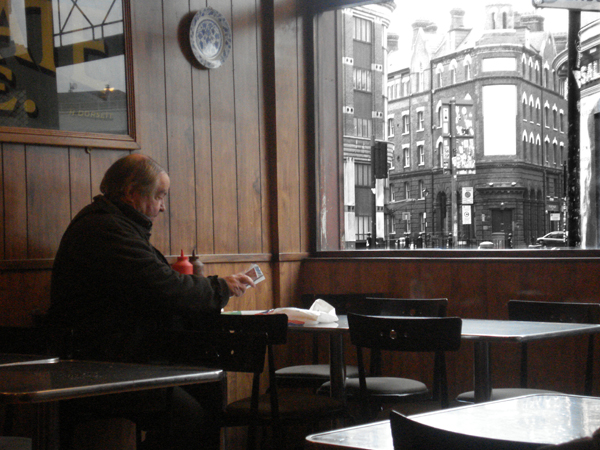
One Customer at Rossi's. Hanbury Street, London 2009.
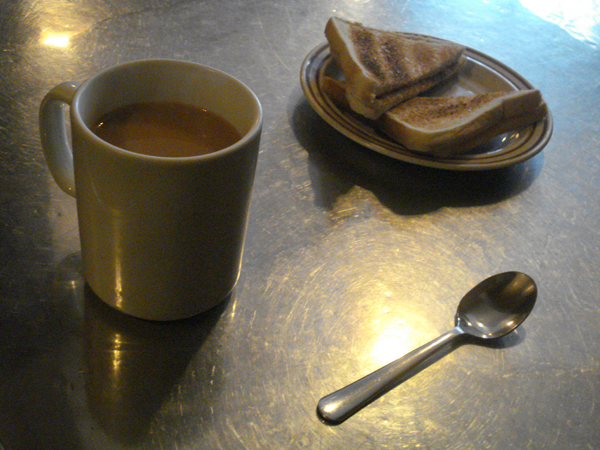
Tea, solar pulses, teaspoon and toast at Rossi's. Hanbury Street, London 2009.
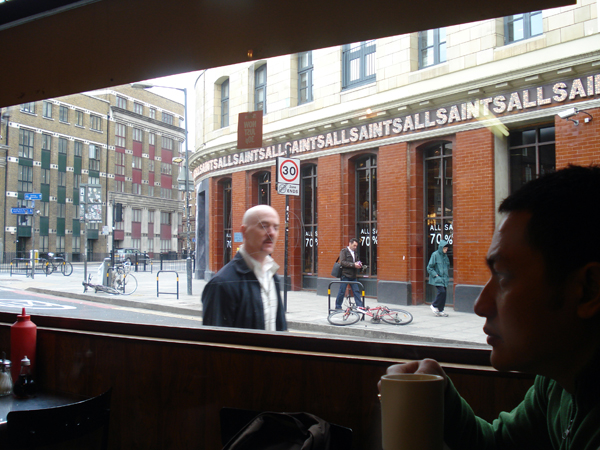
Tea and thought for Hazuan at Rossi's. Hanbury Street, London 2009
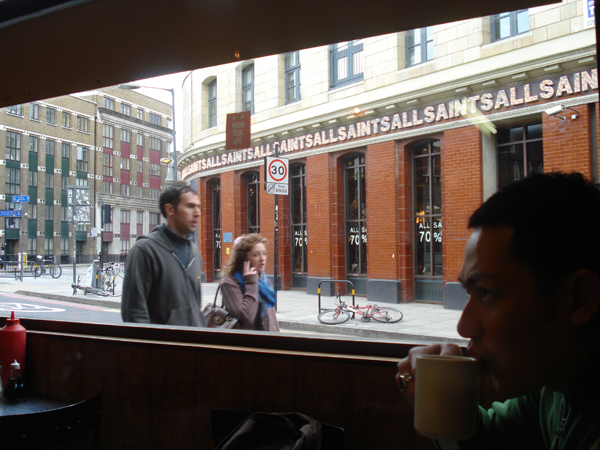
Tea and more thought for Hazuan at Rossi's. Hanbury Street, London 2009
Food For Thought
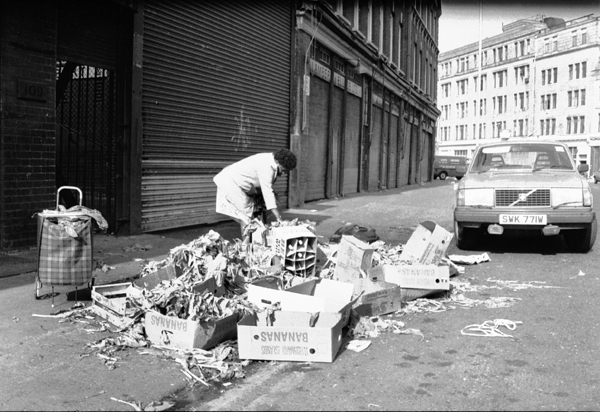
Spitalfields market, Commercial Street, London 1983
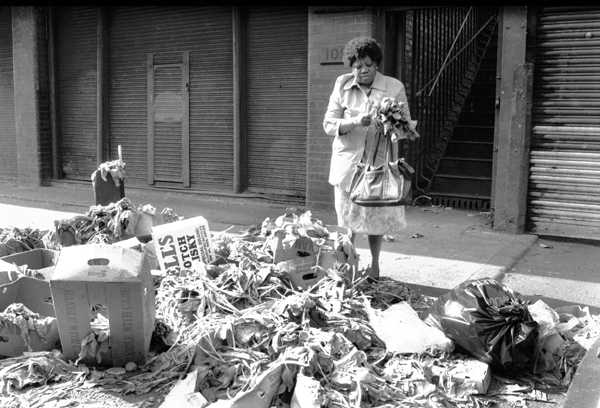
Spitalfields market, Commercial Street, London 1983
Picture Research For Our Film From Cable Street to Brick Lane
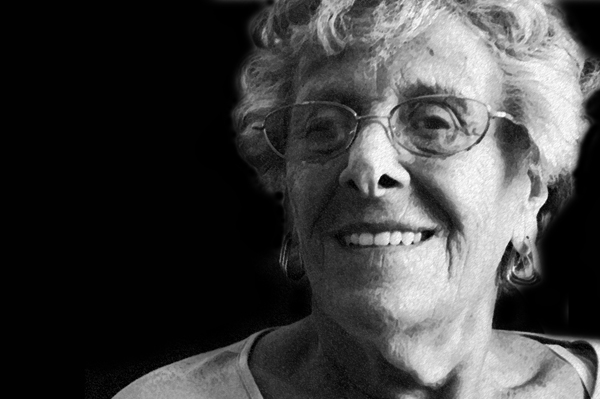
Beatie Orwell was present at the Battle Of Cable Street
Following an interview of Beatie Orwell for our film ‘From Cable Street to Brick Lane‘ I remembered her sadness when recounting what the Nazis did to the Jews. In turn this reminded me of an interview with Leon Kuhn (Not In Our Name) when he spoke of the death of his great grandfather at the hands of Nazis butchers. Leon’s description was accompanied on screen with images of tree branches. I was reminded then of two photographs I had taken in Berlin in 2002 both of which featured trees as well as the buildings photographed.
When I start to look for something in my archive I often end up going off at a tangent. This can be terribly frustrating in terms of the amount of time ‘wasted’. In other ways it can also reveal links between images that hitherto were in the sub conscious ….

The Berlin New Synagogue, 2002

The Berlin Jewish Museum. Berlin 2002
The Lift in Denning Point Commercial Street
It is strange how certain events or even words can raise a memory which can push you to look for something. Yesterday my partner Hazuan Hashim was editing part of our film from ‘Cable Street to Brick Lane’. I was busy looking for suitable stills for a different part of the film and happily listening to an interview Hazuan was reviewing of the Cable Street veteran Max Levitas.

Portrait of Max Levitas, Whietechapel, London 2010
Max himself was reviewing rare film of the police confronting anti fascists with horses and truncheons. Max said something like “the police were trying to move us onto Commercial Street.” For some reason I was prompted to dig out a photo collage I produced around two years ago. The work was basically a photograph of board, with graffiti, protecting a new lift in Denning Point Commercial Street during a refurbishment programme. On the photograph I had positioned the face of a man called Lawrence who is probably nearly the same age as Max.

Photo collage with a lift in Denning Point, Commercial St, London 2010
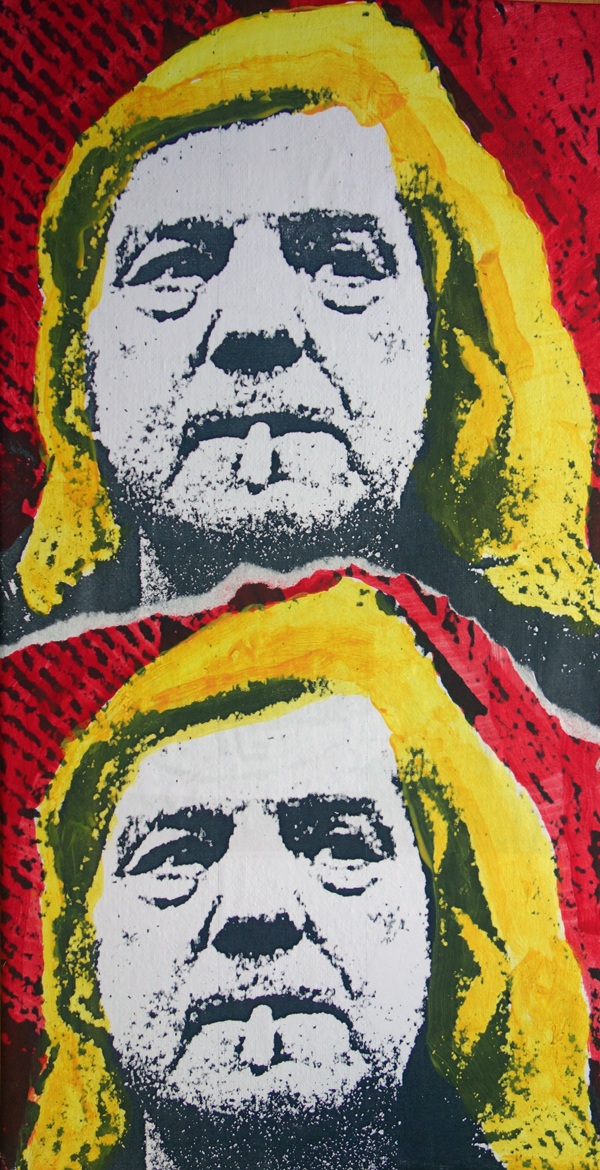
When I used to print in my darkroom I always ‘guessed’ the time for exposure and would do a ‘test print’ on a piece of paper carrying the image of one of the faces from the negative. Above we see a test print of the face of Lawrence who was destined to star a few years after I took his photograph in our film Sandra.