Bangladesh Bus Tales
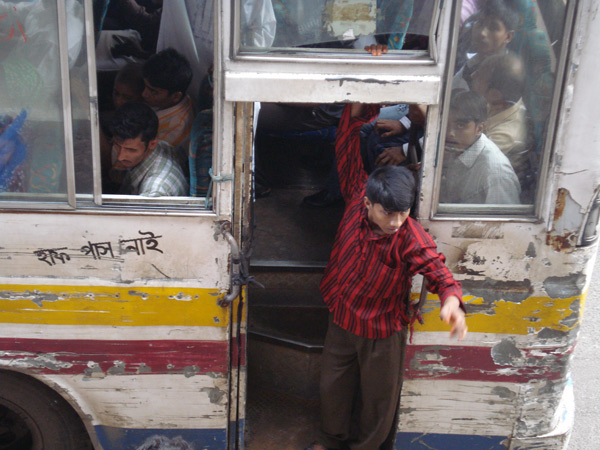
Conductor on passenger Bus in Dhaka, 2009
As a small child if we went anywhere with my mother it would be on a bus. Some of my earliest memories are of me sitting with my sister behind the drivers cab which was isolated from the rest of the bus. We loved watching the driver steering the bus in his small cabin. For me it might as well have been the capsule of a Vostok spacecraft. Second in command of this wonderful vehicle was the conductor. He or she could fly about the bus and hang off the platform in a way that inspired awe from younger passengers. In addition to their gymnastic passage through the bus they could also entertain, comment on international affairs, recite poetry and evict handfuls of yobs from the upper saloon without violence. It was such a shame when conducters were ‘phased out’ from buses in pursuit of higher profits.

Passengers boarding bus on Bethnal Green Road, 1983
I was amazed last year when I got on a bus in Bow to find it half full but strangely silent. I wondered if everyone had been drugged or if they were in a transitional process on the way to becoming zombies. As I sat down I noticed large video screens showing live images of passengers in various parts of the bus sequenced in a way that would assure the transmission of their image every 30 seconds. These omnibus portraits were interspersed with advertising for garden centres and other interesting places you might want to visit on the bus route. For a moment I thought I was watching Fox News – perhaps I was. Anyway it was at this point that I understood how boring the present day ‘digital bus’ in London is compared to its ‘analogue’ parent.
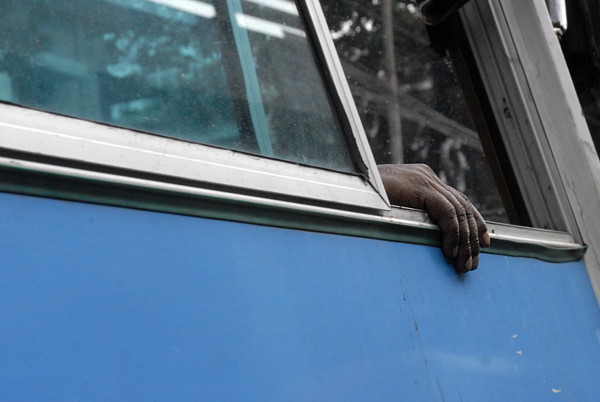
Bus in Dhaka with a hand out of the window, 2009
It was with some satisfaction that on my last visit to Bangadesh in 2009 I was able to indulge my affection for older buses. I can confirm that in Bangladesh the conductors are able to fly about with great ease in order to keep this important service moving.
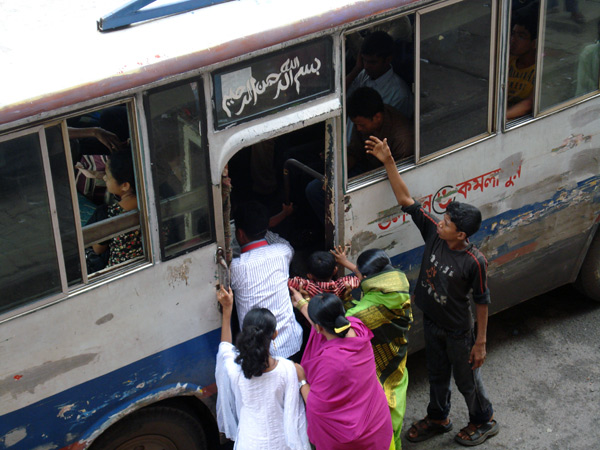
Bus in Dhaka, 2009
The eloquent gesture of the conductors right hand (above) guides new passengers onto his bus. The gesture has a reassuring welcoming quality about it that suggests imminent luxury; it’s all part of the service.
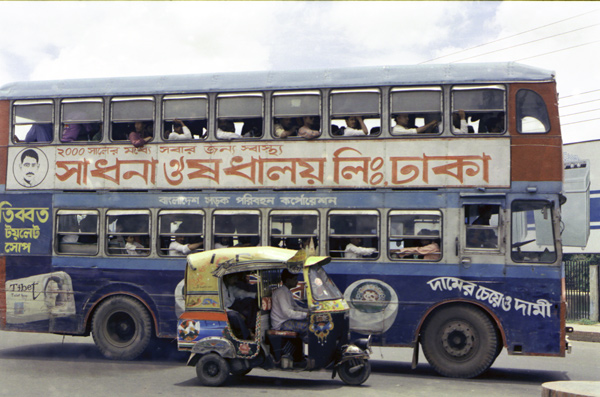
Baby taxi and bus in Dhaka, 1992
The older bus (above) dwarfs the accompanying baby taxi. No longer in service the drivers cab is isolated from the passengers.

A Rickshaw and bus in Dhaka, 2009
Rickshaws compliment the public transport system and are ideal for shorter journeys. In recent years congestion on roads has reached gridlock proportions. This is mainly because of the increase in car use. However it is often the poor rickshaw drivers who get the blame for the congestion.

Car in Chittagong, 2009
Brick Lane Reflections

Brick Lane reflection in a window, 2010
Sometimes reflections in a window reveal something you would not normally observe.

Brick Lane reflection in a window, 2010
This window of an off license in Brick Lane (below) is a metaphor for the direction in which the Lane has traveled in the last decade. I suspect we have reached the stage where all the champagne has been consumed. The sparkle has evaporated and the off license now has a less ostentatious display.
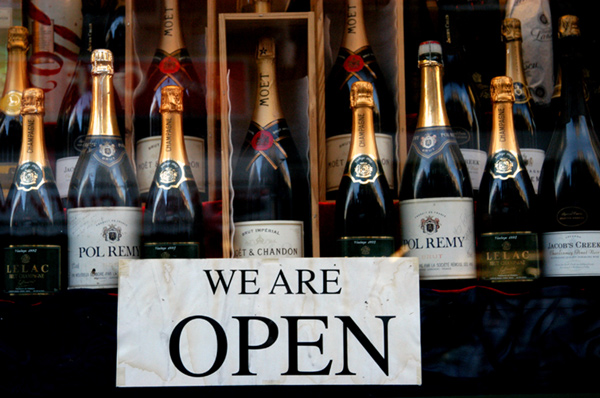
Brick Lane off license window, 2002
Going back in time the Lady walking on Brick Lane in 1982 is about to pass the former Taj Store shop displaying a healthy window of fruit. Many of the shops further down the street have been boarded up with corrugated iron. In a few years time they will disappear completely.

Lady walking down Brick Lane, 1982
Further up Brick Lane we see a wider view of boarded up buildings leading all the way to the bridge. With the election of Margaret Thatcher’s Conservative Party in the 1970’s the UK became a laboratory for economic experimentation. The doctrine of Monetarism had a brief life under Thatcher but was at its end in 1982 when this photograph was taken. It was a time characterised by social unrest, unemployment and poverty for millions of families. The fabric of Brick Lane reflects the state of the economy at this time as well as the mood of depression.

Brick Lane, 1982
The Brick Lane of 2011 is entirely different from the depression above and caters for those with cash to spend. The former local shop (below) has become an Estate Agents.

Estate Agents, Brick Lane 2009
I wonder what the lady below thinks about all of this?
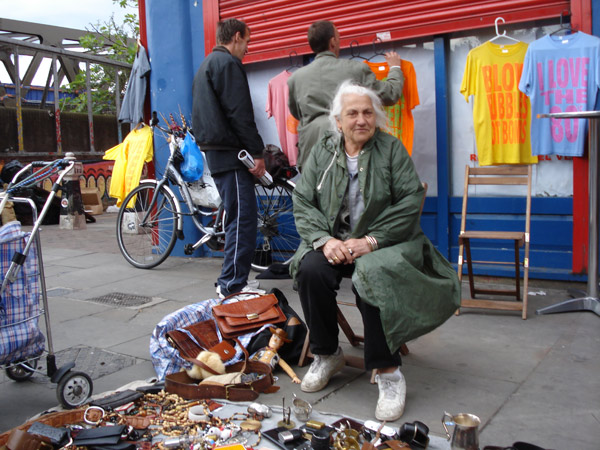
Lady selling second hand goods on Brick Lane, 2007

Window reflection, Brick Lane 2010
Books
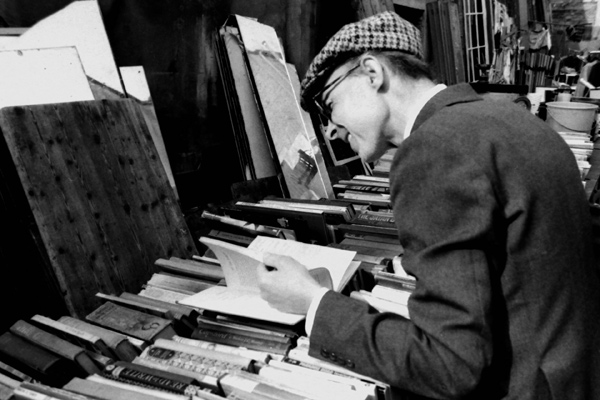
A man looking through second hand books in Cheshire Street, 1984
Books of all kinds have always been available at street markets in Spitalfields.
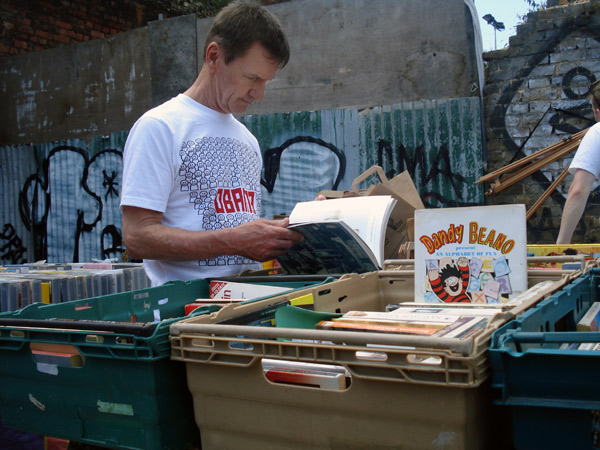
A man looking through second hand books in Sclater Street, 2009
The precarious nature of book collections in markets adds to their attraction. Unlike a book shop where everything is well ordered alphabetically a market selection is random. You never know what you might stumble upon. You will also find collections from dead people. Spending time looking through these is like reading an autobiography. You can imagine and construct the character of the former owner of the books. A box of books in a market once examined with a cursory browse inevitably draws you in to inspect every volume in the box.
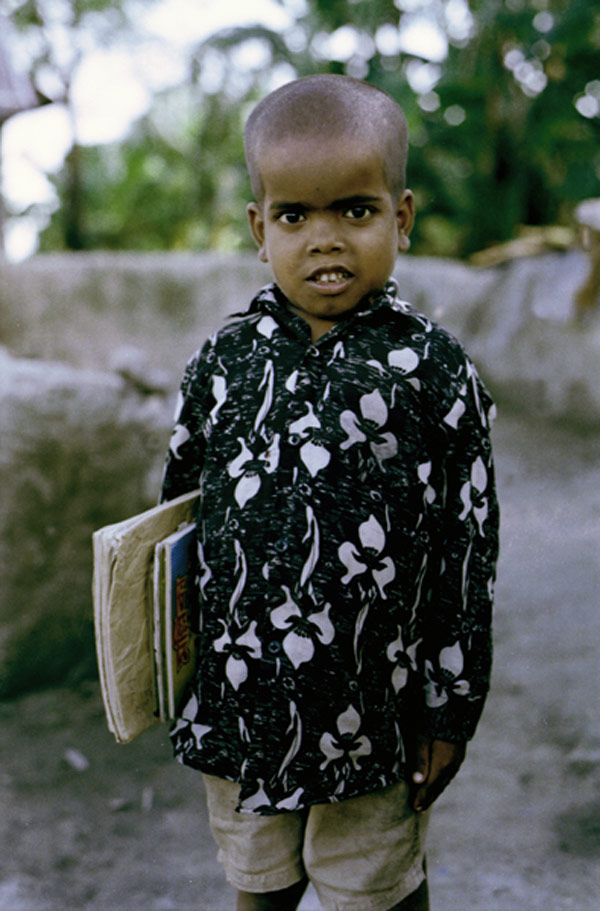
A boy in Bangladesh with his school books, Sylhet 1993
This boy has covered one of his school books with brown paper. This neat endeavour reminds me of my own school days when we were encouraged to do the same with unused wallpaper rolls or brown paper. One teacher in particular would inspect books to ensure they were covered and would cane boys who had failed to cover their maths exercise books. Our art teacher however would have no problem with graffiti and lewd remarks enveloping sketch pads.
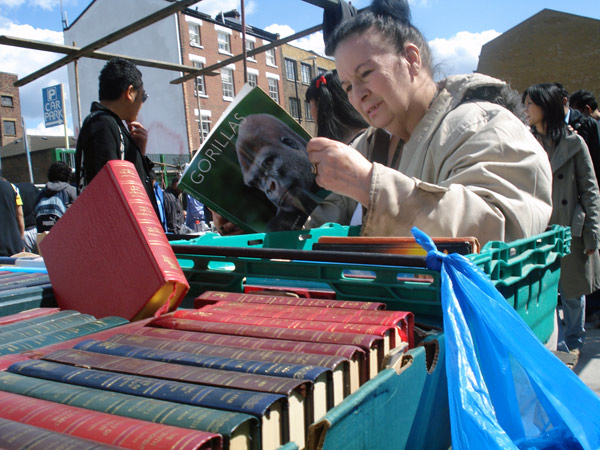
A woman looking through second hand books, Sclater Street market 2008
Legs
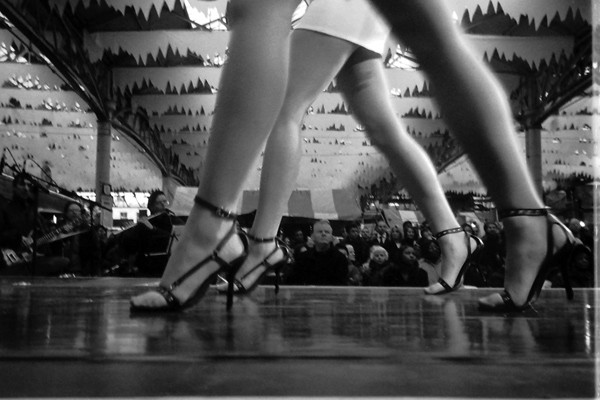
Legs at Alternative Fashion Week in Spitalfields Market, 1995
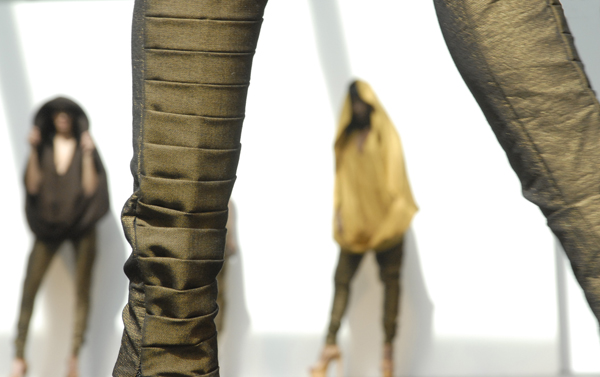
Legs at Alternative Fashion Week in Spitalfields Market, 2009

Man pulling two wheeled cart in Dhaka, Bangladesh 1994
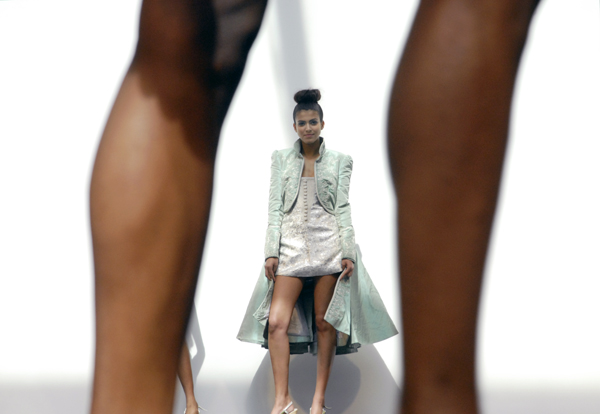
Legs at Alternative Fashion Week, Spitalfields Market 2009
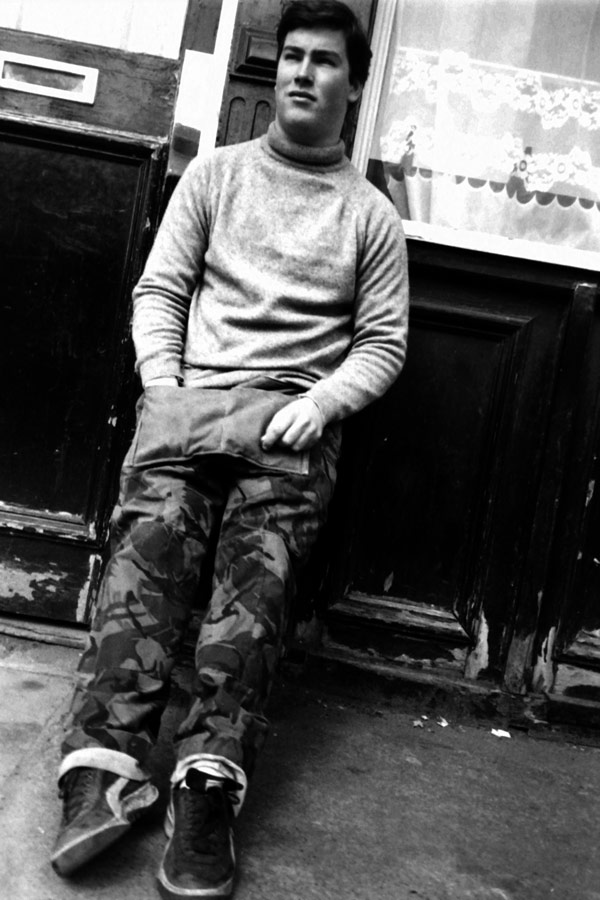
Market Trader with camouflaged legs, Whitechapel 1984

Legs at the Alternative Fashion Week, Spitalfields Market 2009

Boy running down Swanfield Street,1983
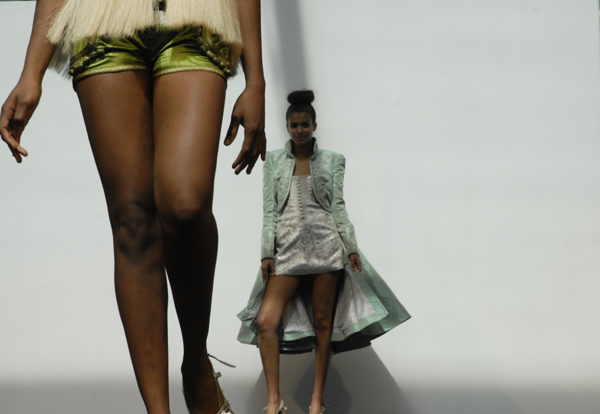
Legs at the Alternative Fashion Week, Spitalfields Market 2009

Legs at the Alternative Fashion Week, Spitalfields Market 2009
Headwear
The headwear to be seen around the world can be functional, spontaneous, hierarchical, outrageous or driven by fashion. Here are a few examples mainly from East London:

Man with woolen hat, Brick Lane 2009
In contrast with the functional woolen hat that keeps the man on Brick Lane warm, Solly (below) has a more fashionable fedorah hat. He is staring out across the bottom of Hanbury Street.

Solly wearing a fedorah hat, East London 1984

Woman wearing a Burka, Whitechapel 2004
The man and woman (below) would probably consider themselves undressed if they went out without their hats. No doubt the woman above would feel undressed without her Burka.

Man and woman wearing hats on Whitechapel Road 1983
The two women crossing Vallance Road in Whitechapel are wearing the Jilbab which is a cloak worn in public. The cloak continues into a head scarfe.

Three women crossing Vallance Road in Whitechapel, 2007
Headwear with a splash of leaf design at the entrance of Whitechapel station.

Two women outside Whitechapel Station, 1998

Man wearing a woolen hat with a red shawl, Roman Road 2010
The characters above and below add a mark of eccentricity to the collection. The red shawl seems slightly out of place as does the attire of the boater hat on the old lady crossing Vallance Road; it’s as if she has been transported from the Whitechapel of the 1920’s.

Lady crossing Valllance Road, Whitechapel 1983
Below we have a man wearing a turban buying tobacco from a man wearing a cap.

Two men in Sclater Street, 1985
The lady below is wearing a functional plastic head scarf, popular a few decades ago. They could be wrapped into a small ball and used for raining emegencies.

Woman in Cheshire Street, 1987

Hazuan in Budapest, 2010