Canary Wharf
1 Canada Square was the first building to dominate the skyline in East London in the new ‘Enterprise Zone’ established in the 1980’s. Following its completion in 1991 it became the UK’s tallest building.

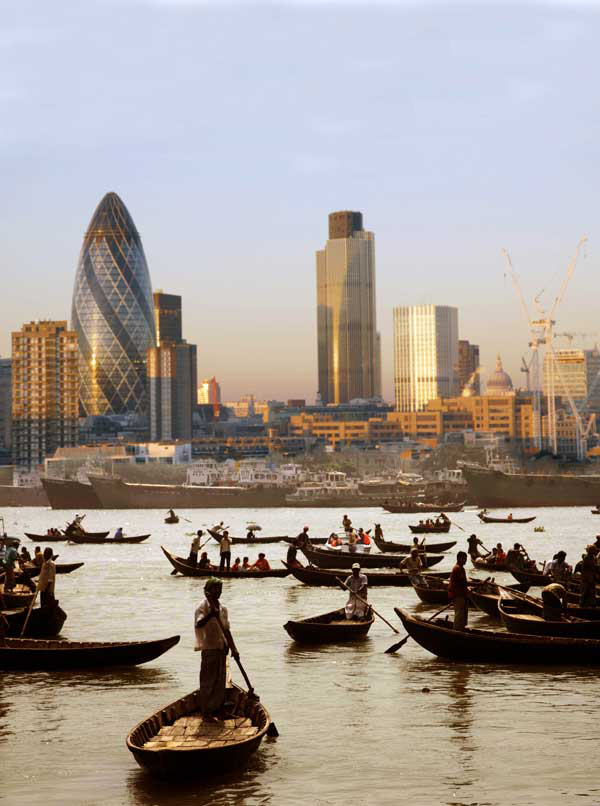
Canary Wharf, 1989
Intended as a powerful symbol of the regeneration of Docklands it stood alone for some time and seemed an unlikely challenger to the City of London. During its first two decades it was to reflect the travails of capitalism as its ownership changed following the collapse and rebirth of the property market and finally the international banking crisis.

Canary Wharf, 1991
The new enterprise zone got off to a rocky start. Local residents were unconvinced by talk of jobs and opportunities. In May 1992 Olympia and York, Canary Wharf Limited filed for bankruptcy.

Canary Wharf under construction, 1990
In December 1995 an international consortium, backed by the former owners and other investors, bought the scheme. The new company was called Canary Wharf Limited, and later became Canary Wharf Group.

Canary Wharf demonstration, 1992
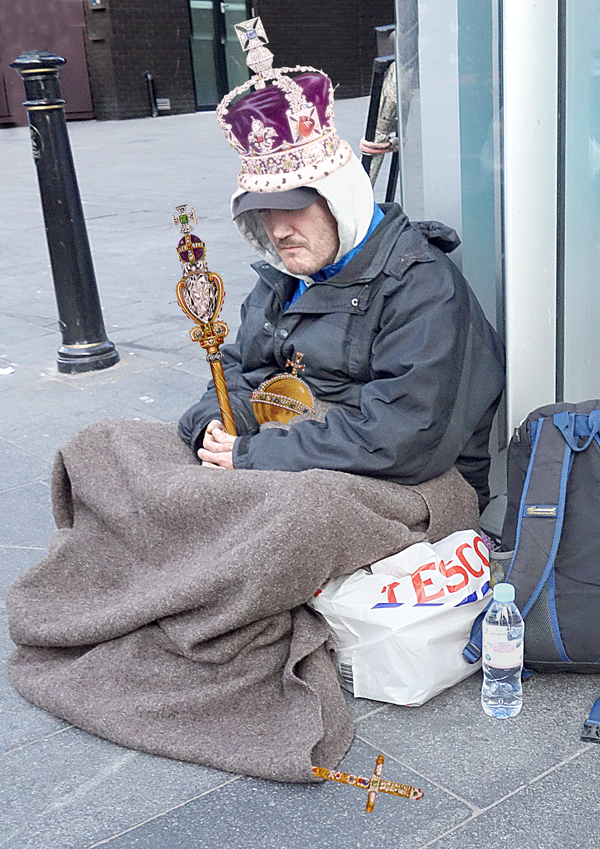
In the end the homeless were not housed at Canary Wharf.

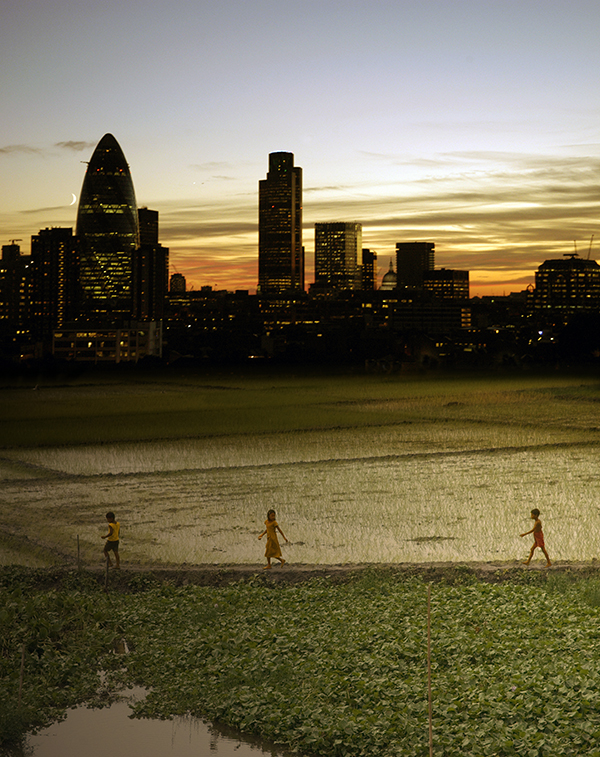
Canary Wharf, 2008
Street Clothes
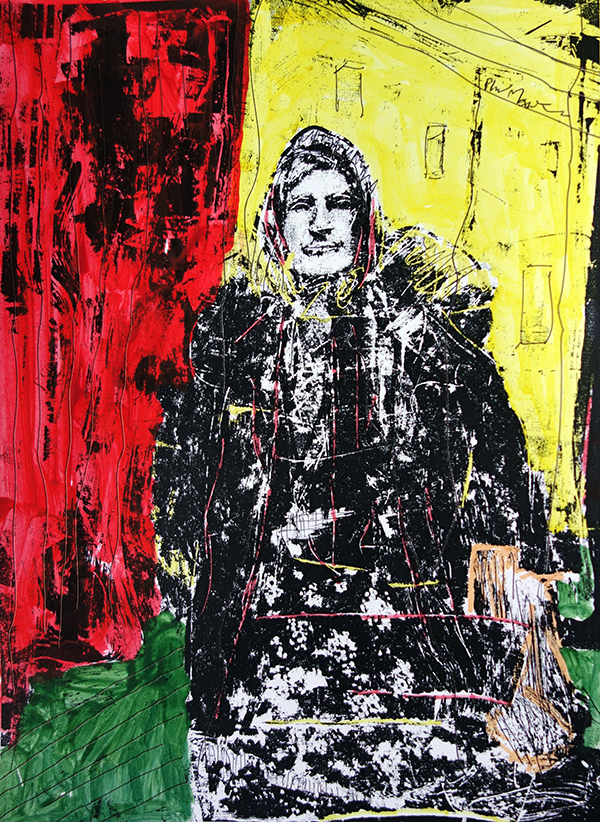
The advertisement on the plastic carrier bag held by this lady seems oddly out of place. She is collecting clothes rather than food. Her shopping trolley hosts two black plastic bags containing clothes collected off the road next to stalls selling second hand clothes.

Woman with shopping trolley, Sclater Street 1983
The smile (below) could be the result of the satisfying knowledge that she has collected a wardrobe of clothes for nothing. I wonder if the clothes are for her or is she going to wash and repair them to sell them on?

- Woman with shopping trolley, Sclater Street 1983

Woman with shopping trolley, Sclater Street 1983
The gentleman below shares the knowledge of where to find clothes left in the wake of the Sunday market. I can sense the excitement of collecting clothes off the street. There will be some collectible items. Each one will carry its own history and have a story to tell.

Man looking through discarded clothes, Bishopsgate 1999
Painting Hastings
This is the painter David Reeve. He is inspired by the land and seascape of Hastings. He captures the essence of the place and serves it up in a way that gently encourages the viewer to celebrate space, light and sea as it reveals boats and the legacy of a fading fish economy. David’s art reminds us of the connection the town has with the sea.
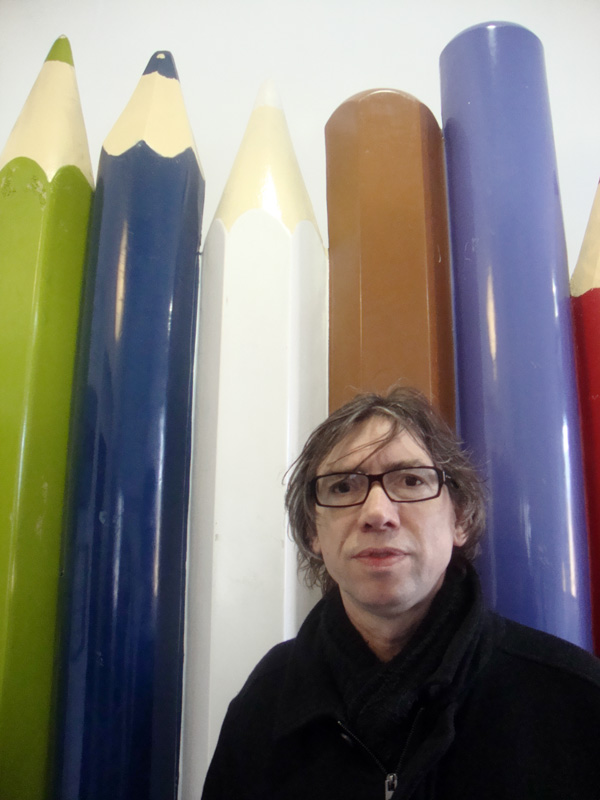
Artist David Reeve, 2010
I feel these photographs were influenced by the conversations that leap from Reeve’s Hastings paintings. As a photographer I am aware of the moment in time that can be captured by a short exposure. This mechanical or digital process is of a different order to the painting Reeve returns to year after year in a continuing exploration of the land and sea around Hastings.

Empty fishing boat on the beach in Hastings, 2000
The absence of fisherman in this photograph (above) suggests that the boat is a monument to a bygone era where the sea was central to Hastings life.

Boat on Buriganga river, Dhaka 1998
The fishing boat in Dhaka is alive with fisherman. The boat on the Hastings beach seems lifeless and abandoned.
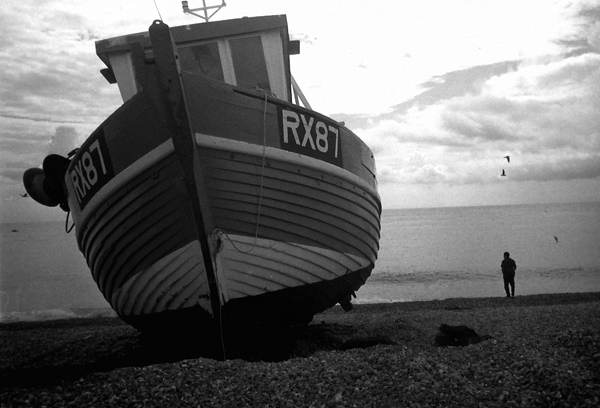
Fishing boat, Hastings 2000
Begal thoughts
Over the years I’ve noticed how the Begal shop at the top of Brick Lane is part of a space that appears to induce a state of reflection for some people. The lady below seems detached from her surroundings and her mind is possibly somewhere else. Is she remembering the past?

Woman with her thoughts outside the Begal shop in Brick Lane, 2009
We have seen this man before pushing his bike in Grimsby Street. Here we see him in a more reflective mood sitting on a milk crate with his bike parked against the metal gate behind him.

Man sitting on a milk crate outside the Begal shop, Brick Lane 1985
Slow bike race and more
Below we see a slow bike race in Spitalfields. The winner was the rider who could cycle the slowest without falling off their bike.
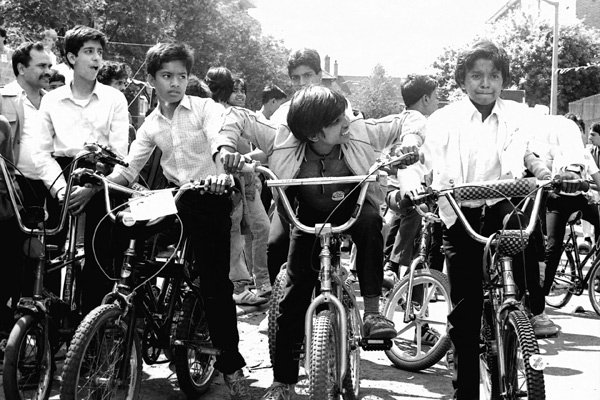
Slow bike race in Spitalfields, 1984
The boy on the bike below pauses among the street debris which includes furniture and a stenciled door announcing ‘new media’.

Boy on a bike in Sclater Street, 2000
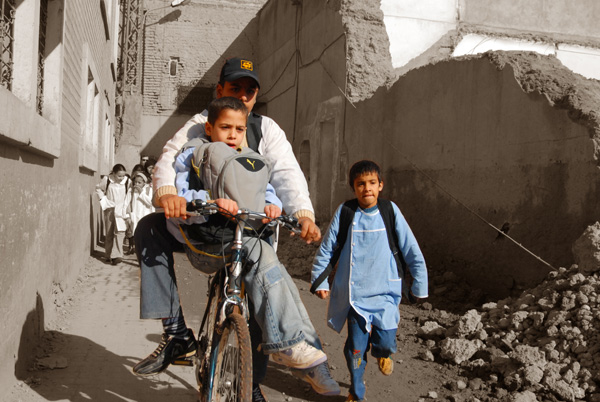
Boys on a bike in Old Town Marakech, 2005

Children with a bike on Brick Lane, 1984

Children with bicycles at the entrance of Pauline House in Hanbury Street, 1985