Rickshaw art

Rickshaw in flooded road, 1994
Rickshaws are the most popular means of transportation in Bangladesh. In the capital Dhaka there are over 600,000 competing for passengers.

Rickshaw with passenger in Sylhet 1996
Rickshaws are covered with paintings of rural scenes, animals, film stars, the rich and the famous, great monuments and religious symbols. The dress of the passenger above compliments the art work on the rickshaw.

Celebrity rickshaw portraits, 2009
Rickshaws have become mobile works of art. Scores of people are employed to paint and decorate this popular form of human powered transport. In recent years computer generated images have joined hand painted patterns. The main aim of rickshaw art is to attract the attention of potential passengers.

River scene on a rickshaw, 2009
Rural scenes are a popular motif. The river scene above adorns the backboard of the rickshaw. Rickshaws are a cheap and popular mode of transport over short distances. Currently there is a battle between rickshaws and cars in Dhaka. Rickshaws are blamed for traffic congestion. However, rickshaws are safe, environmentally friendly and do not rely on fossil fuels. Many people rely on rickshaws. The industry employs people from 38 different professions.

Rickshaw art, Dhaka 2009
The weather project
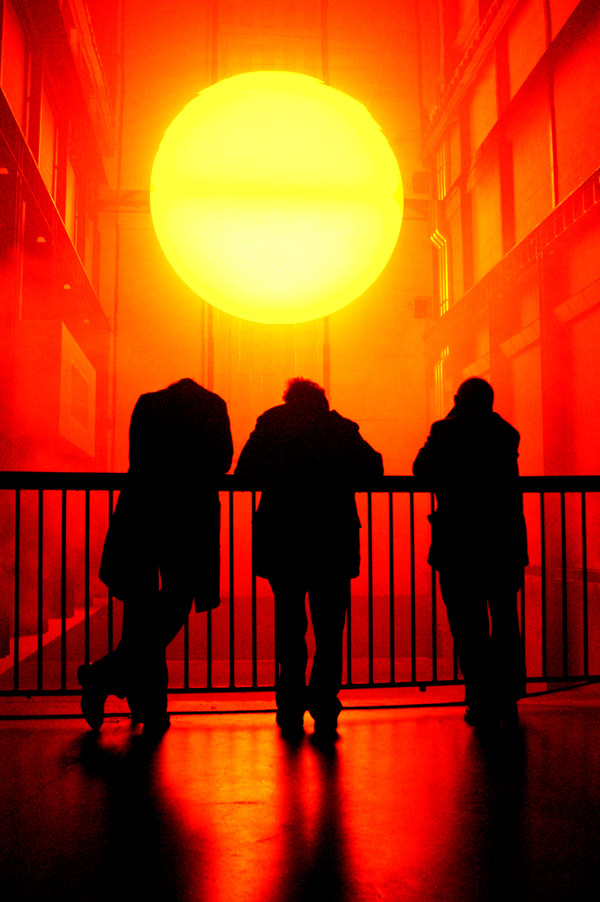
The sun in the Tate gallery, 2004
One of the most impressive exhibitions I have ever seen was the sun installation by Olafur Eliasson in the turbine hall at the Tate gallery in 2004.
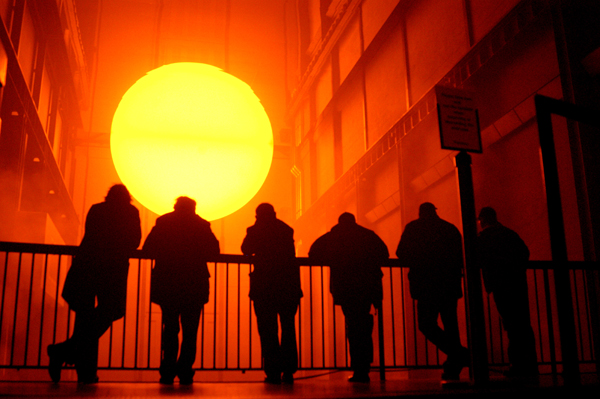
The sun at the Tate gallery, 2004
These photographs utilise silhouettes of people against the sun and provoke a conversation about our relationship with the elements.

Silhouette of the city, 2007
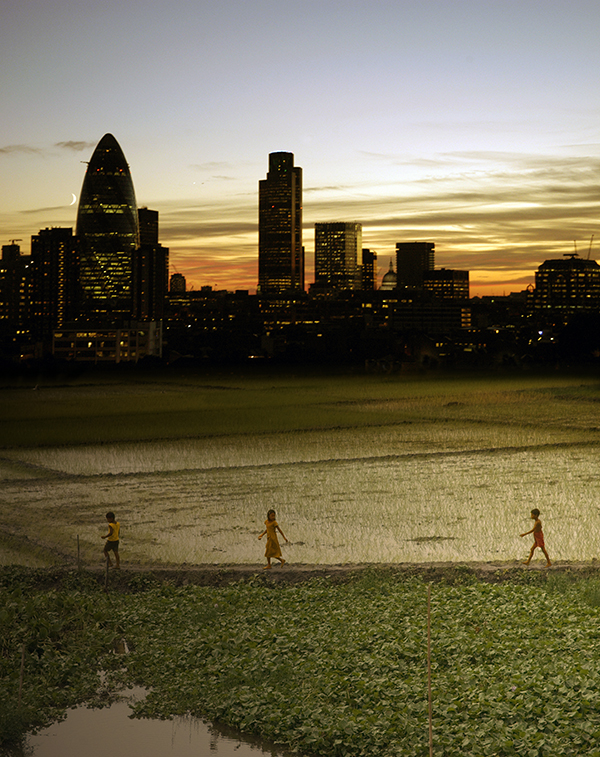
Here the sun creates a silhouette of the City. Over the past 30 years I have watched this sky line change dramatically as new buildings are built and older ones demolished.
Second hand clothes

Sam outside his shop in Cheshire street, early 1980's
My nieghbour Sam lived in the flat opposite me in the early 1980’s. He was a Jewish refugee from Eastern Europe. On Sundays he would open his second hand clothes shop in Cheshire street.

Sam's friend at the entrance to his shop, early 1980's
He was assisted by his friend who we see here at the entrance of the shop. The interior of the shop was dark and damp. If you wanted to buy something it was best to just browse the clothes that hung outside the shop. Coat hangers hung from screws in the wall facilitated a display of coats, trousers and jackets. In the 1980’s most of the buildings in Cheshire street were derelict and empty.

New clothes for sale, Brick Lane 2009
Second hand clothes can still be bought in Cheshire street but they are expensive and hang on rails in ‘retro’ shops. Today you can still see clothes adorning brick work on Sundays in and around Brick Lane. The clothes for sale here are new and probably counterfeit.
Whitechapel portrait

Shopping in Whitechapel market, early 1980's
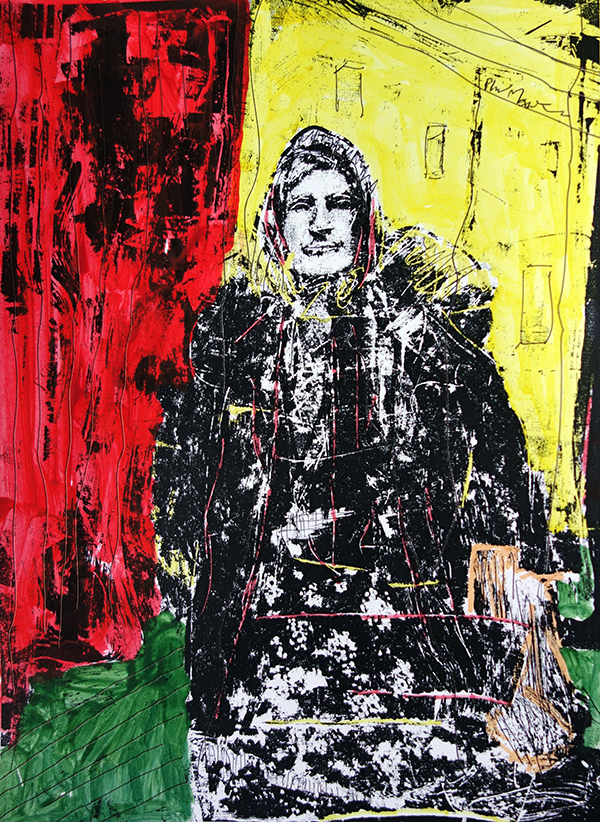
As a street photographer I am always on the look out for interesting subjects. I was immediately drawn to this Lady who was viewing stalls in Whitechapel market with her friend.

Viewing a stall in Whitechapel market, early 1980's
Her face seems to hold many stories about her life. I am sure she has worked hard and had to struggle during difficult times.

Portrait of a lady, Whitechapel early 1980's
In a few seconds I captured these images of a lady who I’m sure had a thousand stories to tell. It was a brief encounter with a formidable lady whose face still captivates me.
Dockyard Doris

Dockyard Doris at the Brick Lane music hall
I first saw Colin Devereaux performing at the Lord Hood pub in the early 1980’s. Off stage Colin was a quiet and sensitive man. On stage as Dockyard Doris he was an outrageous performer with a wide repertoire influenced by music hall traditions.

Dockyard Doris at the Brick Lane music hall
Colin regularly appeared in pantomimes and was a regular performer at the Brick Lane music hall set up by Vincent Hayes in the 1990’s.

Dockyard Doris at the Brick Lane music hall in Brick Lane
These photographs were taken at the Brick Lane music hall in the mid 1990’s. The music hall has now moved from Brick Lane to a magnificent Victorian church in Canning town. It is now the only fully functioning music hall venue in the UK.

Peter John and Dockyard Doris at the Brick Lane music hall
Colin Devereaux had a thirty year career in show business which included radio and TV appearances. After a long fight with cancer he died in 2001 aged 50.

Peter John and Dockyard Doris at the Brick Lane music Hall
I recall visiting him in his home in the 1990’s in Stepney. He was extremely knowledgeable about the history of music hall and he viewed himself as part of that rich tradition.