Cat lady of Spitalfields

Cat lady on Brick Lane. Late 1980's.
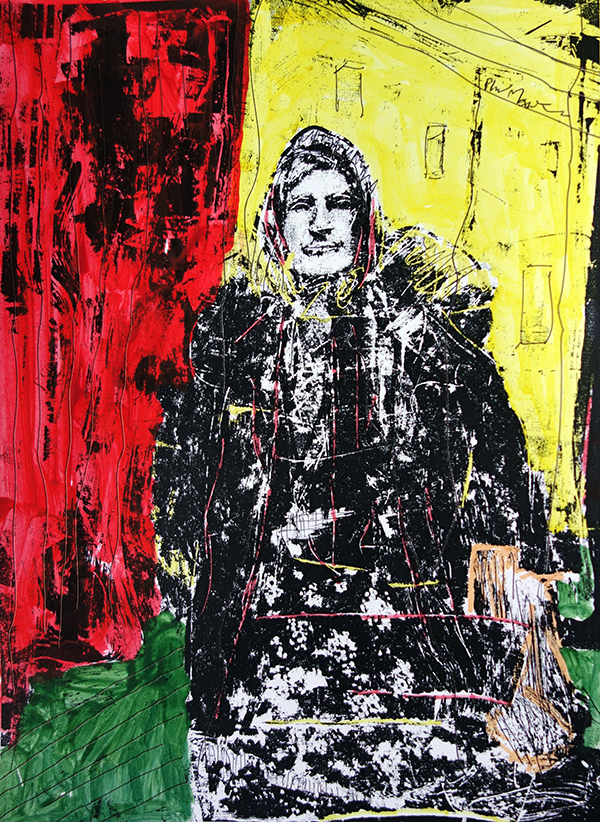
The woman in this photograph was always dressed in a head scarf and large coat. Usually she would pull a shopping bag on wheels behind her. She was the cat lady of Spitalfields. She knew where every cat and kitten lived in the wild and made it her task to feed them every day. Her bag was full of cat food which she would serve on newspaper at designated spots around Spitalfields.

Cat lady on Brick Lane near the Seven Stars pub
The cat lady pauses for a second near the Seven Stars pub on Brick Lane. She has just left some food in the ‘private road’ for some cats.

Cat lady near Christchurch school on Brick Lane
The cat lady floats past Christchurch school on Brick Lane. With her eyes closed she contemplates the next cat awaiting a delivery.

Cat lady on Cheshire Street with her shopping trolley
The cat lady waits outside her favourite cafe in Cheshire street. Now a trendy boutique, in the 1980’s you could buy a cup of tea and a sandwich for less than a pound at this establishment.

Cat lady in Cheshire street cafe
The cat lady ‘kept herself to herself’ and avoided the company of others.

Cat lady sits alone in her Cheshire Street cafe
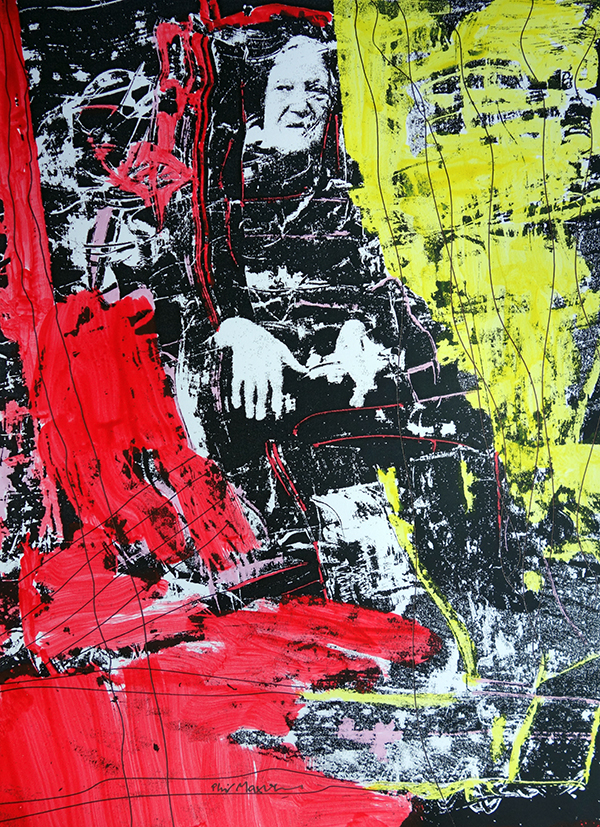
It must be about twenty years since I last saw the cat lady of Spitalfields. She devoted her life to feeding the stray cats of the area. I have no idea where she lived and I never saw her talking to another person. She seemed to live in her own separate cat world. Even though I was sitting opposite her when I took this photograph I felt that she had created a barrier and would be reluctant to engage in conversation. It was impossible to make eye contact. I’m pleased I photographed her on the streets and in her Cheshire street cafe. She would not recognise Cheshire street and Brick Lane today.
Liverpool Cathedral

Liverpool cathedral
The Liverpool skyline is dominated by two cathedrals. The Anglican cathedral designed by Giles Gilbert Scott eclipses the modern design of the Catholic cathedral a short distance away. This may be partly due to its position on St James’ Mount which overlooks the city and the river Mersey. Perhaps also the Gothic revival style of the building plus the fact that it is the largest Cathedral in Britain assures its dominance of the skyline.

During the early 1980’s the cathedral was surrounded by urban dereliction. As I photographed inner city Liverpool at this time the building became an anchor for many shots. The juxtaposition of the imposing Gothic structure against acres of urban decay provided an irresistably surreal composition for the photographer.
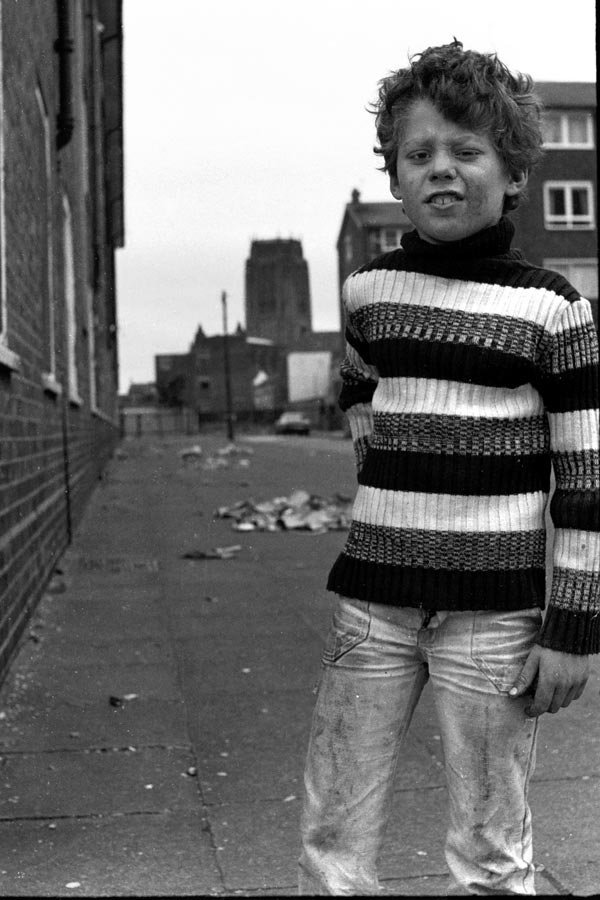
Today the landscape around the cathedral has completely changed following various regeneration schemes.
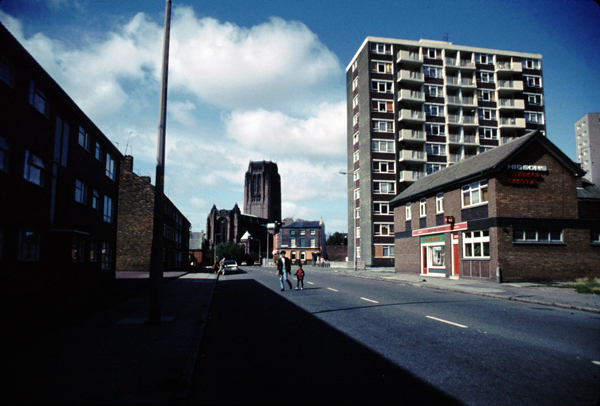
For me the relationship of Scotts iconic design with the old Liverpool captured here had a special resonance which has now disappeared.

Nuclear Protest
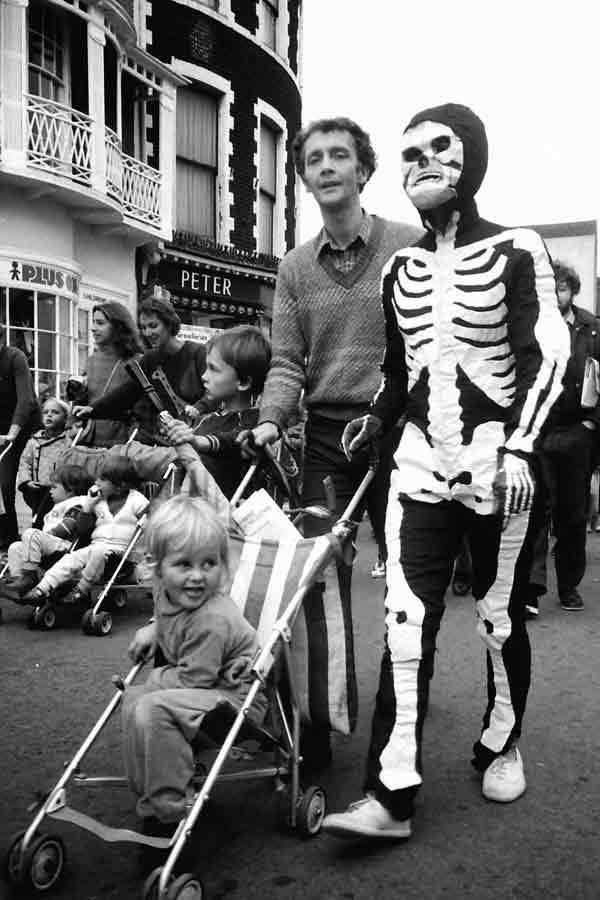
Anti nuclear weapons protest in Brighton
This photograph was taken in Brighton in the early 1980’s when the Labour Party was holding its annual conference. The protesters are calling for an end to nuclear weapons. The juxtaposition of the skeleton next to the child in the push chair makes a powerful point.

A message for the Labour Party conference
Despite pressure for a nuclear free defence policy from the Unions and party membership Labour governments have always maintained a nuclear arsenal. Motions agreed at conferences are simply ignored.
Heads and sculptures
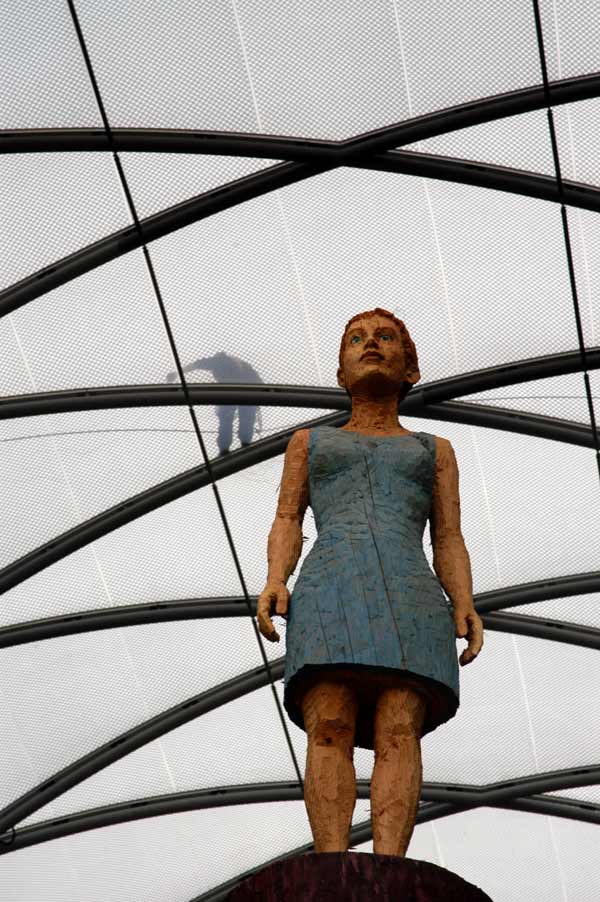
Public art, sculpture in Berlin
This public sculpture in Berlin (2002) is enhanced by a real man on the roof who is cleaning the glass.

Silver head with a cap and daffodil
Again in Berlin a sculptured silver head is enhanced by a daffodil and cap.
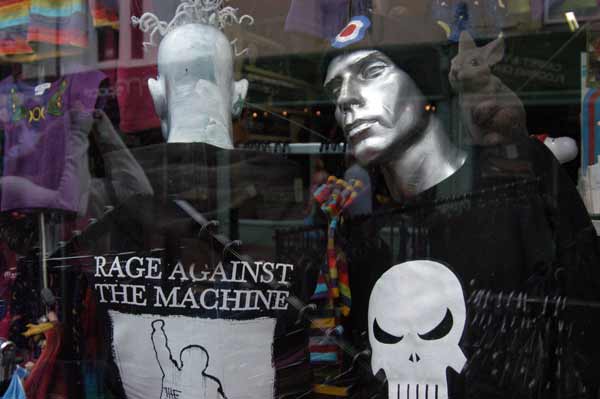
A shop window in Brighton
These two heads in a shop window in Brighton (2002) rage against the machine and hopefully encourage potential shoppers inside.

Art installation on Brick Lane with Oscar
Oscar becomes part of an art installation in Brick Lane. His intelligent pose brings it all to life.

Carving of dancers on a temple wall, Cambodia
This is one of hundreds of ancient sculptures that can be found in temples in Siem Reap in Cambodia (2009).
Cruise Missile Protest

Protest halts traffic on Whitechapel Rd in 1982
These photographs were taken in 1982 at the junction of Whitechapel Rd and Vallance Rd. The protesters are from a local peace group who took direct action to halt the traffic on Whitechapel Rd which was used to transport Cruise missiles to Greenham Common.

Cruise convoys convey death
At this time the Greenham Common peace camp was established to protest against the decision of the British government to allow American cruise missiles to be based there. In December 1982, 30,000 Women, including those photographed here, joined hands around the base at the Embrace the Base event. After making there point by holding traffic up for some time the protesters followed instructions from the police and allowed traffic to flow freely. The Women’s peace camp at Greenham Common inspired the creation of other peace camps at more than a dozen sites in Britain and elsewhere in Europe. Note the remnants of the Lahore Kebab House in the background on New Rd.

A waiting motor cyclist reads a flyer about the protest
In 1991 the last missiles left Greenham and protesters won the right to house a memorial site which was established in October 2002.

Police arrive at the protest
When the police arrived they addressed their remarks to the only man in the demonstration. When the women asked the officer to address them because they were a collective it caused some confusion. In the end the protest finished with no arrests. The protesters had made their point effectively.