Gentrification and Housing Affordability in East London
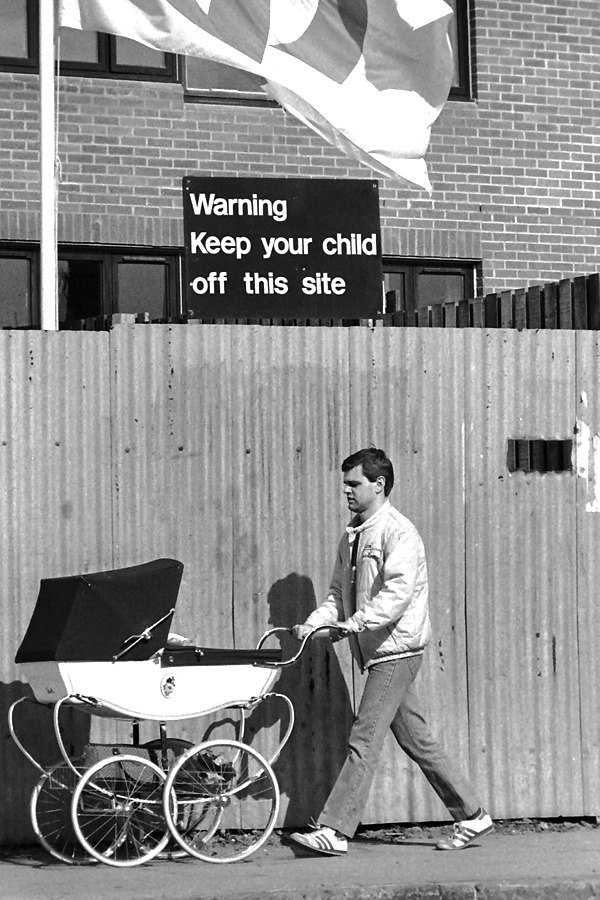
When I took this photograph in 1986, the Isle of Dogs was undergoing one of the most dramatic urban transformations in Britain.
Following the decline of London’s docks during the 1960s and 1970s, the area experienced severe unemployment and economic decline. In 1981, the London Docklands Development Corporation was established by the Thatcher government to attract private investment into the Docklands. Vast tracts of valuable land were transferred to developers, paving the way for new housing schemes and, ultimately, Canary Wharf.
The first signs of redevelopment appeared in the form of new housing estates, preceding the skyscrapers and financial towers that would later come to define the area. Many local residents saw these developments as being designed for incoming professionals rather than the established working-class communities who had lived there for generations.
In this context, the photograph came to symbolise exclusion as much as opportunity. The man with the pram becomes a representative figure of the existing community, passing developments that were physically within his neighbourhood but economically beyond his reach.
Today, the image reads almost as an early photograph of gentrification. By contemporary standards these houses do not appear especially luxurious, yet in the mid-1980s they represented a new housing market largely disconnected from local incomes and circumstances.
The photograph documents the beginning of a process that would eventually transform the Isle of Dogs from one of London’s poorest districts into an area with some of the highest property values in the country.
Viewed forty years later, the image has acquired an additional significance. It now appears almost prophetic. The issues it hints at—housing affordability, regeneration, displacement and social inequality—remain central to debates about the Isle of Dogs and many other parts of London.
The continuing relevance of these questions is reflected in today’s housing crisis. The housing charity Shelter reports that more than 1.3 million households are currently on waiting lists for social housing in England, while only 12,198 new social homes were built by councils, housing associations and private developers last year. At that rate, there are approximately 110 households waiting for every new social home delivered, and it would take well over a century to clear existing waiting lists.
As a result, the photograph functions both as a record of a specific moment in 1986 and as a lasting commentary on the social consequences of urban redevelopment. What began as a local story about the transformation of the Docklands now resonates as part of a much wider conversation about who benefits from regeneration and who is left behind.