Mile End: A Tapestry of Change in East London
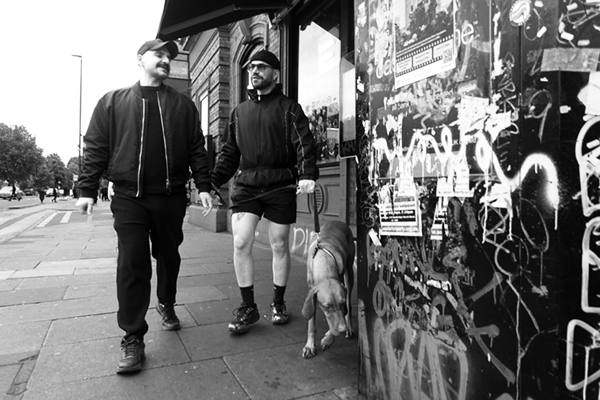
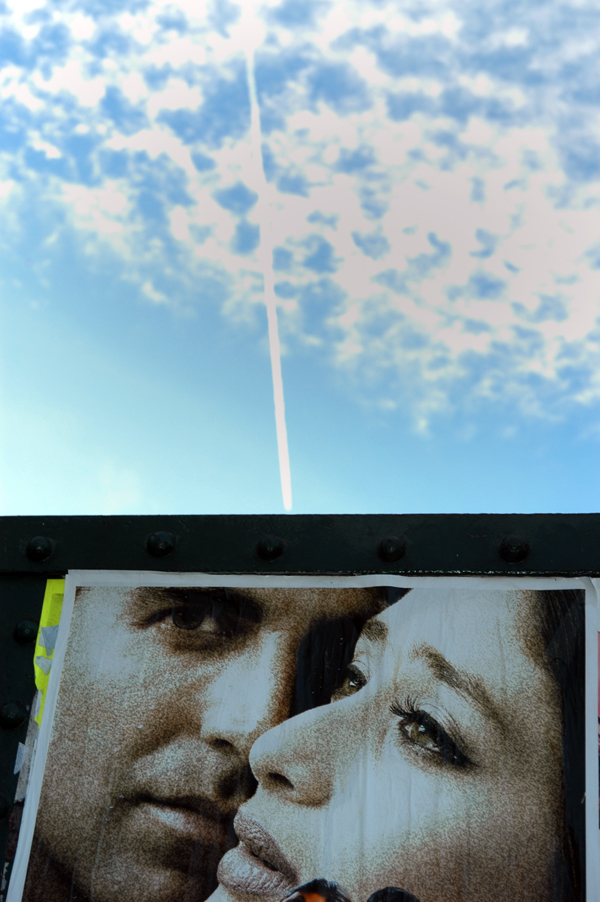
This recent photograph was taken on Mile End Road, a place I know well and have been photographing for many years. This lively urban scene—with two men in conversation, a dog, graffiti, and layers of weathered posters—appeals to me because it feels so full of life. There is a sense of humour and familiarity in the exchange between the two men, while the dog is happily following the scent trails left by others who have passed before him. The graffiti and torn posters form an ever-changing visual footprint of the city: an organic, unplanned piece of collective street art that even the weather has helped to create.
Mile End sits within a part of East London that has experienced repeated waves of social, economic, and cultural change. The layered wall, covered with posters, paint, and graffiti, functions almost like an archaeological surface, recording those changes over time. There are two conversations taking place simultaneously: the everyday dialogue between the dog walkers and the silent, accumulated voices embedded in the wall itself, inviting passers-by to stop and decipher its messages.
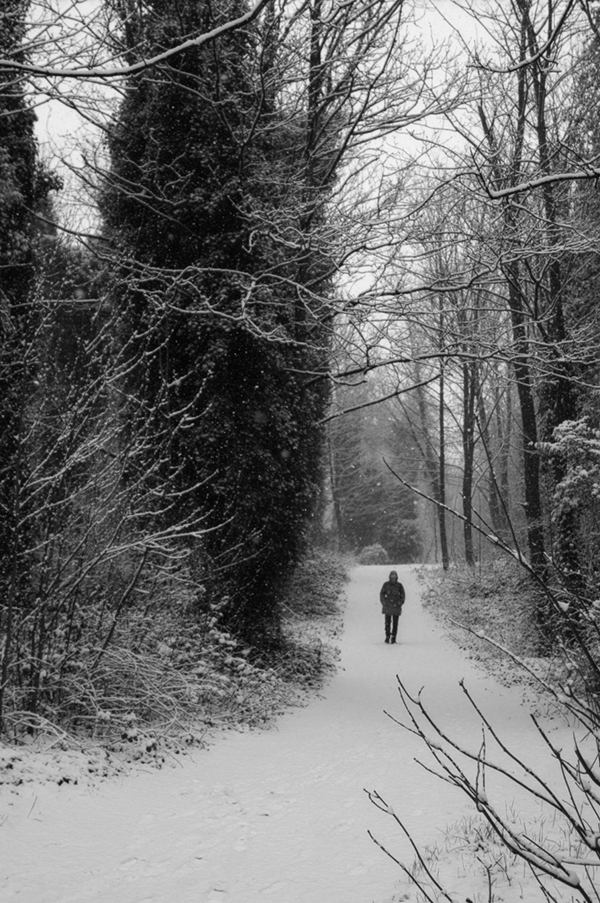
Mile End has always been a place of transition, where different communities, histories, and cultures intersect. A short walk away (above), on Southern Grove, lies Tower Hamlets Cemetery Park, one of London’s magnificent Victorian “Magnificent Seven” cemeteries. Established in 1841, it is now a thriving urban nature reserve where woodland has gradually reclaimed the historic graves and monuments. The contrast between the urban energy of Mile End Road and the quiet, overgrown cemetery offers a poignant reminder of the many layers of life, memory, and change that define this part of East London.