Capturing Liverpool: The Dignity in Daily Life
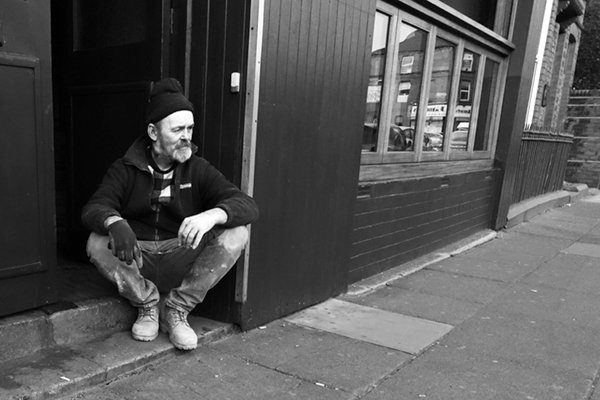
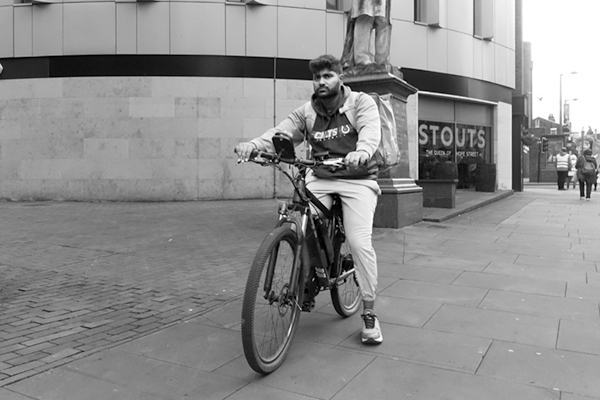
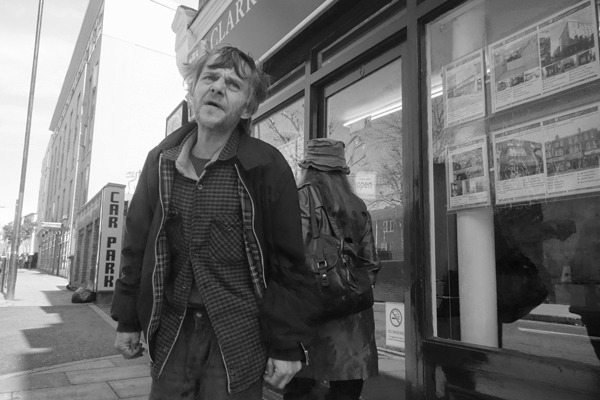
I photographed this man on Smithdown Road as he paused for a break from work, or perhaps had just finished a hard day’s labour. His clothing suggests that he is a construction worker. His gaze indicates that he is neither fully engaged with the street nor withdrawn from it. He appears tired, yet content to be resting for a moment. There is a dignity about him as he removes a glove, while the empty pavement around him creates a sense of solitude and reflection.
The scene reminds me of my own time as a builder’s labourer on the National Exhibition Centre in Birmingham during the 1970s. It was a holiday job while I was a student in Liverpool. Looking back, I suspect I learned as much about life on that building site as I did at university.
The photograph presents a man occupying a small corner of Liverpool, yet he gives the image its emotional weight. It speaks of work, waiting, place, and presence without explicitly naming any of them. It is a celebration of everyday life—one of those quiet moments that reveal a city’s character through the people who inhabit it. The image invites us to pause and recognise the dignity, resilience, and humanity found in ordinary lives.


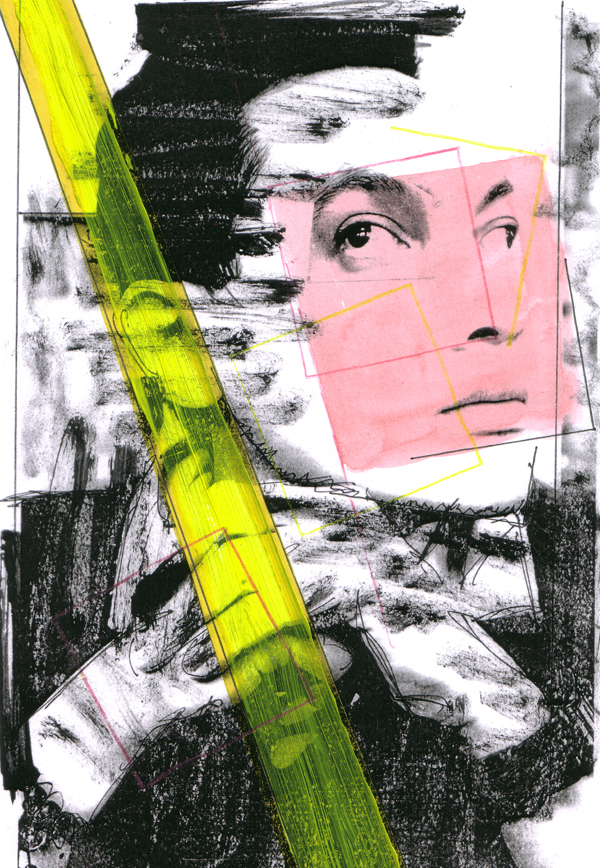
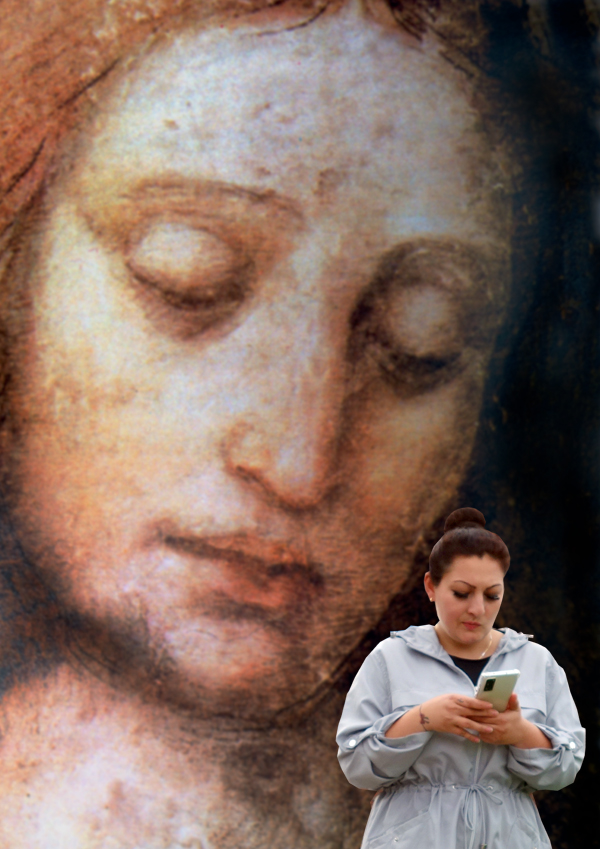
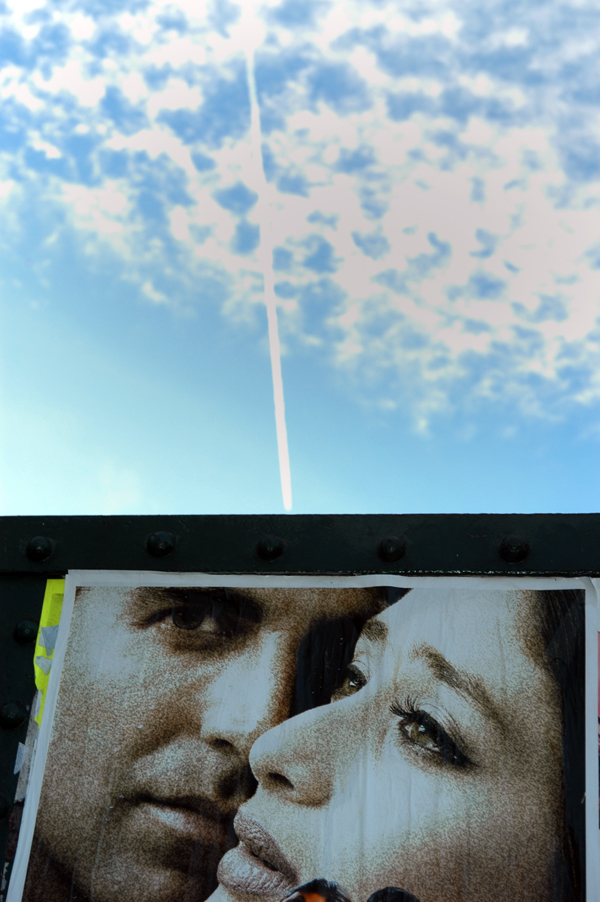
I’ve always believed that breaking the “rules” of photography can open up creative possibilities that allow for a more visually expressive exploration of the human condition.
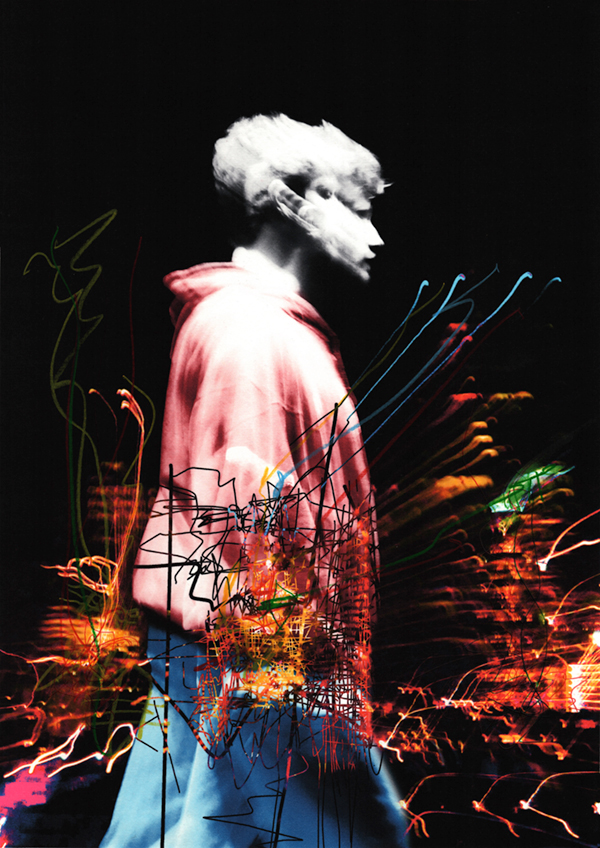
This photomontage is the collision of two images: one, a low-light photograph of a dancer during rehearsal; the other, a London nightscape dominated by streaks of light created through deliberate camera movement. I have also drawn over the final composite image. Although the figure is technically the subject, it is motion and light that ultimately dominate the experience.
The central figure stands isolated in profile, almost ghost-like. The face is blurred enough to erase individuality, transforming the person into something symbolic rather than personal—a mood, a memory, or a psychological state. He exists in stark contrast to the harsh electric streaks that surround him.
I’ve always loved walking through a city at night, and I’ve long felt that the trails of light captured while photographing evoke a fractured sense of time. Rather than preserving a single instant, the image compresses multiple moments into one. It becomes an exploration of the nocturnal urban landscape, held together by screeching, untouchable ribbons of light that resemble neural pathways. Perhaps it is closer to a surreal dreamscape—a place where you are lost, disoriented, and uncertain of how to find your way home. I’ve had many dreams like that.
You can buy a signed copy of my latest photo book here
Watch The Photographer – a short film about the photography of Phil Maxwell:

I took this photograph in Aldgate in 1991, when the area was caught between decline and redevelopment. The City of London was expanding eastward, Docklands regeneration was reshaping nearby districts, and roadworks and improvised infrastructure had become constant features of the streetscape.
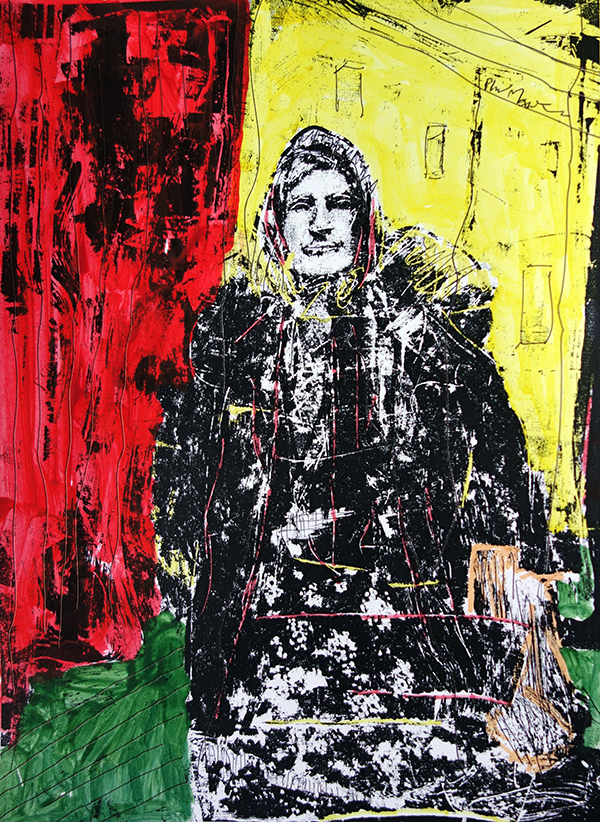
The woman in the picture is signalling to the approaching bus to stop. I had been cycling through Aldgate and, instead of simply riding past, I got off my bike and stopped to talk with her. She told me that because it was only a temporary stop, drivers would often fail to notice people waiting and sometimes carried on without stopping.
Her walking stick, rather than suggesting vulnerability, became a symbol of determination and strength. She was absolutely intent on making that bus stop.
My bicycle, leaning in the foreground beside the makeshift barrier, became part of the scene too — a reminder that I was not a detached observer but briefly part of the same improvised urban choreography.
Aldgate has changed dramatically since 1991. What seemed at the time an ordinary roadside moment now reads as an archival record of a transitional East End landscape before large-scale commercial redevelopment transformed the area. As much as it is a portrait of a feisty East End woman, it is also a portrait of London itself: permanently unfinished, adapting in real time through makeshift solutions, resilience, and everyday encounters.



You can buy a signed copy of my latest photo book here
Watch The Photographer – a short film about the photography of Phil Maxwell:
East London: Capturing the Spirit of Transformation

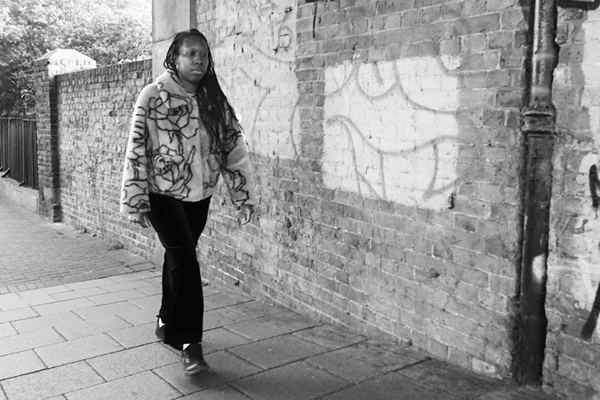
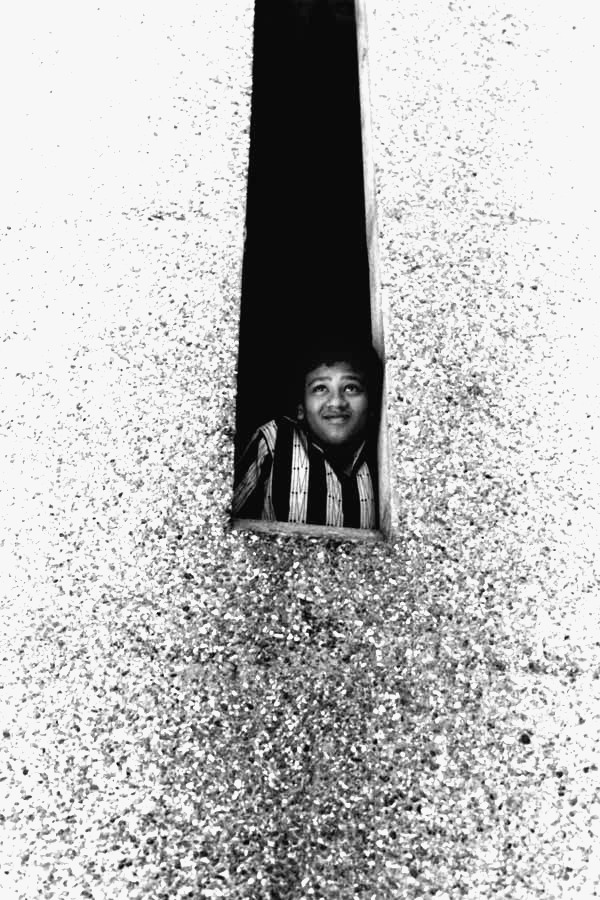
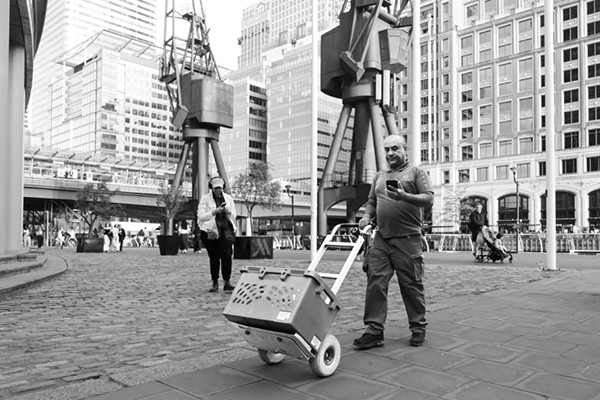
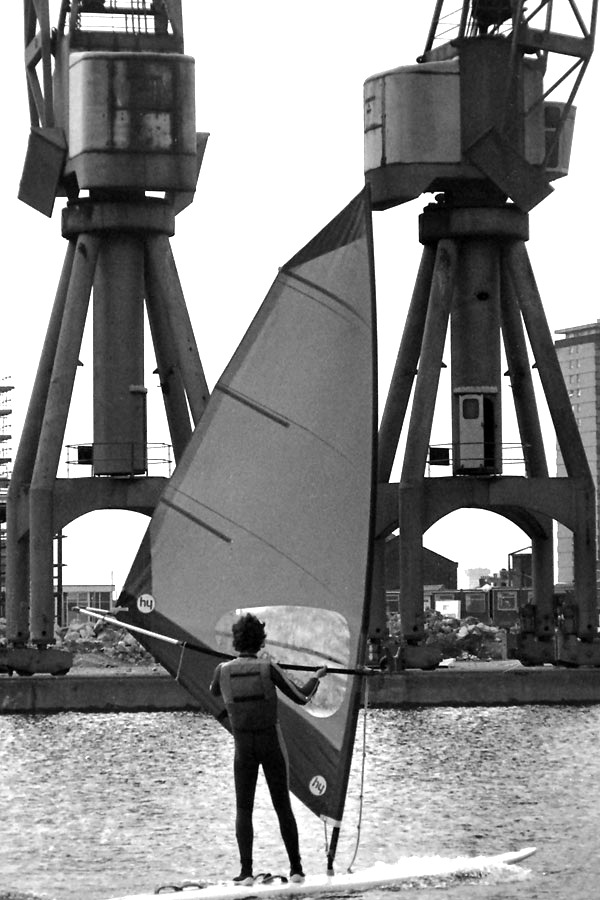
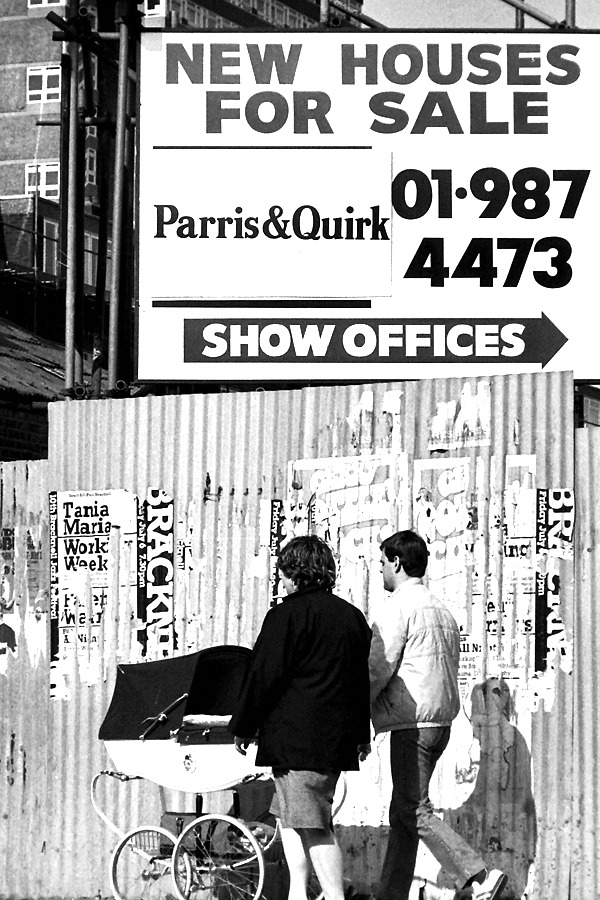
I’ve photographed Brick Lane and the surrounding area for more than forty years, and together these images form an archive of a disappearing London. I’ve always thought of Brick Lane as a kind of stage set, with multiple planes of action unfolding simultaneously. People move in different directions: some aware of each other, others isolated within their own trajectories. The street has a restless, kinetic quality that felt especially characteristic of East London in the early 2000s — a place where identities, economies and histories constantly overlapped and collided.
For Brick Lane in particular, change has been accelerated by its proximity to the financial centres of the City and Canary Wharf. In 2003, the area was at a moment of transition: still visibly working-class and deeply shaped by Bangladeshi immigrant culture, yet increasingly attracting artists, students, nightlife and the first strong waves of gentrification.
Personally, I’m saddened by the way local people have been pushed out through that process. Walking along Brick Lane in the 1980s, I would always run into people I knew. It was a place for the exchange of neighbourhood news, gossip, laughter and protest. Today, much of the street theatre I loved has become corporatised and bland.




You can buy a signed copy of my latest photo book here
Watch The Photographer – a short film about the photography of Phil Maxwell:

I took this photograph in 1990, at the exact moment a child ran across the road and briefly aligned with the immense Canary Wharf tower rising in the distance.
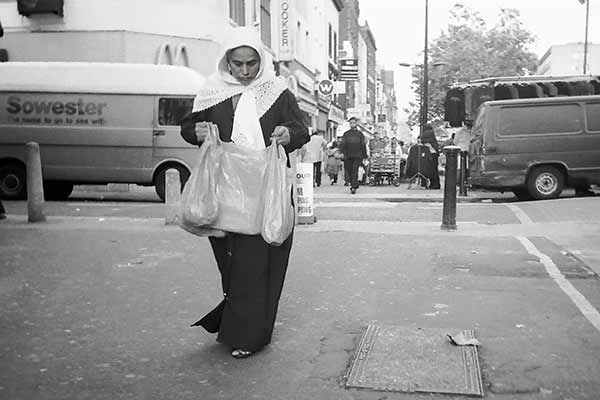
The image captures Canary Wharf at a pivotal stage in its transformation from derelict docklands into a global financial centre. It presents a landscape that is simultaneously unfinished, ambitious, and strangely empty — a visual record of London in transition at the end of the twentieth century.
The development itself was deeply controversial. Critics viewed it as a speculative project, disconnected from the needs and realities of the surrounding communities. The photograph subtly reflects that tension: the architecture appears monumental yet socially absent. The tower block — a monument to free-market capitalism — seems, in an almost surreal way, disconnected from the child in the foreground.
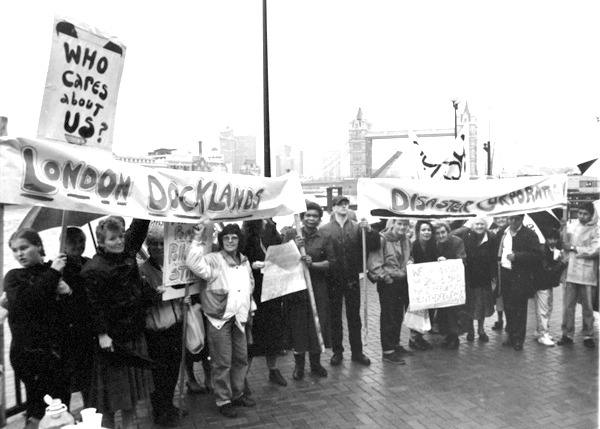
By the 1970s and 1980s, the docks had become emblematic of post-industrial decline and economic abandonment. Under the policies of the Thatcher era and the direction of the London Docklands Development Corporation, the area was reshaped through deregulation, private investment, and large-scale commercial development. Vast areas of publicly owned land were handed to speculators, often with little regard for the people who had long lived and worked in the area.



You can buy a signed copy of my latest photo book here
Watch The Photographer – a short film about the photography of Phil Maxwell: