The Low Paid Keep The World Moving
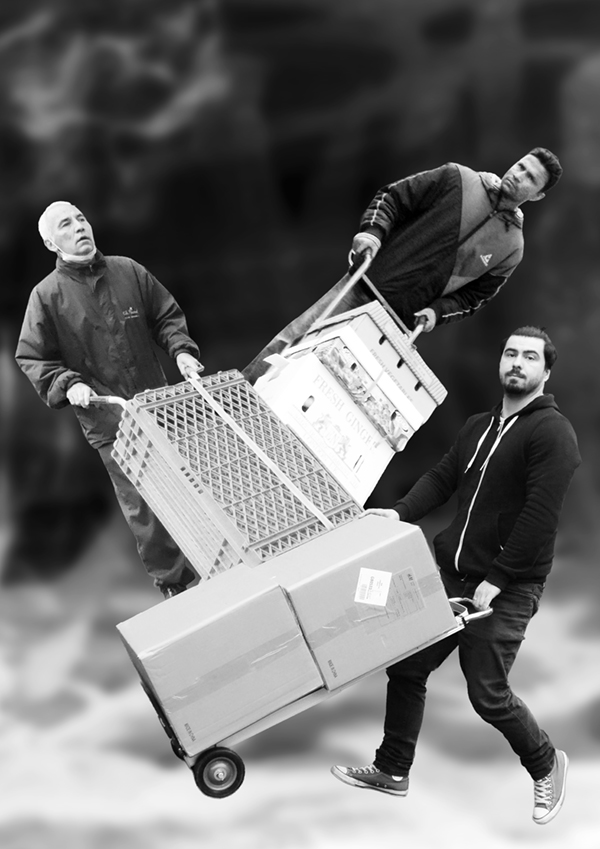
I’ve long been drawn to early 20th-century avant-garde photomontage—especially Dada works by Hannah Höch and John Heartfield. Their sharp critiques of capitalism and fascism continue to resonate.
This digital photomontage based around three seperate images of workers moving goods on hand trolleys. I’ve combined them to relate their physical effort to a broader economic truth using both composition and symbolism.
Symbolically, the overloaded trolley becomes a metaphor for the global system—commerce, consumption, infrastructure—all of it literally being pushed forward by underpaid workers. The precarious angle suggests instability: the system depends on these workers, yet burdens them to a point that looks unsustainable. This isn’t a single moment or specific place, but a recurring reality across many societies.
I’ve tried to highlight the disconnect between the essential nature of low-paid work and its lack of recognition or reward under capitalism. I’m inviting the viewer to reconsider who actually “carries” modern life—and at what cost. During the pandemic key workers were praised as heroes but are now demonised by mainstream media if they dare to go on strike fore better pay and conditions.
You can buy a signed copy of my latest photo book here
The Power of Reading: A Great Escape.

Whitechapel station has changed dramatically since this photograph of a woman reading her book was taken. Today, you’d be far more likely to see someone absorbed in their phone than in a paperback. I imagine this passenger has passed through the station many times before, navigating the stairs almost instinctively. Yet she is clearly elsewhere—lost in thought, detached from her surroundings. She has carved out a small, private world in the middle of a transient space. The book becomes a kind of shelter, its thin pages standing in for walls.
Whitechapel Station is built for movement—for people passing through without attachment. Nobody is meant to linger. And yet, she leaves an impression precisely because she resists that momentum. While everything around her suggests urgency and flow, she chooses stillness. Reading here isn’t just a way to pass time; it’s a quiet act of opting out. That choice gives the image its emotional core.
There’s also an enduring sense of mystery. I find myself wondering what she was reading, what held her attention so completely—but of course, that’s something I’ll never know. The unanswered question becomes part of the photograph’s power.
The station itself opened on 6 October 1884 as part of the District Railway, serving a rapidly expanding and industrialising East London. Since then, countless passengers must have read newspapers, novels, letters—small acts of inwardness amid the outward rush. This single image, of a woman reading as she climbs the stairs, taps into that long, unseen history.
It’s a reminder that photography doesn’t just record what is visible; it sparks what we imagine.


You can buy a signed copy of my latest photo book here
Celebrating Global Cycling Culture Through Photos
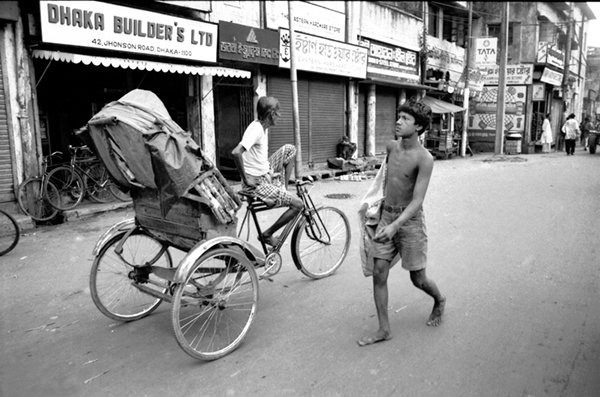
The best gift I received as a child was a brand-new bicycle. I went everywhere on it. It was a source of pure joy, but it was also practical—I rode it to school and used it to explore the surrounding countryside of my hometown, Coventry.
In the 1960s, there were far fewer cars on the roads, so cycling felt relatively safe. For me, it was the closest thing to flying. As I raced down hills, I would imagine myself soaring through the air—it was a thrilling escape from the darker edges of the world.
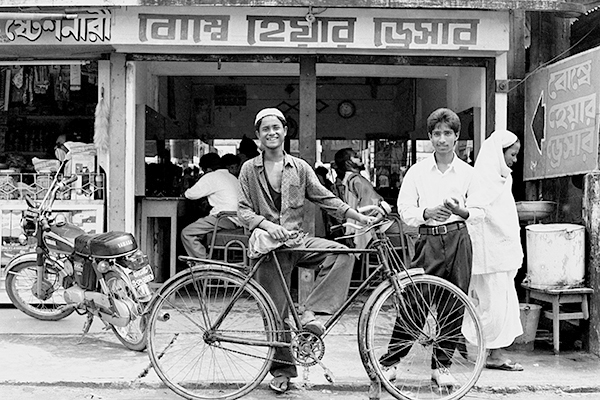
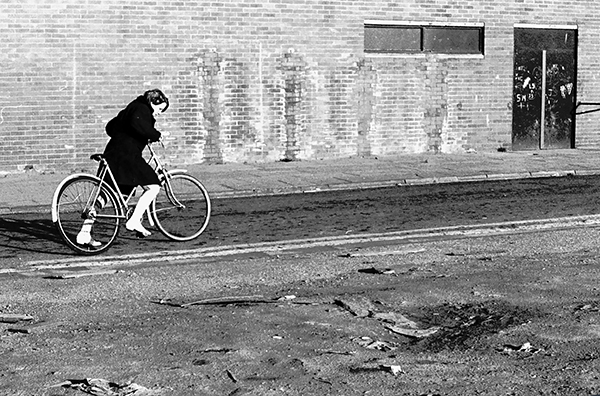
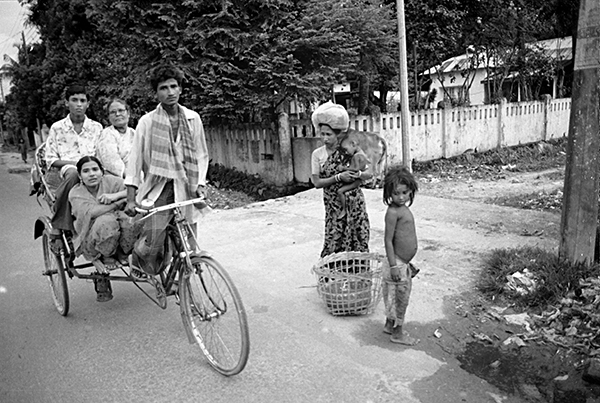
Pedal power is universal, found in every corner of the globe, and these photographs celebrate that enduring spirit. As H.G. Wells once said, “Whenever I see an adult on a bicycle, I do not despair for the future of the human race.”



You can buy a signed copy of my latest photo book here
Exploring Liverpool: Vibrant Streets and Moments
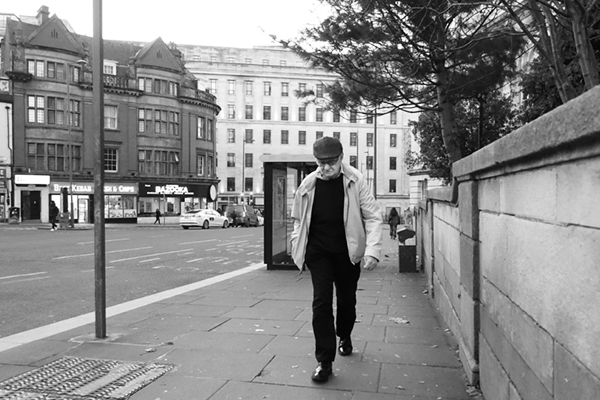


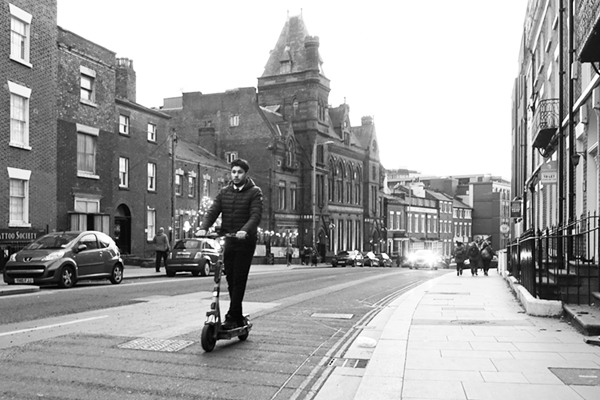
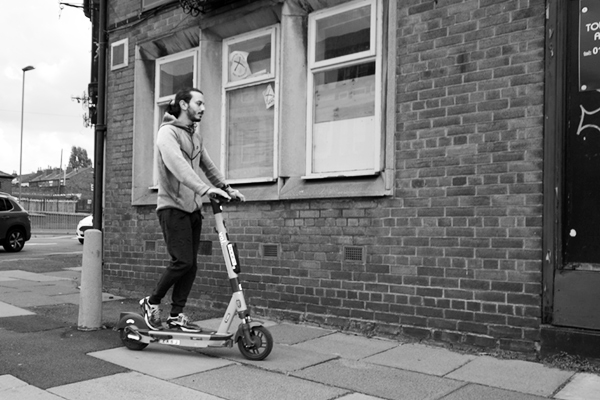
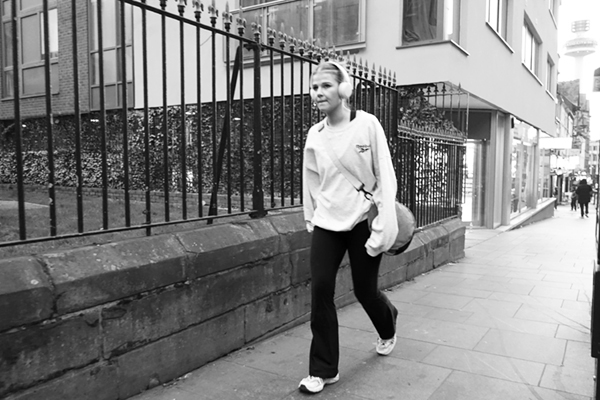


You can buy a signed copy of my latest photo book here
Exploring Urban Life in Birmingham City Centre
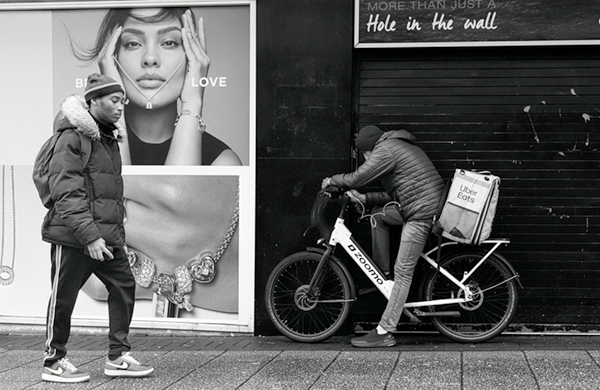
Birmingham is often described as the UK’s second city, and I’ve known it since childhood due to its proximity to my hometown of Coventry, which I left in 1972 at the age of eighteen. Since then, I’ve returned only occasionally. On this occasion I was there for a few days to interview and film striking bin workers who were fighting against cuts in their pay and conditions.
I made this image on a grey day, on a street marked by numerous closed shop units, which contributed to a distinct sense of decline. I’ve long been interested in the relationship between people and advertising, and here that interplay felt particularly stark. A large, glamorous fashion advert—idealised and aspirational—contrasts sharply with the gritty reality of the street: a delivery rider waiting for his next job and a passerby absorbed in his phone, seemingly indifferent to his surroundings.
The eye is eventually drawn to the model in the advert, posing with a piece of jewellery alongside the words “Be Love.” Meanwhile, the two individuals, though physically close, remain disconnected from one another, and from the message looming above them. The advert feels irrelevant, even hollow.
This photograph reflects on themes of urban isolation, inequality, and the gig economy, which often demands long hours for low pay. It is a scene that could easily be repeated in cities across the UK today.
You can buy a signed copy of my latest photo book here