Exploring Travel Underground: Moments in Time

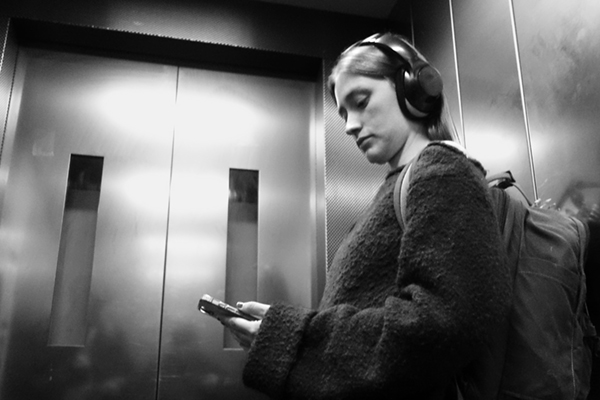
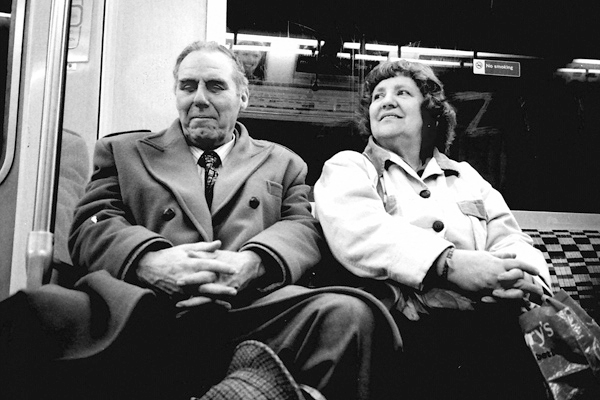
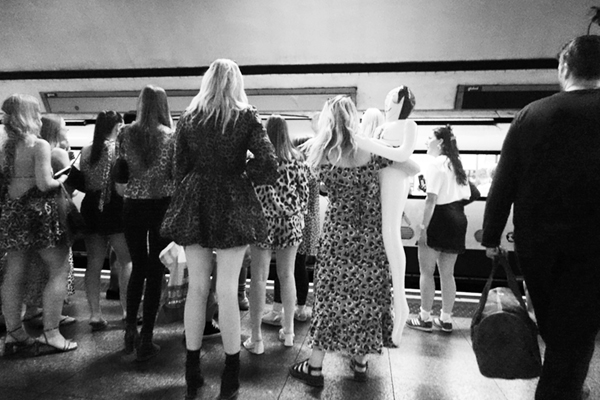
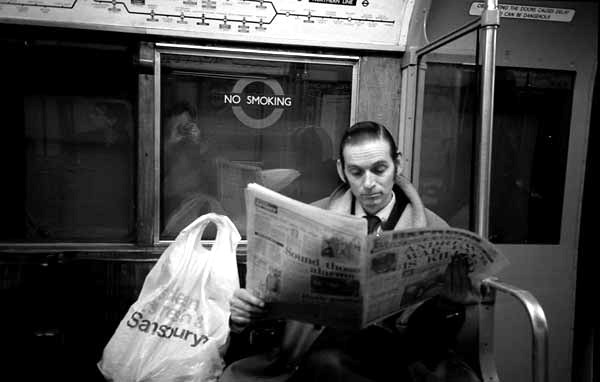
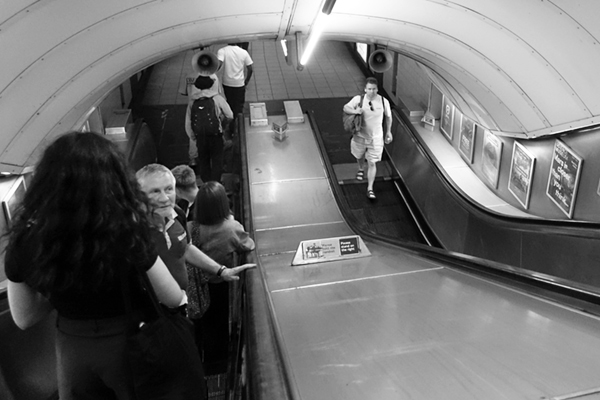
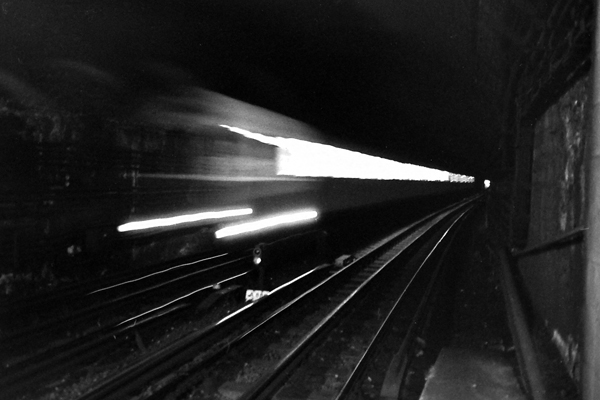
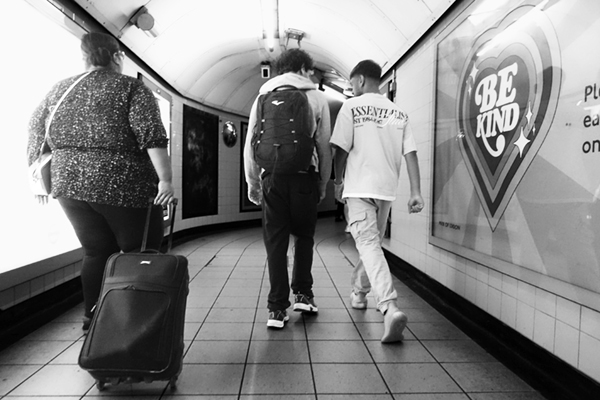
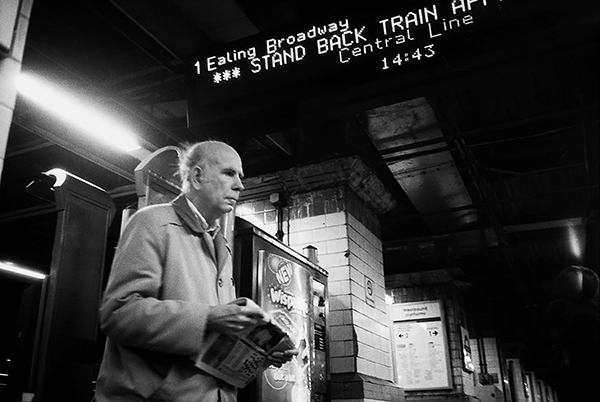
This photograph feels less like a picture of the London Underground than one about emotional isolation within a crowded city. Although there are many people using the London underground there’s usually little communication between strangers on the train.
It speaks to the paradox of metropolitan life: being surrounded by strangers while experiencing something deeply personal.
The mood of passengers on the underground changes at different times of day. At night after the pubs have shut passengers are boisterous in the morning they’re quiet.


Mile End: A Tapestry of Change in East London
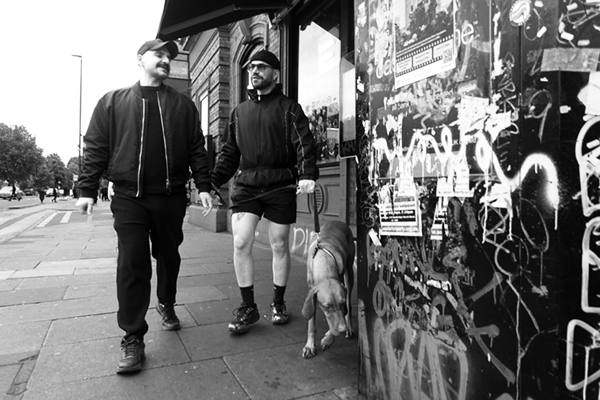
This recent photograph was taken on Mile End Road, a place I know well and have been photographing for many years. This lively urban scene—with two men in conversation, a dog, graffiti, and layers of weathered posters—appeals to me because it feels so full of life. There is a sense of humour and familiarity in the exchange between the two men, while the dog is happily following the scent trails left by others who have passed before him. The graffiti and torn posters form an ever-changing visual footprint of the city: an organic, unplanned piece of collective street art that even the weather has helped to create.
Mile End sits within a part of East London that has experienced repeated waves of social, economic, and cultural change. The layered wall, covered with posters, paint, and graffiti, functions almost like an archaeological surface, recording those changes over time. There are two conversations taking place simultaneously: the everyday dialogue between the dog walkers and the silent, accumulated voices embedded in the wall itself, inviting passers-by to stop and decipher its messages.
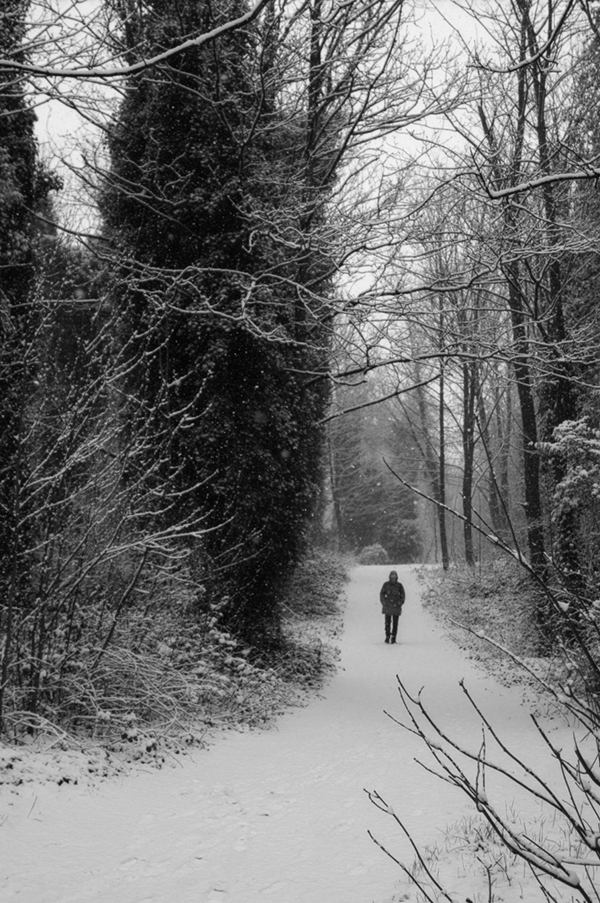
Mile End has always been a place of transition, where different communities, histories, and cultures intersect. A short walk away (above), on Southern Grove, lies Tower Hamlets Cemetery Park, one of London’s magnificent Victorian “Magnificent Seven” cemeteries. Established in 1841, it is now a thriving urban nature reserve where woodland has gradually reclaimed the historic graves and monuments. The contrast between the urban energy of Mile End Road and the quiet, overgrown cemetery offers a poignant reminder of the many layers of life, memory, and change that define this part of East London.




Capturing Time Through Mixed Media Art
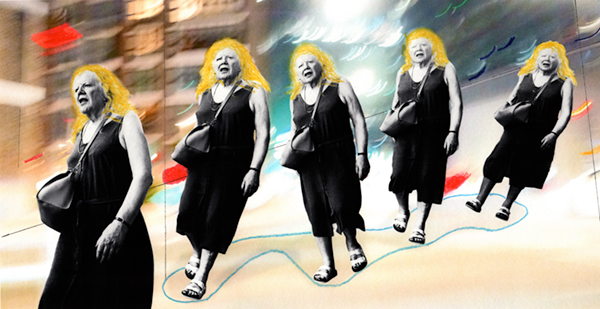
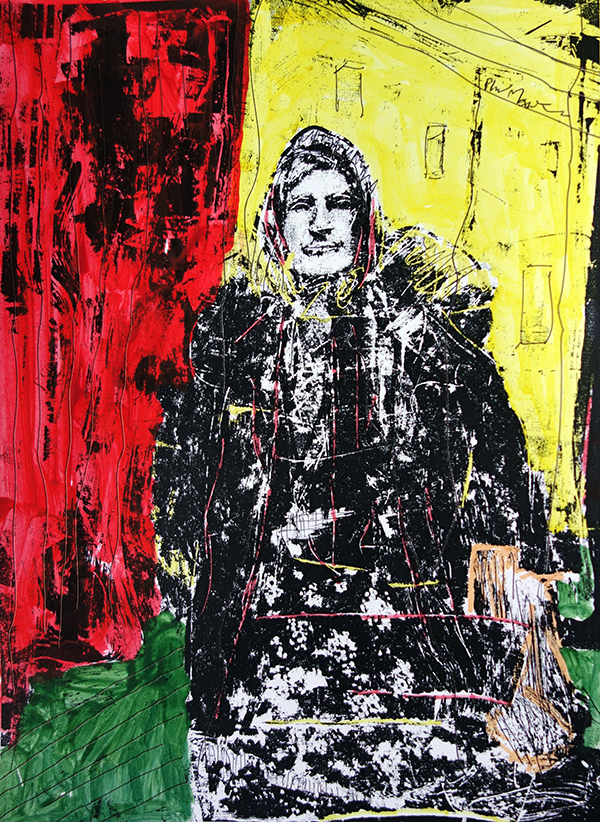
I photographed this woman recently as she walked slowly through Euston Station. The five sequential images were taken over a period of approximately fifteen seconds. I later combined them with a background photograph made from a moving car on the same evening, then developed the final collage by hand using a variety of media.
In the 1990s, I frequently experimented with sequential repetition. At that time, I would cut and reassemble black-and-white darkroom prints into collages, hoping to encourage viewers to engage with an image in a different way. The repeated figure here suggests how a person leaves traces of themselves through time. Rather than disappearing with each step, every moment remains visible, accumulating within the frame.
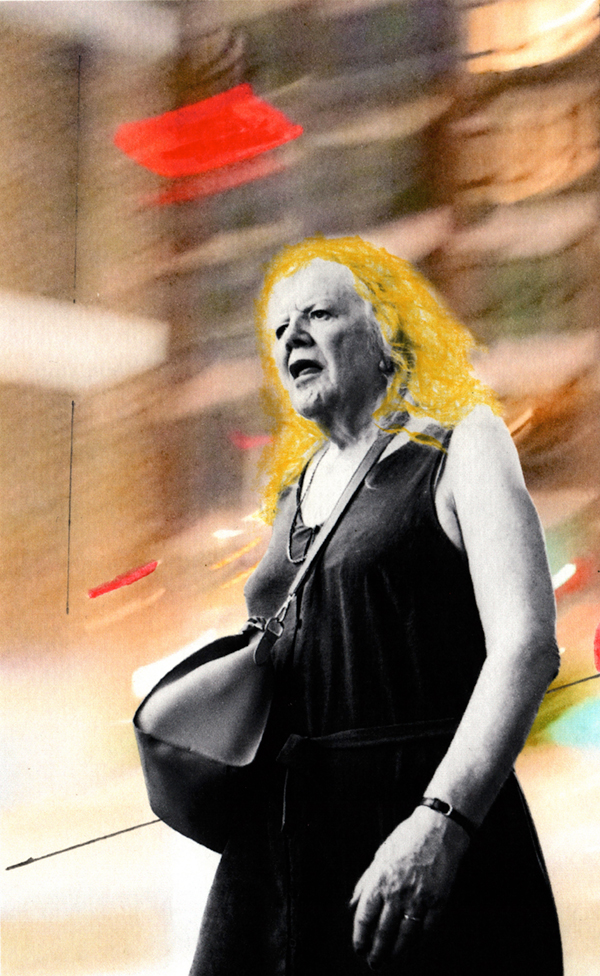
Among the hundreds of people moving through the heat and bustle of the station, this woman stood out. I was drawn to her demeanour and the quiet determination of her stride. In this image, she evokes ideas of accumulated experience, life’s journey, and the simultaneous visibility and invisibility of older people in public space.
The blurred city background contrasts with her repeated presence. The environment appears fast-moving and chaotic, while her expression and pace seem detached from the rush around her. She occupies a different rhythm, carrying her own sense of time through the city.
I have titled the work On My Way because it is concerned with transition rather than arrival. It is a meditation on movement through urban space and through time itself. The piece reflects my belief that there is a poetic potential embedded within everyday encounters on the streets of London.

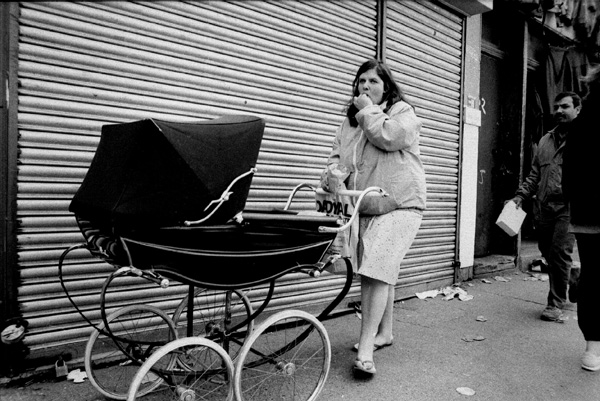
on Whitechapel High Road in the 1980s.
Exploring London’s Dynamic Skyline in Art
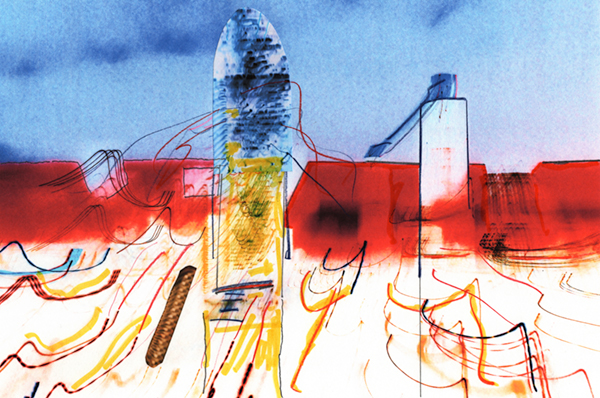
For over forty years I lived on the eleventh floor of a tower block near Brick Lane in East London. From there, I enjoyed sweeping views of the cityscape and watched London’s skyline evolve and transform over the decades. In this mixed-media piece, I have sought to capture the metropolis as a place of constant change.
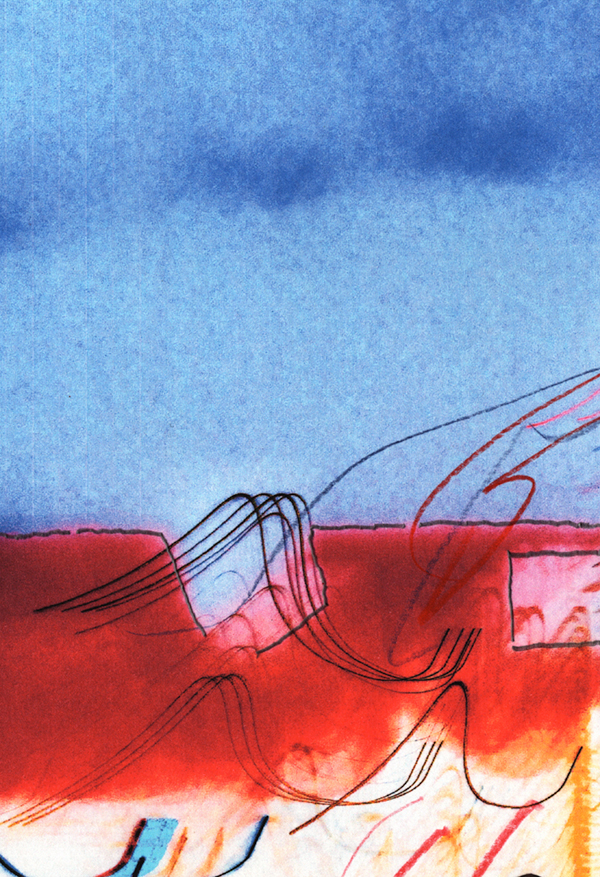
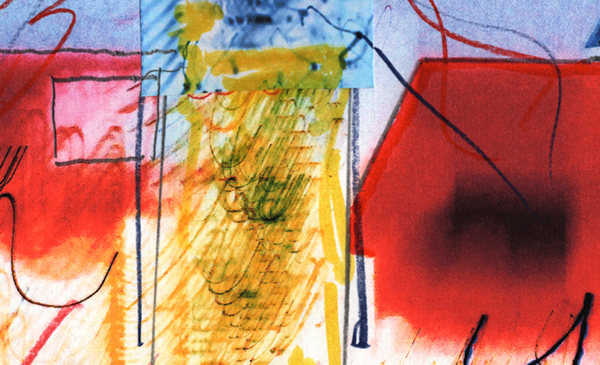
The intersecting lines create a sense of perpetual motion, reflecting the complexity of London—a city where history, finance, infrastructure, and human activity continuously overlap and interact. The work is structured around three principal layers representing the sky, the ground, and the underground.
During a recent week in London, I travelled mainly by Underground and found the claustrophobic heat and overcrowding particularly challenging. That experience remains with me, and I hope to explore it more directly in future work. In contrast, this piece conveys a greater sense of order than the organised chaos that often characterises the city during a heatwave.
The swirling coloured lines suggest traffic routes, Underground networks, electrical systems, and the countless patterns of human movement and communication that animate the city. London has always seemed to me both monumental and unstable—a place of immense scale that is nevertheless in a constant state of flux. For a visual artist, it remains an endlessly engaging and inspiring subject.
Life and Stories in East London Cafés
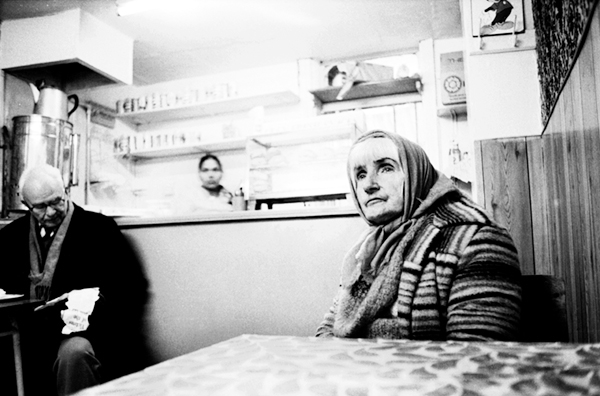
I took this photograph of Joan Lauder, known locally as the “Cat Lady of Spitalfields”, in a modest café on Cheshire Street. At the time, a cup of tea cost just 20p. Sadly, the café has long since disappeared.
Joan was a familiar figure around Spitalfields, pushing a trolley bag filled with tins of cat food, which she distributed to the area’s many stray cats. She was well known and instantly recognisable, an enduring presence in the neighbourhood.
Although three people share the same room, each appears enclosed within their own world. Joan is the anchor of the image, her thoughtful and expressive gaze directed into the distance. She brings life and humanity to a social environment that has now largely vanished. Her expression is difficult to define: thoughtful, wary, resigned, perhaps even quietly determined.
For me, the photograph presents an emotional mystery. What is Joan thinking? Are these regular customers? Is this a moment of waiting, resting, or reflection? What stories lie behind these faces?
During the 1980s, I photographed many people in this café. Some sat alone in moments of quiet contemplation; others were deep in conversation. I was always intrigued to see who might be there, and I was never disappointed. The café offered a small stage on which the everyday dramas of East End life quietly unfolded.