The Resilient Rickshaw of Dhaka: A Symbol of Urban Adaptability
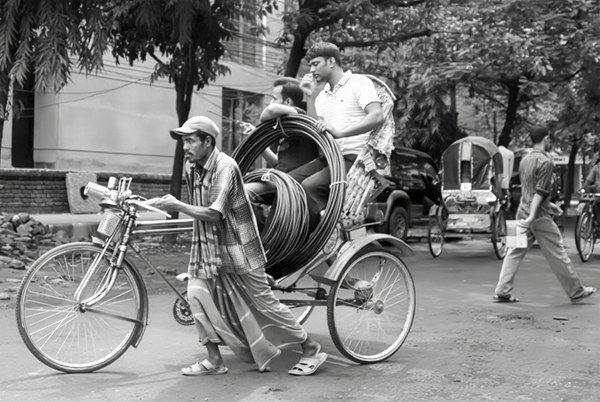
When I made this photograph in Dhaka in 2009, I was struck by how much the city had changed since my earlier visits in the 1990s. New roads, buildings and relentless development had reshaped much of the urban landscape. Yet one thing remained reassuringly familiar: the cycle rickshaw, still the lifeblood of the city’s transport system.
The rickshaw puller leans forward with all his weight, his posture revealing the sheer physical effort required to keep moving through Dhaka’s crowded streets. Behind him, two passengers sit almost casually among enormous coils of black plastic piping. The contrast always makes me smile. During my time in Bangladesh, I never ceased to be amazed by what could be carried on a rickshaw. I saw everything from refrigerators to motorbikes balanced on these superb machines, each load a reminder that necessity often breeds remarkable ingenuity.
For me, this photograph says something about the way Dhaka has always adapted to the demands of a rapidly growing city. There were rarely neat divisions between passenger transport and freight. If a rickshaw could carry it, then it probably would. Every journey represented an opportunity to earn a living.
What also strikes me is that the labour in this scene extends beyond the man pulling the rickshaw. Everyone in the frame appears to be part of the city’s daily economy, whether transporting goods, travelling to work or moving between jobs. It is an ordinary moment, yet one that speaks of the countless individual efforts that keep a great city functioning.
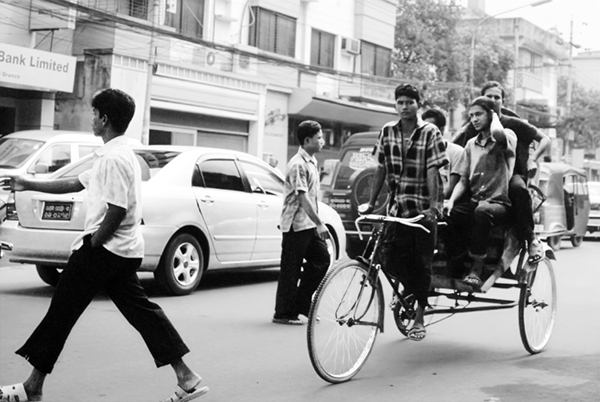
By 2009, Dhaka had become one of the world’s largest cities, with a metropolitan population approaching 15 million. Despite the growing number of cars, buses and motorised vehicles, cycle rickshaws remained indispensable. Estimates suggested there were between half a million and more than one million operating across Greater Dhaka, many of them unlicensed. Together they carried millions of passengers every day and provided work for hundreds of thousands of men, many of whom had migrated from rural Bangladesh after losing agricultural livelihoods or in search of better opportunities.
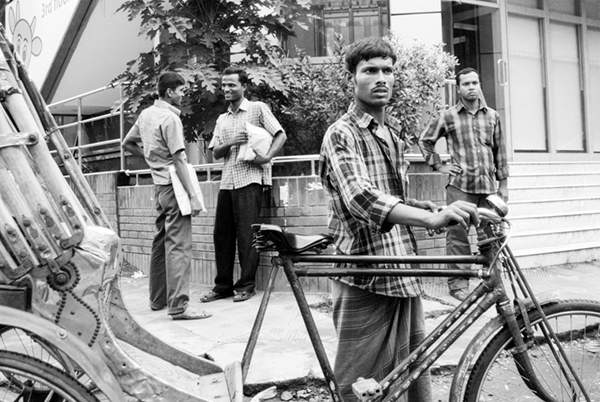
Rickshaw pulling was, and remains, punishing work. Long days of twelve to fourteen hours were common, with modest earnings at the end of them. Yet watching these men negotiate impossible traffic while carrying passengers, oversized cargo—or both—gave me a deep respect for the strength, balance and skill their work demanded.
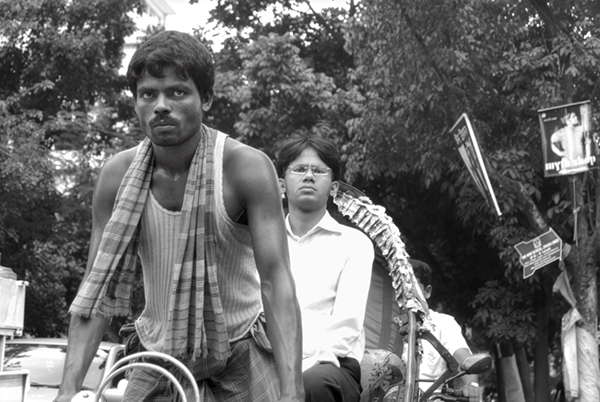
Cycle rickshaws first appeared in Dhaka during the 1930s under British colonial rule. Following the Partition of India in 1947, and especially after Bangladesh gained independence in 1971, their numbers expanded rapidly as rural migration fuelled the city’s growth. By the early twenty-first century, the rickshaw had become far more than a means of transport. It had become one of the defining symbols of Dhaka itself.
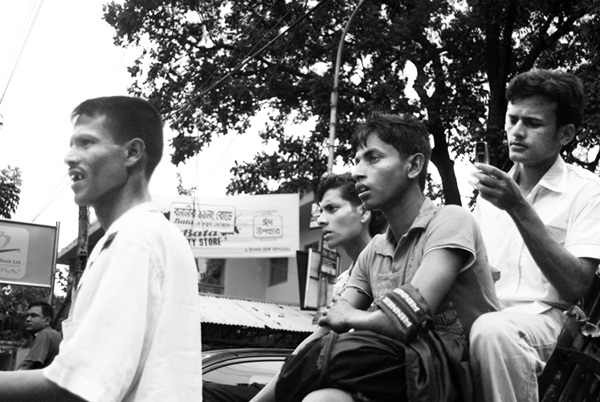
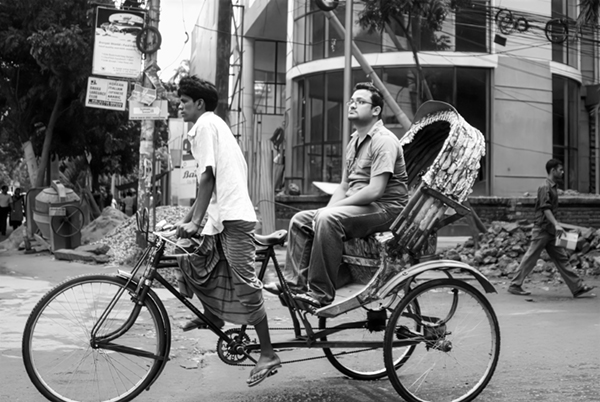
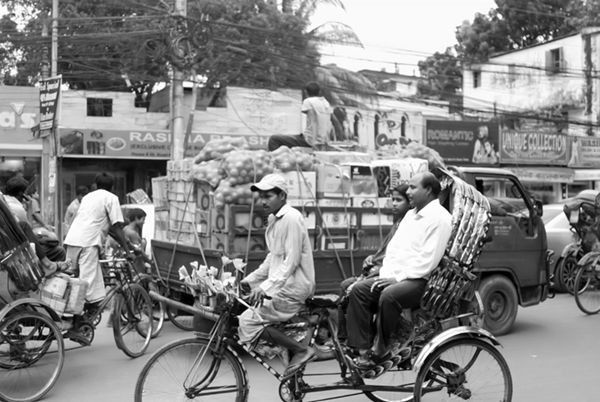
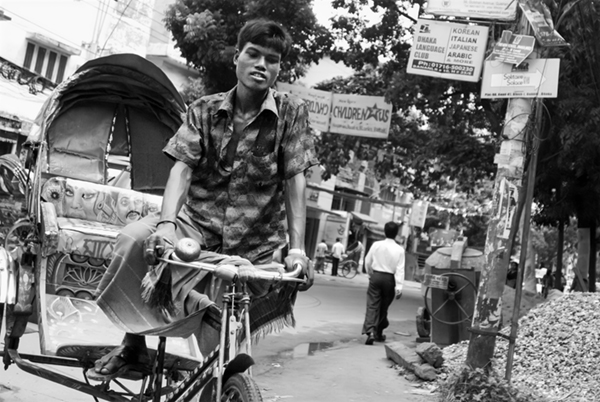
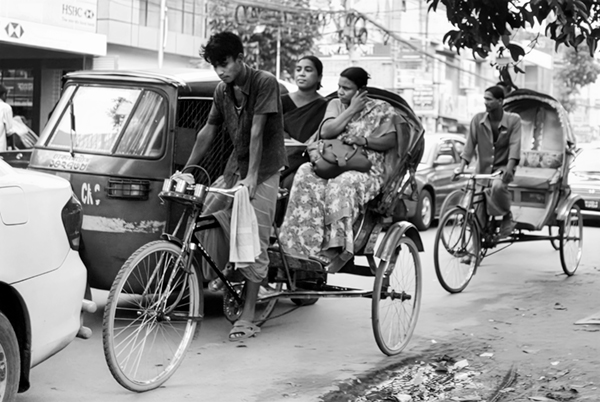
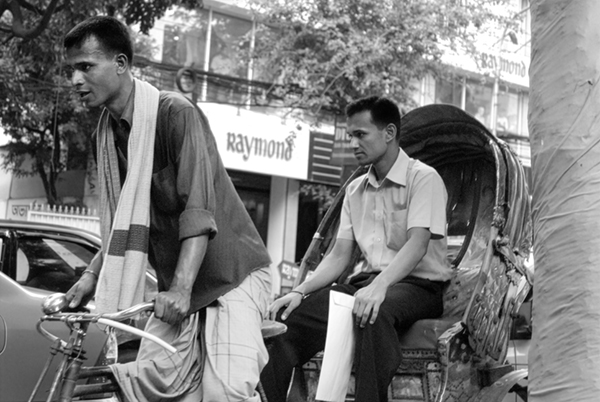
Whenever I look at these photographs, I think of the rickshaw not simply as a vehicle but as a symbol of resilience and adaptability. It represents the informal economy at work, the extraordinary versatility of everyday technology, and above all the human effort that has powered Dhaka’s remarkable growth. I will never forget travelling through the city by rickshaw. Those journeys brought me closer to the rhythm of everyday life than any taxi or private car ever could, and they remain among my happiest memories of Bangladesh.