The Vibrant Streets of East End London
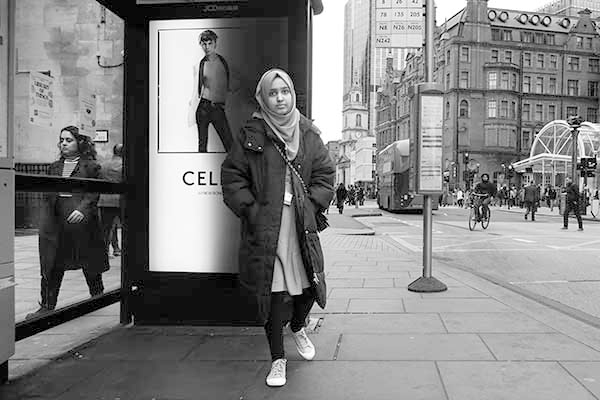
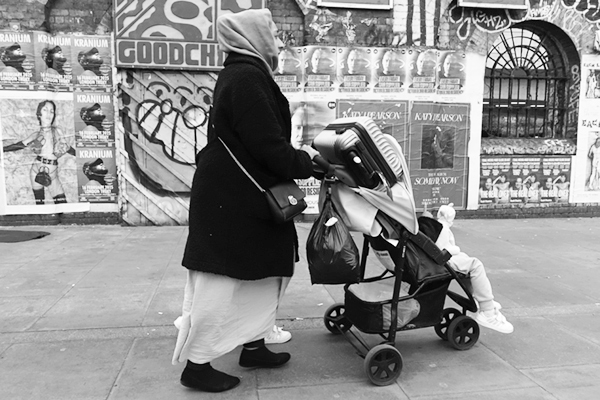
Bishopsgate is one of the most visually layered parts of London. Situated between the financial district and the East End, it is a place where glass corporate architecture, transport systems, fragments of history, advertising, surveillance, and ordinary pedestrian life collide within the same frame.
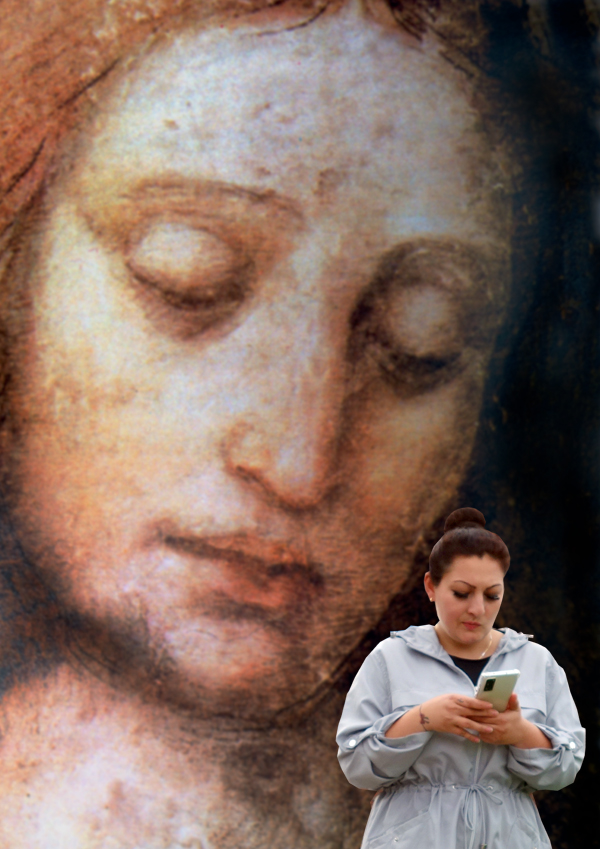
The theatre of the street in this image revolves around the woman waiting for the bus, observed both by the static advertisement behind her and by the pedestrian passing beyond the shelter. All three figures remain disconnected, occupying a temporary social stage where strangers share space without necessarily interacting.
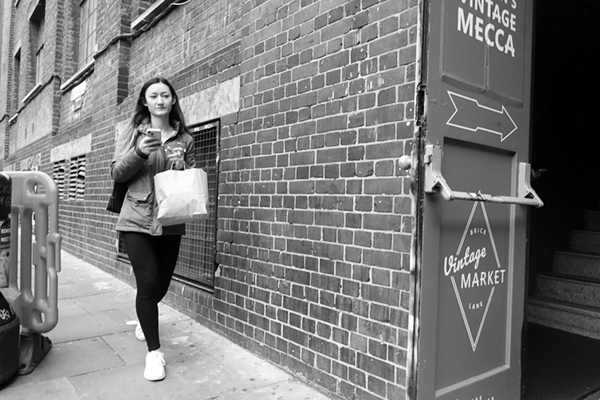
I’ve always been drawn to the rhythms of Bishopsgate: the queues, the posture and spacing between bodies, the repetition of verticals formed by poles and buildings, and the choreography of commuters navigating constrained urban space. It is a rhythm very different from the one found only a few minutes away on Brick Lane.
London’s reflective surfaces — especially around the glass-fronted office developments of Bishopsgate — often produce layered compositions in which advertisements, pedestrians, traffic, and architecture visually overlap. That layering mirrors the social complexity of the city itself, where different cultures, redevelopment, finance capitalism, nightlife, poverty, and wealth intersect within the same streetscape.



You can buy a signed copy of my latest photo book here
Watch The Photographer – a short film about the photography of Phil Maxwell: