Urban Life at Liverpool’s Bus Stops
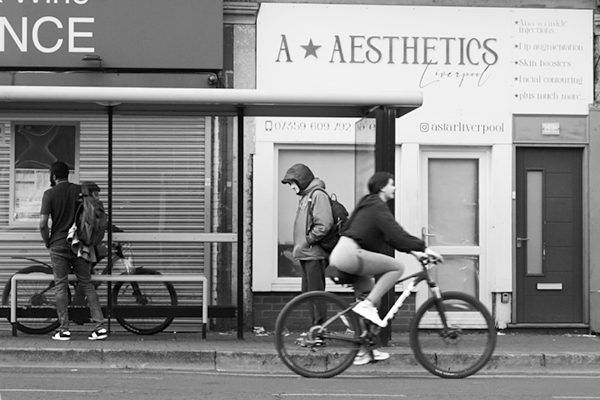
I begin this photoblog with an image taken on Picton road built around a bus stop and framed by a row of shopfronts including one advertising “Aesthetics”. For me the real aesthetic is created by the cyclist cutting across the foreground. She interupts the scene and introduces contrast between the still figures and adds momentum to give the image energy.
The people waiting for the bus are close together but psychologically separate. Each person seems absorbed in their own world—standing, waiting, moving through. There’s no interaction, which subtly echoes the urban experience: shared space, individual trajectories. The cyclist, mid-stride, becomes a visual metaphor for transience, while the others appear rooted, almost paused. As someone who travels by bus regularly I’ve always found bus stops great places for street photography. When I took this photograph I was standing across the road waiting for the bus going in the opposite direction.
Picton Road, close to where I live, comes through not as a landmark but as a lived-in street. The mix of beauty services, closed shutters, and passersby hints at economic tension and everyday resilience.

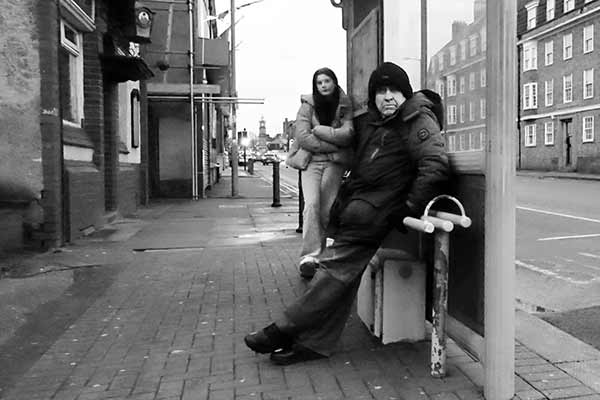


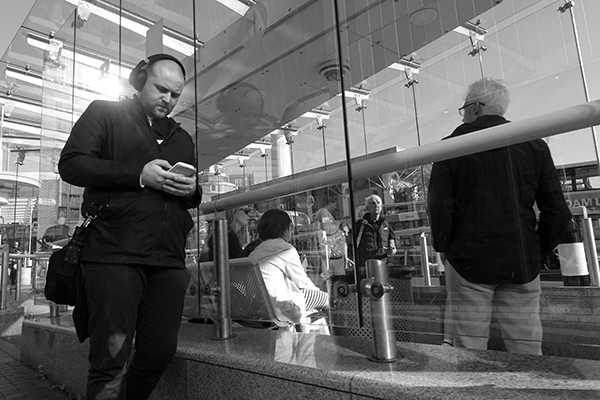


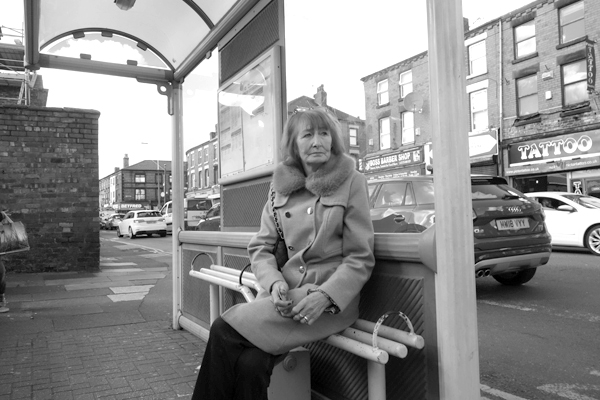
You can buy a signed copy of my latest photo book here.
Exploring ‘Out Of The Sea’: A Mixed Media Journey
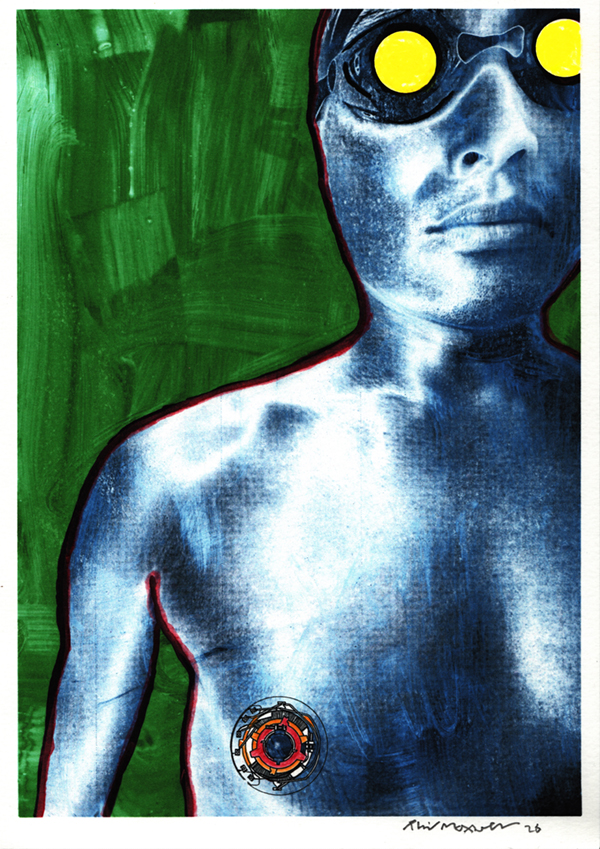
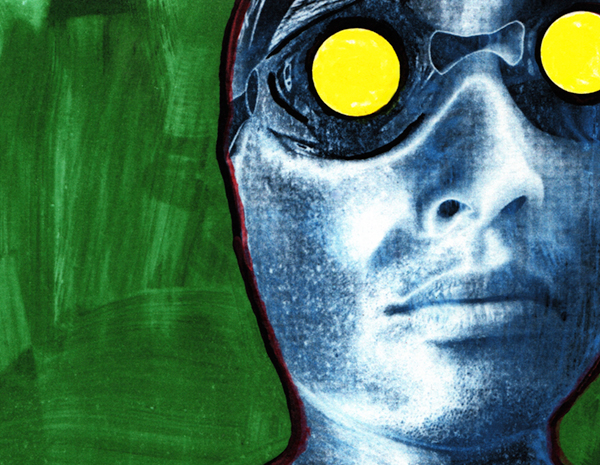
The vast majority of my mixed-media work begins with a photograph from my personal archive. For Out Of The Sea, the source image was taken of Hazuan Hashim shortly after he emerged from a swim in the Aegean Sea—his body still bearing the residue of water, salt, and heat under intense Mediterranean sunlight. The photograph functions as both document and point of departure, allowing the work to move between observation and transformation. Through layering, surface disruption, and material intervention, the image is pushed beyond its original moment, becoming a meditation on exposure, memory, and the physical aftermath of immersion.
The work centres on a body just risen from water, skin still remembering the sea. Salt clings. Light presses hard. The image captures a brief, charged interval in which immersion has not yet released its hold—when the body remains cooler than the air, slick, receptive, exposed. This moment is stretched and reworked: the flesh rendered blue and mineral, as though the sea has stained him from the inside out.
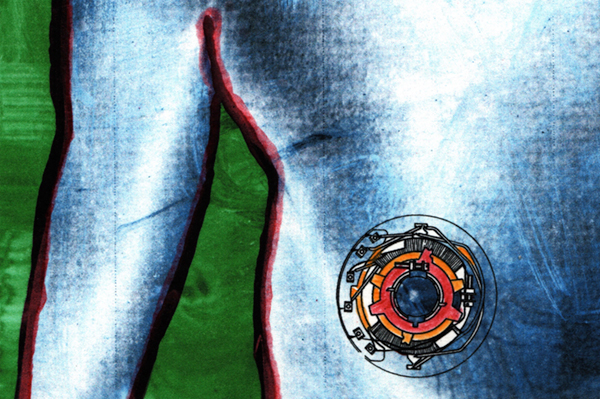
The figure stands bare and frontal, neither posed nor protected. His chest is luminous and vulnerable, marked by an almost talismanic aperture—part wound, part portal. Yellow lenses flare where eyes should be, turning vision into heat, glare, desire. Behind him, a dense green ground presses forward, viscous and tidal, recalling algae or vegetation and refusing any sense of depth or escape.
Eroticism here is not performative but elemental: the damp body cooling in air, the quiet arrogance of exposure, the tension between softness and endurance. He is not so much emerging from the sea as carrying it with him—beneath the skin, behind the eyes, lingering at the threshold where looking becomes touching.
At this threshold, the work shifts. A schematic diagram of a cathode ray tube is drawn around his right nipple, introducing a technological incision into the flesh. The swimmer hovers between organism and apparatus, human and machine. In this fusion, the body becomes a metaphor for the future of the human race, prompting questions of extinction, obsolescence, and transformation: are we approaching our end, or merely being rewritten by artificial intelligence?
You can buy a signed copy of my latest photo book here.
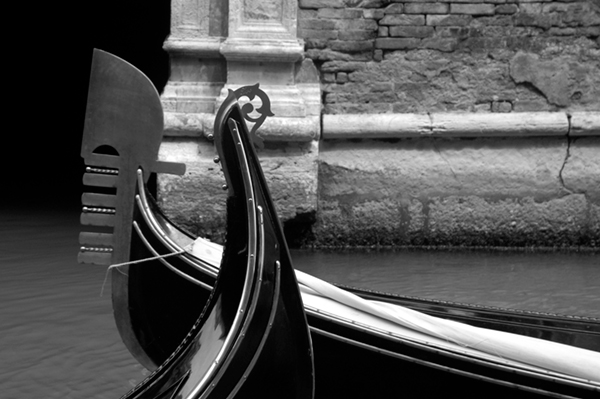
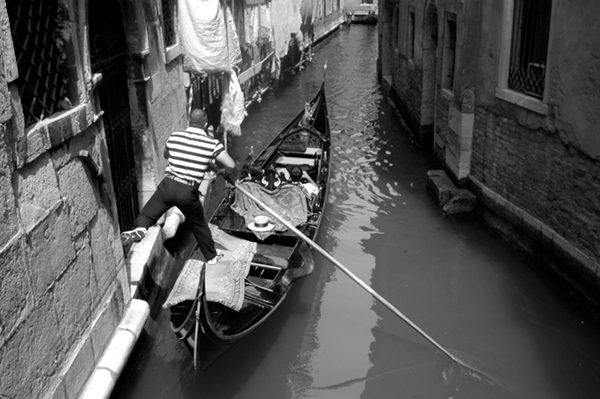
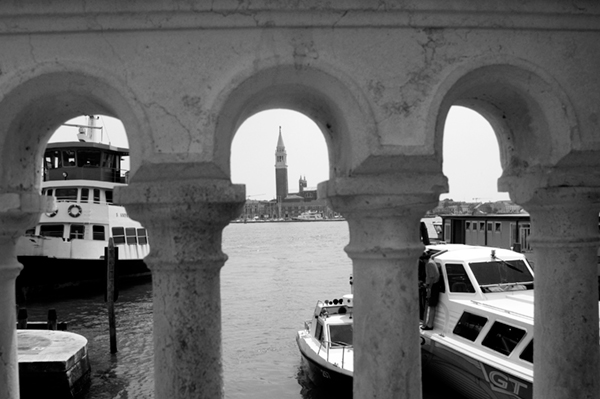
Exploring Venice: A Journey Through Its Unique Beauty
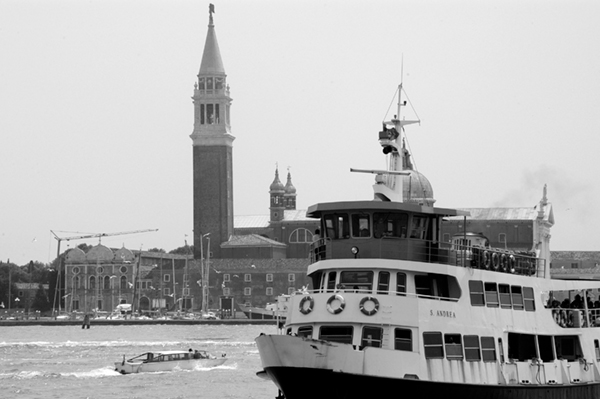
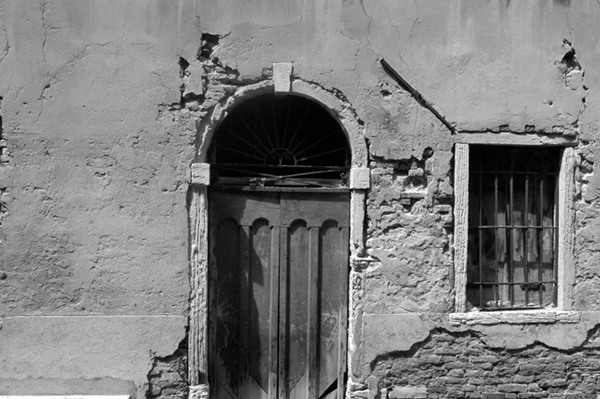
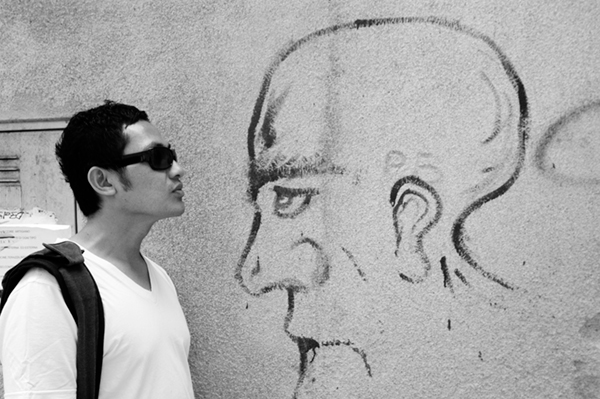
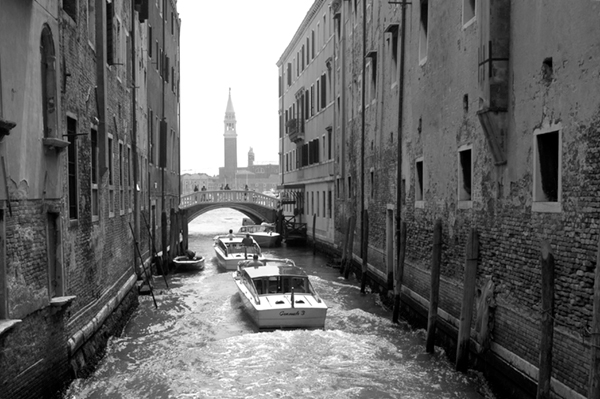
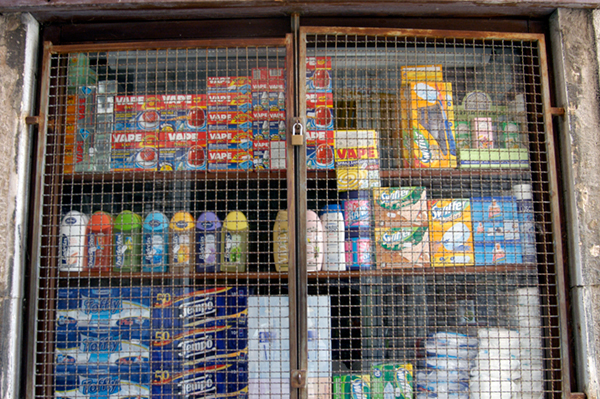
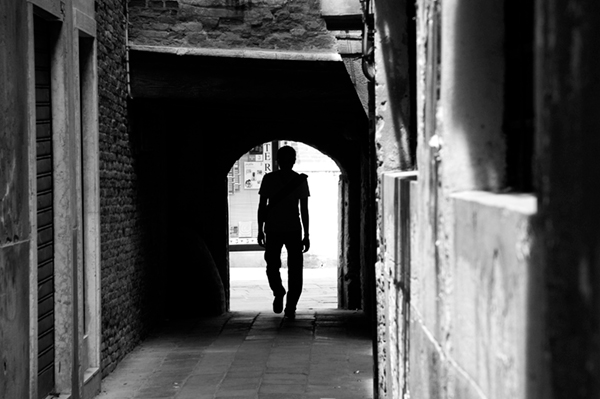
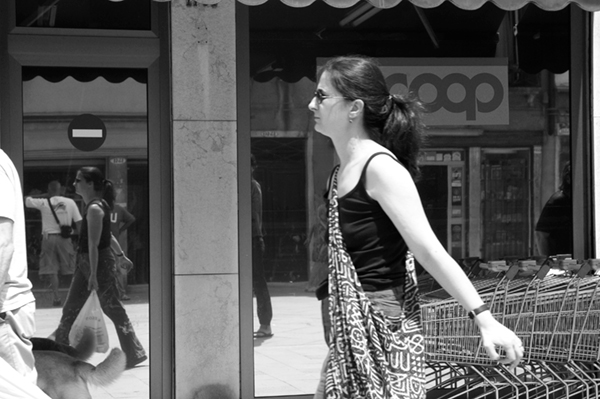
I remember watching a television documentary in the 1960s about the glories of Venice that persuaded the child I was then that the city was slowly but surely sinking into the sea. So it was with some relief that I finally visited in 2006 and discovered that it had not yet slipped beneath the lagoon. At the time, Hazuan Hashim and I were filming the Venice Dance Biennale. When we weren’t filming, we wasted no time drifting through the mysterious and beautiful city, uncovering its many treasures—among them, its bars.
Venice is unique environmentally, architecturally, historically, and visually, and it rarely disappoints. For centuries it has drawn visitors from across the world, but today over-tourism is widely regarded as one of the most urgent challenges facing its population of around 250,000 people. The port city welcomed more than 13 million visitors in 2019, and many locals are now leaving as a result. In 2023, UNESCO warned that Venice could be placed on the list of World Heritage Sites in Danger, as the combined pressures of climate change and mass tourism threaten to bring about irreversible change.
You can buy a signed copy of my latest photo book here.