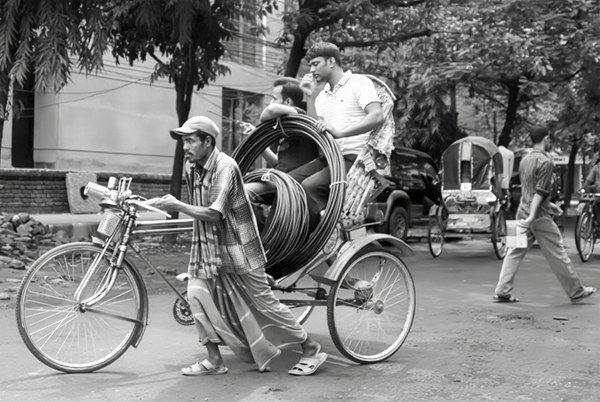
When I made this photograph in Dhaka in 2009, I was struck by how much the city had changed since my earlier visits in the 1990s. New roads, buildings and relentless development had reshaped much of the urban landscape. Yet one thing remained reassuringly familiar: the cycle rickshaw, still the lifeblood of the city’s transport system.
The rickshaw puller leans forward with all his weight, his posture revealing the sheer physical effort required to keep moving through Dhaka’s crowded streets. Behind him, two passengers sit almost casually among enormous coils of black plastic piping. The contrast always makes me smile. During my time in Bangladesh, I never ceased to be amazed by what could be carried on a rickshaw. I saw everything from refrigerators to motorbikes balanced on these superb machines, each load a reminder that necessity often breeds remarkable ingenuity.
For me, this photograph says something about the way Dhaka has always adapted to the demands of a rapidly growing city. There were rarely neat divisions between passenger transport and freight. If a rickshaw could carry it, then it probably would. Every journey represented an opportunity to earn a living.
What also strikes me is that the labour in this scene extends beyond the man pulling the rickshaw. Everyone in the frame appears to be part of the city’s daily economy, whether transporting goods, travelling to work or moving between jobs. It is an ordinary moment, yet one that speaks of the countless individual efforts that keep a great city functioning.
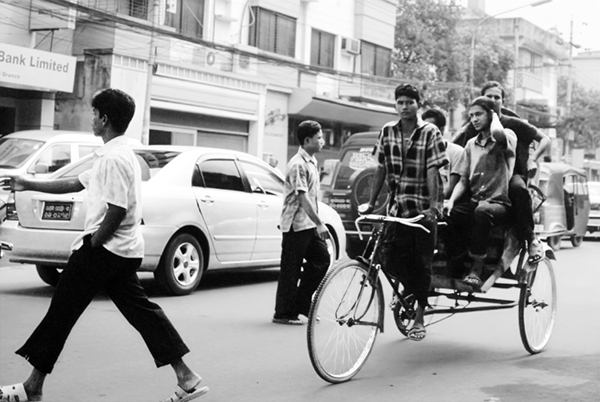
By 2009, Dhaka had become one of the world’s largest cities, with a metropolitan population approaching 15 million. Despite the growing number of cars, buses and motorised vehicles, cycle rickshaws remained indispensable. Estimates suggested there were between half a million and more than one million operating across Greater Dhaka, many of them unlicensed. Together they carried millions of passengers every day and provided work for hundreds of thousands of men, many of whom had migrated from rural Bangladesh after losing agricultural livelihoods or in search of better opportunities.
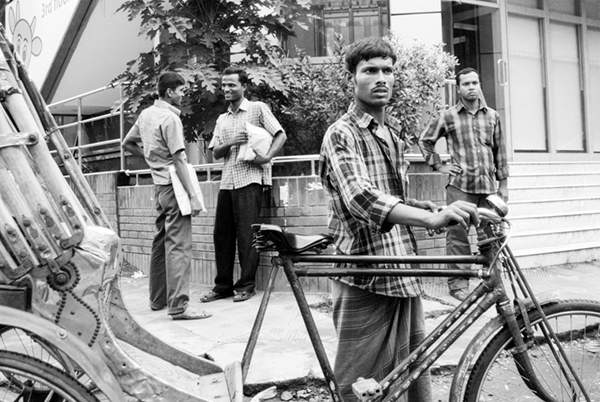
Rickshaw pulling was, and remains, punishing work. Long days of twelve to fourteen hours were common, with modest earnings at the end of them. Yet watching these men negotiate impossible traffic while carrying passengers, oversized cargo—or both—gave me a deep respect for the strength, balance and skill their work demanded.
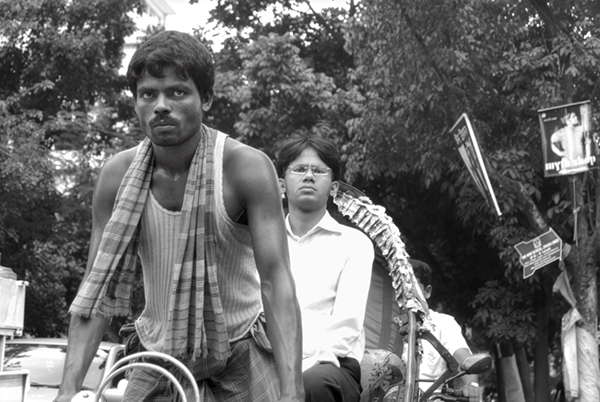
Cycle rickshaws first appeared in Dhaka during the 1930s under British colonial rule. Following the Partition of India in 1947, and especially after Bangladesh gained independence in 1971, their numbers expanded rapidly as rural migration fuelled the city’s growth. By the early twenty-first century, the rickshaw had become far more than a means of transport. It had become one of the defining symbols of Dhaka itself.
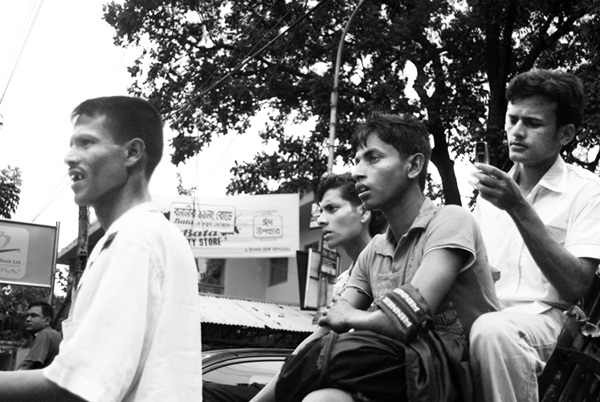
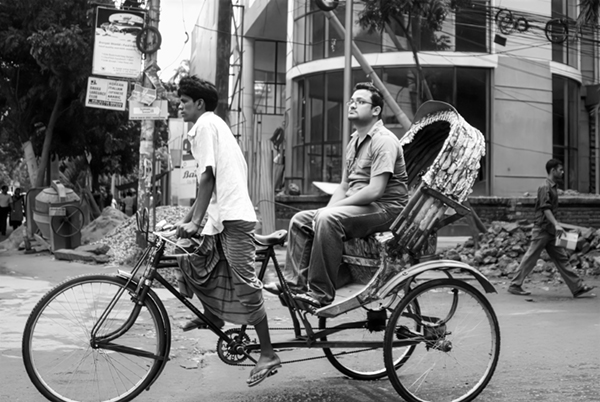
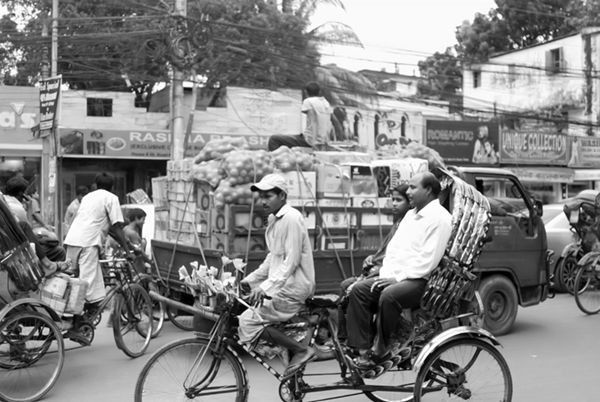
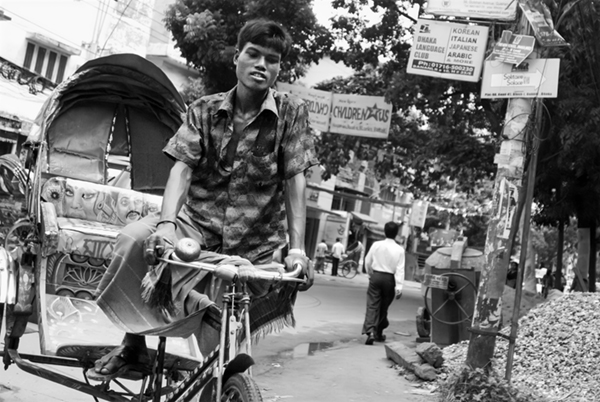
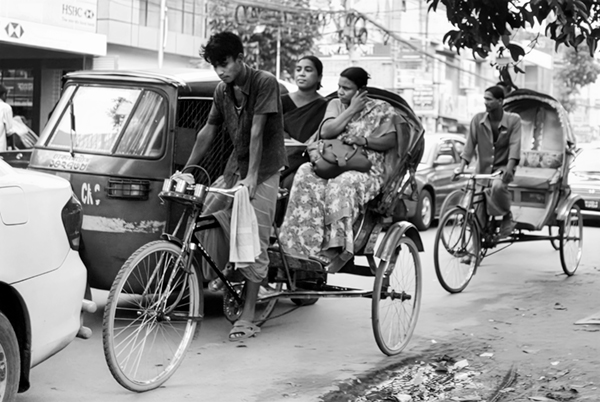
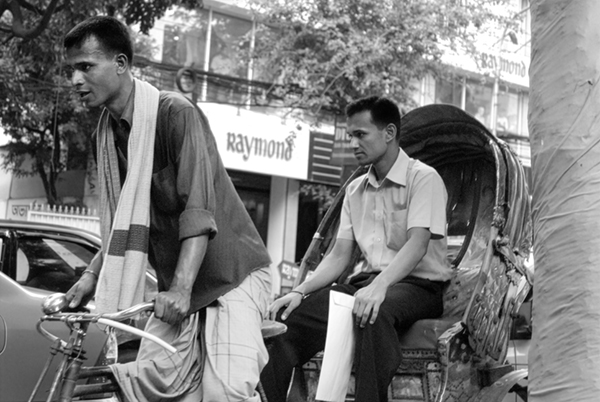
Whenever I look at these photographs, I think of the rickshaw not simply as a vehicle but as a symbol of resilience and adaptability. It represents the informal economy at work, the extraordinary versatility of everyday technology, and above all the human effort that has powered Dhaka’s remarkable growth. I will never forget travelling through the city by rickshaw. Those journeys brought me closer to the rhythm of everyday life than any taxi or private car ever could, and they remain among my happiest memories of Bangladesh.
Exploring Underground Culture: Berlin, New York, London
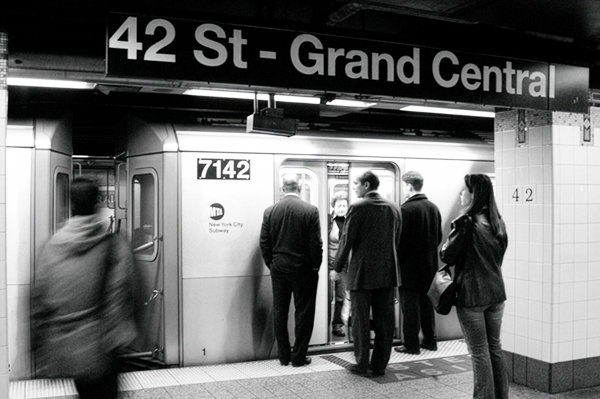
The first two photographs in this blog explore two complementary aspects of New York’s underground: the public choreography of movement and the private worlds that exist within it.
The first image is built around structure, rhythm and contrast. The bold station sign dominates the upper third of the frame, immediately anchoring the location, while the stationary train forms a strong horizontal band beneath it. The commuters waiting on the platform create a second layer of vertical forms, almost like punctuation marks against the station’s rigid geometry. I deliberately used a slow shutter speed, allowing the figure on the left to blur as they walked through the scene. This fleeting movement contrasts with the stillness of the other passengers, who appear almost statuesque. The woman stepping off the train looks down towards the platform, perhaps avoiding eye contact with those waiting to board. The image reflects a familiar urban paradox: hundreds of people sharing the same physical space while remaining socially isolated, each absorbed in their own thoughts and destination.
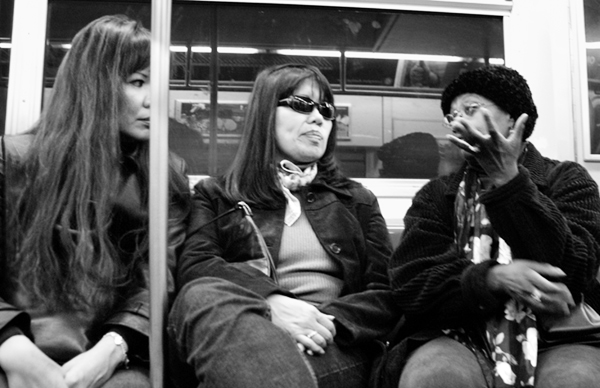
The photograph below tells a different story. It is quieter, more intimate and more personal. The three women appear to be friends, and judging by their expressions, the conversation was thoroughly engaging. From the opposite side of the carriage it was impossible to hear a single word over the relentless noise of the train, yet their body language says everything. In contrast to the anonymity of the platform scene, this image captures a fleeting moment of genuine human connection within the crowded environment of the subway.
These photographs inevitably reminded me of the work of Walker Evans, whose remarkable series of candid photographs of New York subway passengers was made between 1938 and 1941. Evans concealed a 35mm camera beneath his coat, using a hidden cable release to photograph unsuspecting travellers as they sat opposite him. The resulting images are extraordinary for their honesty. Free from self-consciousness or performance, his subjects appear lost in thought, weary after work, curious, anxious or quietly reflective. The photographs reveal the emotional richness that can exist within ordinary, everyday moments and remain one of the most influential bodies of street photography ever produced. If you have never seen them, they are well worth searching for online—not only as a masterclass in candid photography but also as a profound study of humanity in a shared public space.





The Forgotten Liverpool: Stories from the 1980s
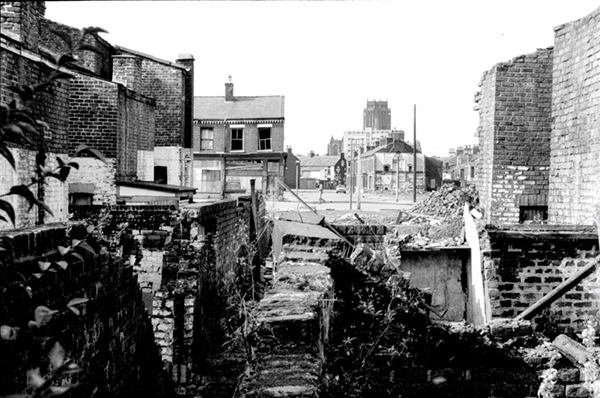
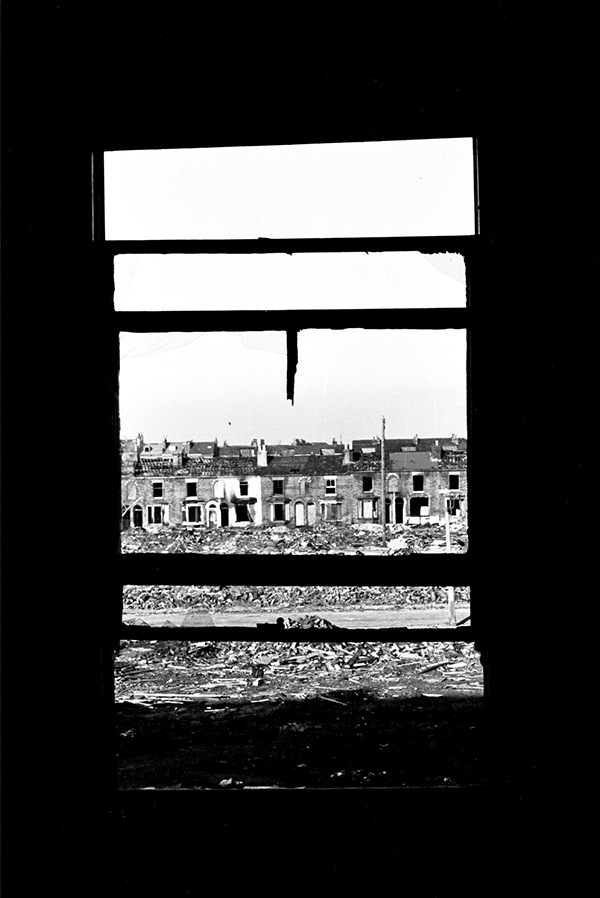
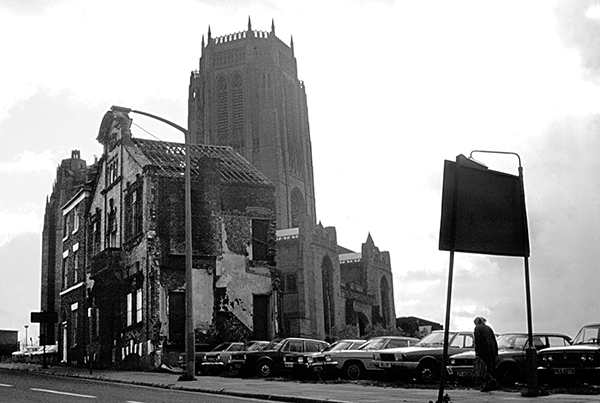
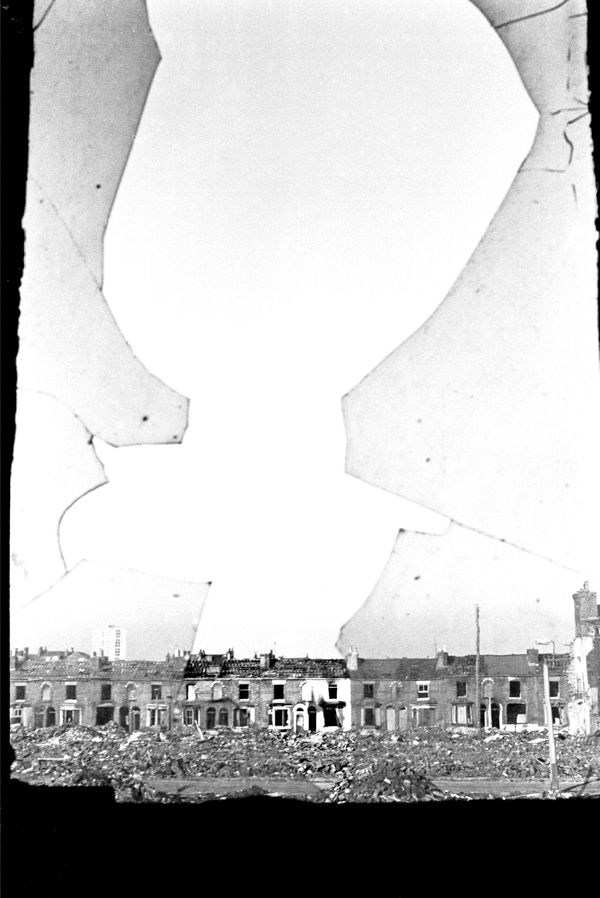
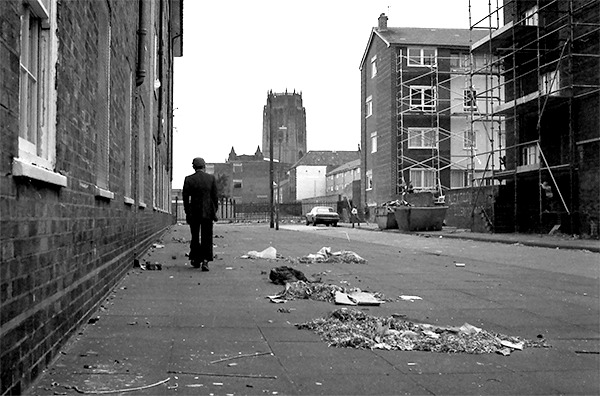
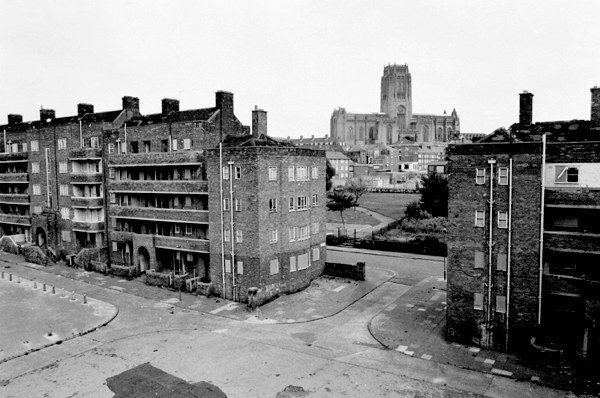
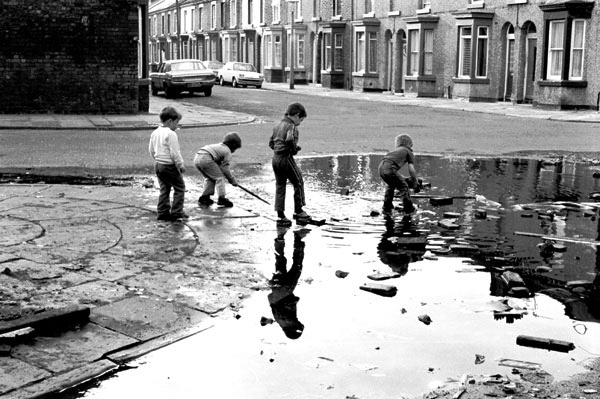
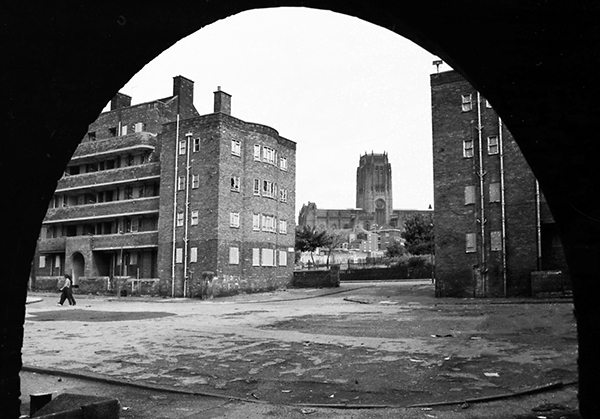
When I took this photograph in 1980, Liverpool was in the midst of profound economic and social upheaval. It later emerged that the government had placed the city into a policy of “managed decline”, and public investment had fallen to an historic low.
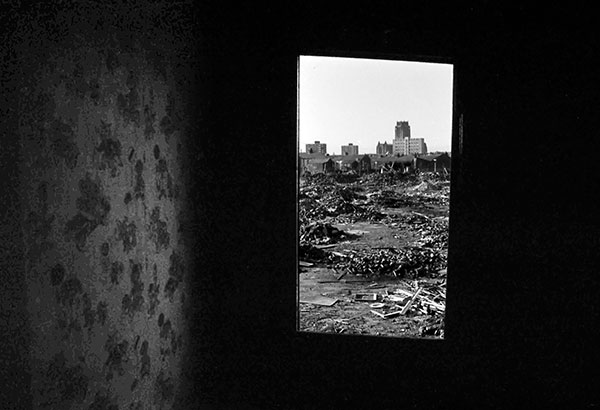
The distant tower of the Cathedral serves as a visual anchor. In the foreground lie the remains of demolished terraced houses: fractured brick walls, collapsed roofs, empty foundations, and piles of rubble. I climbed onto a wall to make this photograph—something I would be unable to do today.
The route to the Cathedral is quite literally obstructed by ruins. Knowing what happened just a year later, during the 1981 Toxteth uprising, adds another layer of meaning to the image. Although the photograph predates those events, it now seems almost prophetic. This abandoned landscape speaks of neglect, disinvestment, and communities placed under immense pressure. What I remember most, however, is the silence. As I stood there, I found myself imagining the lives of the people who had once filled these small terraced houses with activity and routine.
I have always believed that a city’s true identity resides not in its great monuments but in the streets and houses where ordinary people live. I placed the Cathedral beyond this landscape of abandonment because Liverpool’s history cannot be understood through its landmarks alone. It must also be read in the traces of the communities that were displaced or erased.


The Dialogue of Two Generations in London
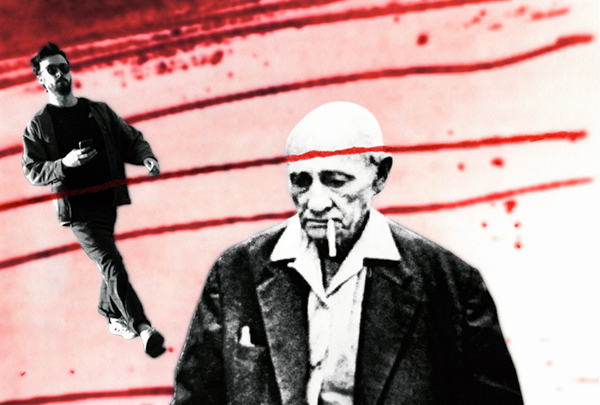
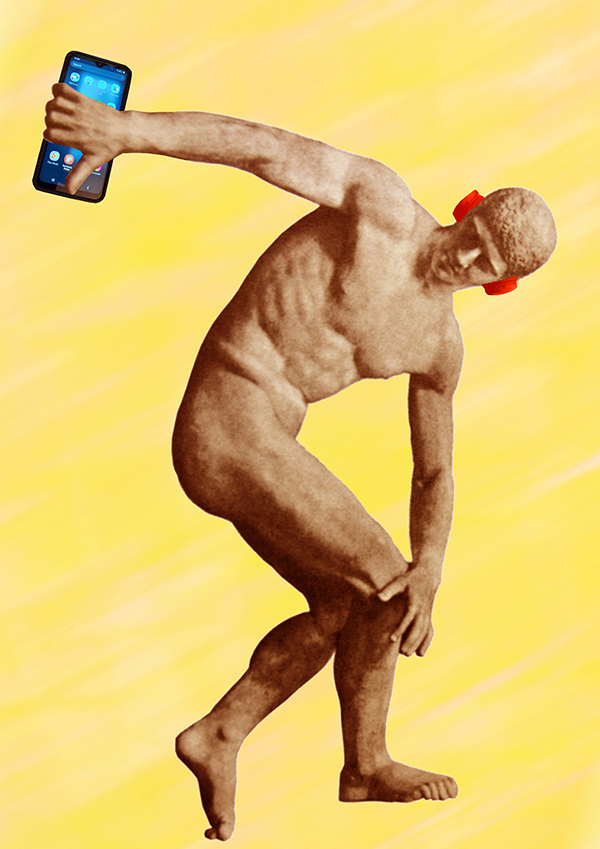
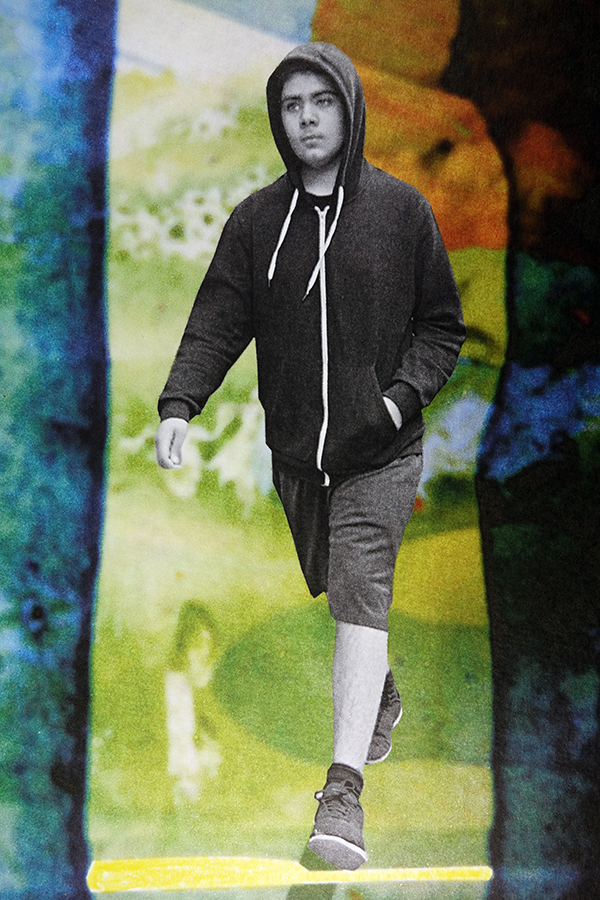
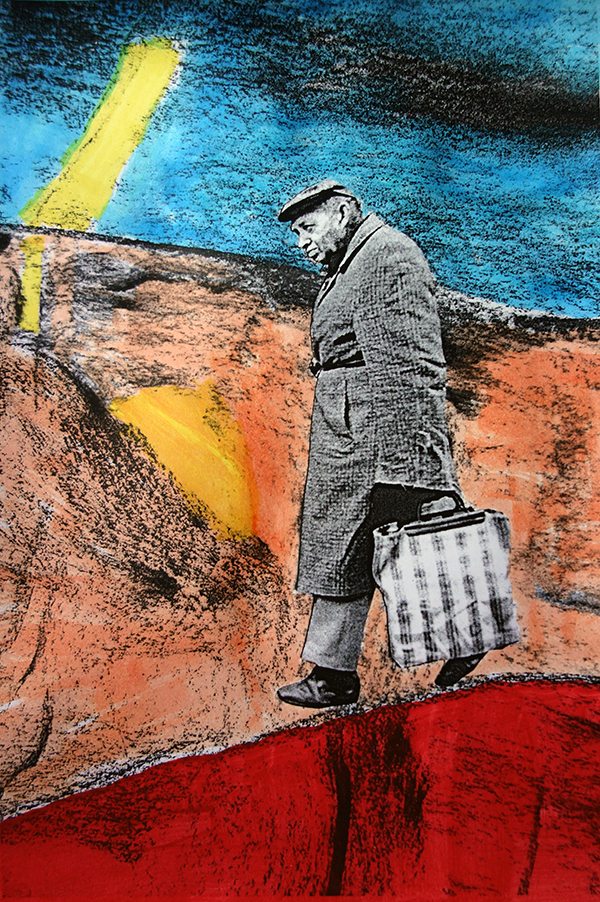
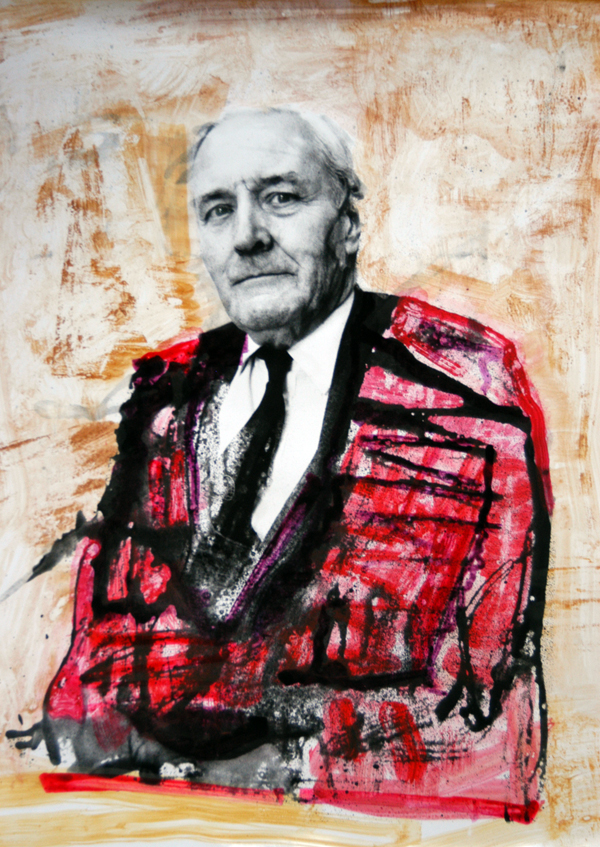
Here we have two photographs separated by roughly four decades: the central figure from Brick Lane in the 1980s and the younger figure from Canary Wharf in 2026. I’ve tried to create a dialogue about continuity, displacement, and the changing identity of East London.
I photographed the older man as he walked slowly down Brick Lane with the aid of a walking stick. I cut out his figure and rephotographed it. His downward gaze, cigarette, and stillness suggest introspection and fatigue. His bald head and worn jacket give him a sculptural presence; to me, he is like a monument to a disappearing generation. He becomes the emotional anchor around which everything else revolves.
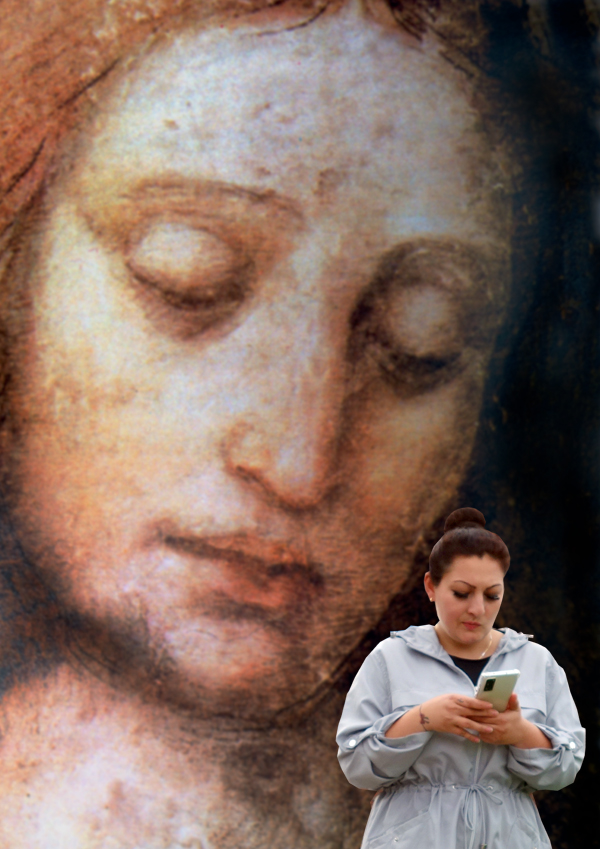
In contrast, the smaller figure on the left is walking quickly across a bridge in Canary Wharf, phone in hand rather than engaging with his surroundings. He represents a very different relationship with the city. He is detached from the older man and occupies another psychological and historical space.
Two worlds collide here. The Brick Lane man stands for the older East End, while the Canary Wharf figure represents the digital, financial, and globally connected London of today.
These are two lives occupying the same geographical landscape but belonging to different historical moments. Are these figures connected by history, or divided by it? The two subjects move through parallel worlds without ever meeting.
The red horizontal bands resemble veins, suggesting that a connection between past and present still remains. I see the work as a meditation on how photomontage can compress decades into a single, unresolved moment.
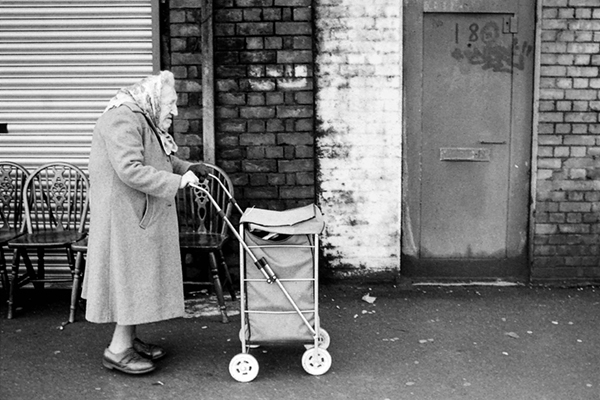
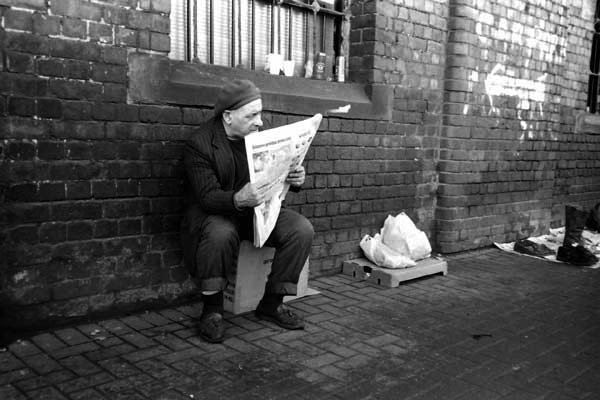
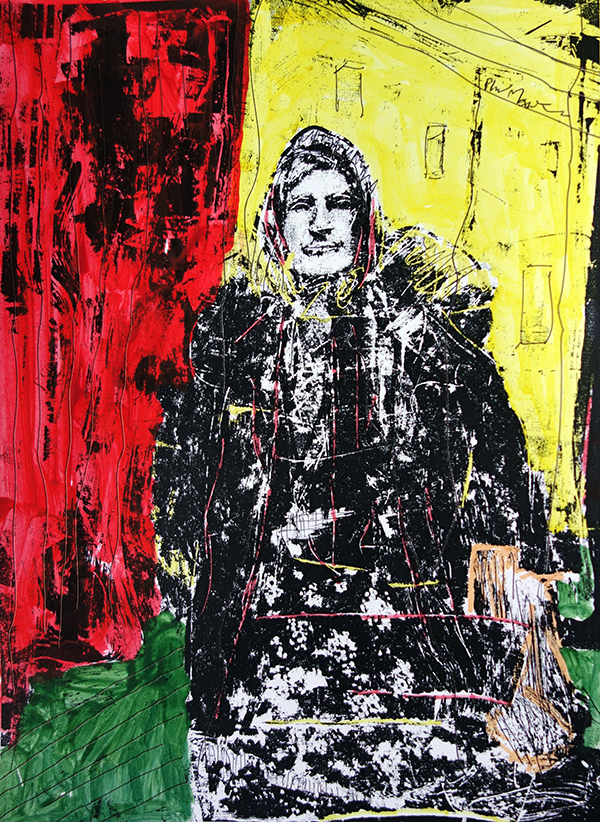
During the 1980s I often saw this woman pushing her shopping trolley through Spitalfields. I admired her quiet determination as she made her way around the Sunday market in search of bargains. The trolley carried her purchases, but it also seemed to steady her steps.
The 1980s brought profound social and economic change to the East End, yet I suspect that, for her, material circumstances had changed very little over the course of her life. I could only respect this elderly, physically frail woman. Her heavy overcoat, headscarf and sensible shoes spoke of a generation shaped by wartime austerity. In the East End of the 1980s, many older residents were among the last to remember the Blitz, the hardships of post-war poverty, and the area’s long-established Jewish working-class communities.
When I moved to the East End in 1982, the tower block where I lived was home to many elderly Jewish residents, each with a fascinating story to tell. The woman who lived on the floor below me was always impeccably turned out and made the finest pastries I have ever been offered by a neighbour. As the years passed, the pastries gave way to curry as the block gradually became home to mainly Bangladeshi families. If I was lucky, a knock on the door often meant a plate of delicious food from a generous neighbour.
In the early 1980s, Spitalfields stood on the threshold of transformation. Much of the old East End remained poor and semi-derelict, but redevelopment and gentrification were already beginning to reshape the area. I hope these photographs preserve something of that vanished world before it disappeared almost entirely.