Second hand clothes

Sam outside his shop in Cheshire street, early 1980's
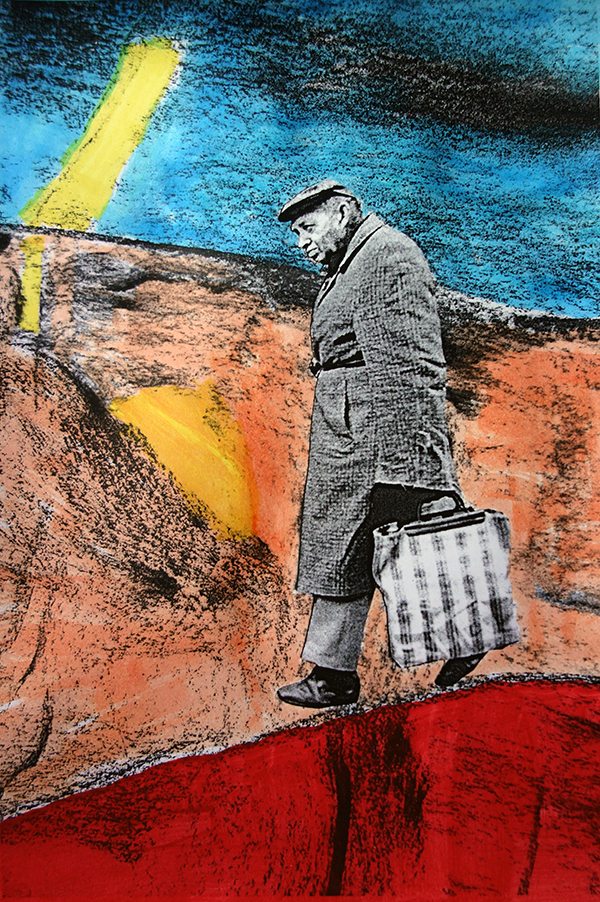
My nieghbour Sam lived in the flat opposite me in the early 1980’s. He was a Jewish refugee from Eastern Europe. On Sundays he would open his second hand clothes shop in Cheshire street.

Sam's friend at the entrance to his shop, early 1980's
He was assisted by his friend who we see here at the entrance of the shop. The interior of the shop was dark and damp. If you wanted to buy something it was best to just browse the clothes that hung outside the shop. Coat hangers hung from screws in the wall facilitated a display of coats, trousers and jackets. In the 1980’s most of the buildings in Cheshire street were derelict and empty.

New clothes for sale, Brick Lane 2009
Second hand clothes can still be bought in Cheshire street but they are expensive and hang on rails in ‘retro’ shops. Today you can still see clothes adorning brick work on Sundays in and around Brick Lane. The clothes for sale here are new and probably counterfeit.
Whitechapel portrait

Shopping in Whitechapel market, early 1980's
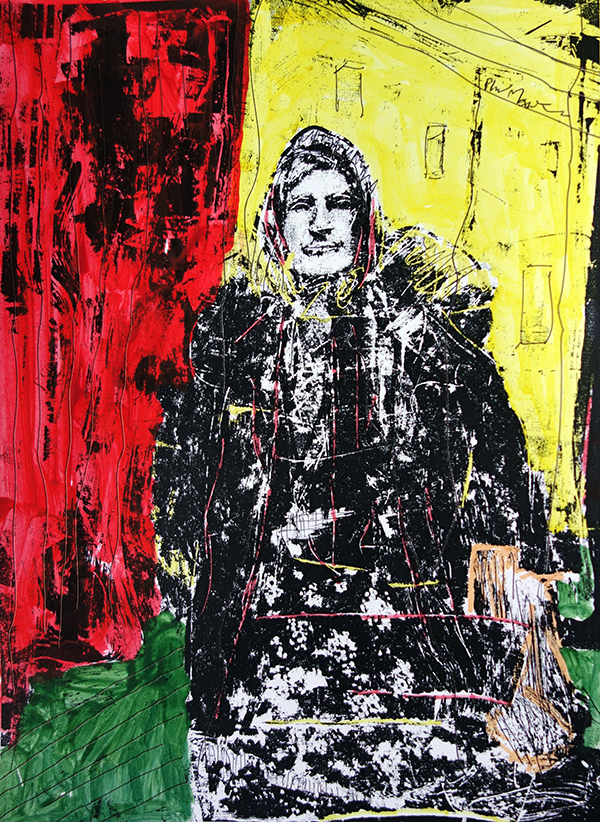
As a street photographer I am always on the look out for interesting subjects. I was immediately drawn to this Lady who was viewing stalls in Whitechapel market with her friend.

Viewing a stall in Whitechapel market, early 1980's
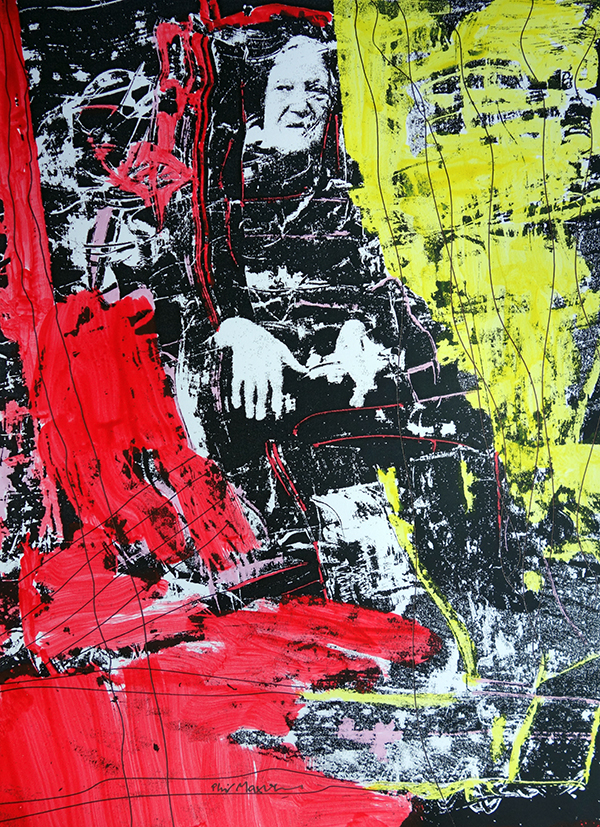
Her face seems to hold many stories about her life. I am sure she has worked hard and had to struggle during difficult times.

Portrait of a lady, Whitechapel early 1980's
In a few seconds I captured these images of a lady who I’m sure had a thousand stories to tell. It was a brief encounter with a formidable lady whose face still captivates me.
Dockyard Doris

Dockyard Doris at the Brick Lane music hall
I first saw Colin Devereaux performing at the Lord Hood pub in the early 1980’s. Off stage Colin was a quiet and sensitive man. On stage as Dockyard Doris he was an outrageous performer with a wide repertoire influenced by music hall traditions.

Dockyard Doris at the Brick Lane music hall
Colin regularly appeared in pantomimes and was a regular performer at the Brick Lane music hall set up by Vincent Hayes in the 1990’s.

Dockyard Doris at the Brick Lane music hall in Brick Lane
These photographs were taken at the Brick Lane music hall in the mid 1990’s. The music hall has now moved from Brick Lane to a magnificent Victorian church in Canning town. It is now the only fully functioning music hall venue in the UK.

Peter John and Dockyard Doris at the Brick Lane music hall
Colin Devereaux had a thirty year career in show business which included radio and TV appearances. After a long fight with cancer he died in 2001 aged 50.

Peter John and Dockyard Doris at the Brick Lane music Hall
I recall visiting him in his home in the 1990’s in Stepney. He was extremely knowledgeable about the history of music hall and he viewed himself as part of that rich tradition.
Chewing gum machines

Chewing gum machine on Brick Lane, 1984
As a child it was a treat to put a penny in the chewing gum machine outside the local newsagents. These machines were alluring because you could access them without parental supervision at any time.
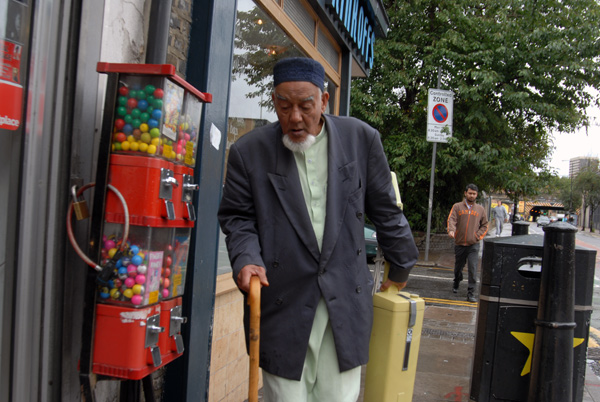
Chewing gum machine on Vallance Rd, 2005
The chewing gum machine has proved to be an intrepid survivor of the street and is alive and well in East London. They are unnoticed by adults but are always set at a height accessible to a small child. Their bright colours make them difficult for a child to ignore.
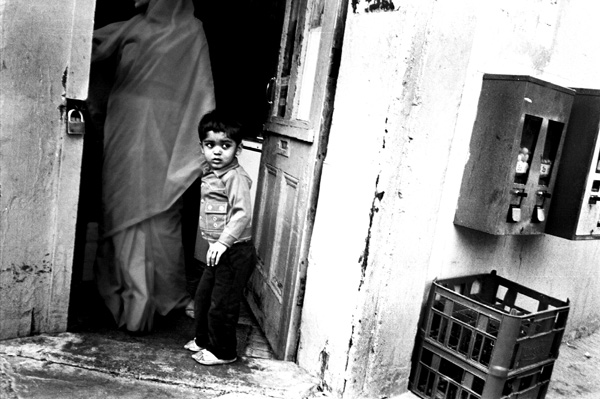
Chewing gum machine next to shop entrance. Brick Lane early 1980's.
The child above is ripe for seduction by the chewing gum machine. He is the right height and he cannot even see over the counter in the shop. The machines are an apprenticeship into becoming a consumer. It is unlikely he will use the machine with his mother around.
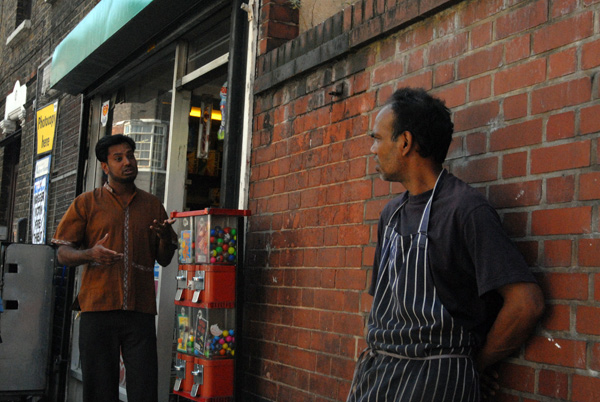
Chewing gum machine in Fieldgate street, 2004
This chewing gum machine referees a heated conversation between two men on Fieldgate street. I always remember one of the most engaging attractions of these machines was the slow turn and clunk of the handle as the coin dropped into the compartment beneath the chewing gum; today it would be described by a marketing agency as a complete shopping experience.
Brick Lane launderette
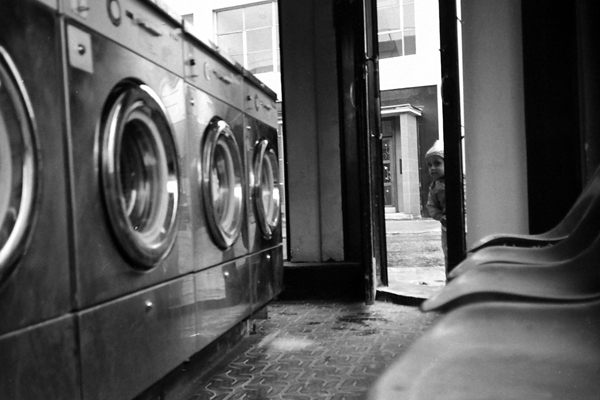
A child peers through the entrance of the launderette at the photographer
In the 1980’s less people had a washing machine at home so they relied on their local launderette. Thousands of launderettes have now vanished and I can only think of a handful that remain in Tower Hamlets. I took these pictures of the launderette I used to use in Brick Lane in 1982. The launderette is now the Bengal Cuisine restaurant.
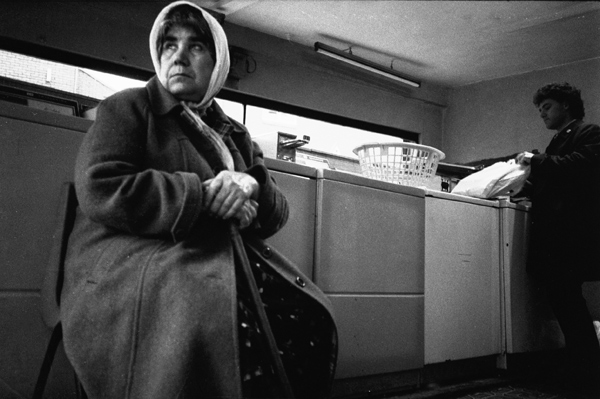
Looking into the street as her washing dries
Launderettes were great meeting places since they brought together disparate members of the community. A trip to the launderette could take up to two hours so you could occupy your time with conversation or reading. I would usually take my camera and take advantage of the lighting and stationary subjects.
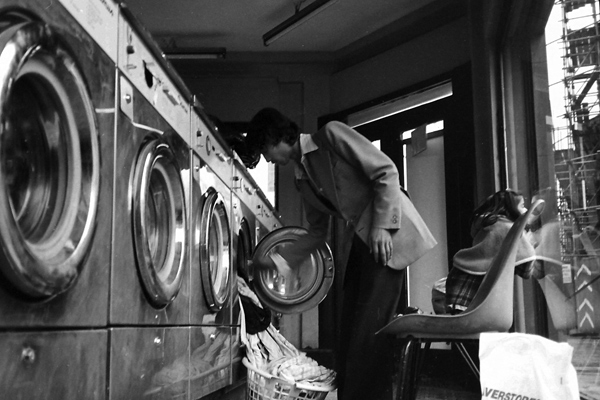
Loading a machine for a wash
If the launderette was busy there would be a que for the dryers. This could could lead to a sharp exchange of words between customers where you could suddenly be asked to referee.
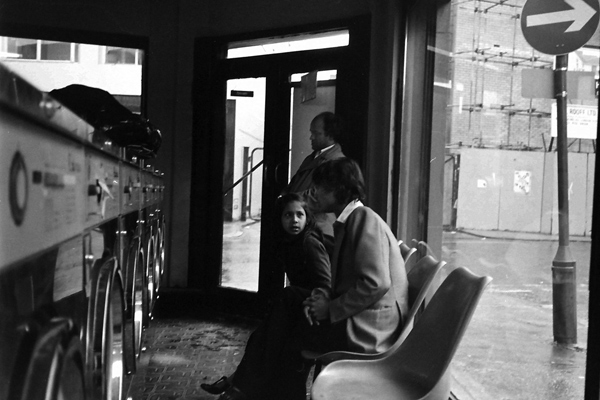
Having started his wash he is joined by his daughter
With the decline of launderettes a valuable meeting space has disappeared.